
For the acrylic painting ideas below, begin with a small canvas or acrylic painting paper, a flat brush, a round brush, a palette, and a water container. A basic selection of colours is enough you can mix additional shades as you work.
Acrylics suit these exercises because you can build a painting in layers and cover many mistakes once the paint dries. Keep your first composition small and use a limited palette so you can concentrate on brushwork, shapes, and colour mixing.
Easy Landscape Painting Ideas
Landscape painting offers plenty of room for interpretation. You can simplify trees, hills, and clouds while still creating a recognisable scene. Start with large shapes, then add only the details that support your focal point.
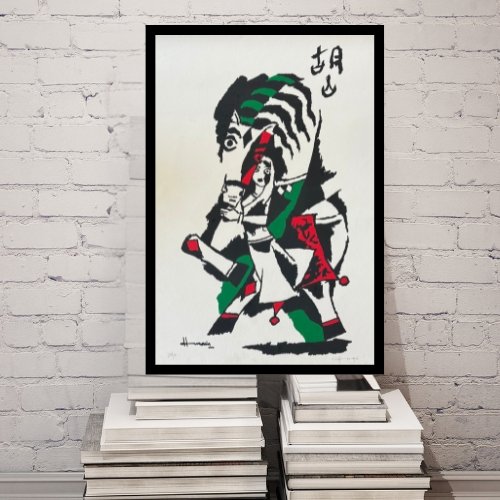
1. Sunset Over Hill Silhouettes
A sunset is a useful first project for practising colour blending. Choose yellow, orange, pink, and a dark colour for the hills. A quick look at the colour wheel can help you pick shades that blend smoothly.
Paint the sky first, working quickly while the acrylic is still wet to soften the transitions between colours. Let it dry before adding two or three overlapping hill shapes. Make the distant hills lighter and the nearest hill darker to suggest depth. Painters call this effect aerial perspective.
Keep the foreground simple. One tree or a small group of grasses can complete the composition without overwhelming it.
2. Mountain Lake with Reflections
A mountain lake introduces depth and reflections through a few clear shapes. Use pale blue for the sky, muted blue-grey for distant mountains, and darker tones for the foreground.
Sketch a horizon line and position the mountains above it. Paint simplified reflections below, using gentle horizontal strokes to suggest water. Avoid outlining every reflection sharply; softer edges help the lake feel more natural.
Leave a few lighter areas on the water to create a sense of reflected light.
3. A Path Through Green Fields
A winding path gives a landscape a clear point of interest. Use greens, earthy browns, and a pale sky colour.
Draw the path wider near the bottom of the painting and narrower as it moves towards the horizon. Block in the fields on either side, then introduce lighter and darker patches to suggest sunlight and uneven ground.
Add a small tree or distant house only after the larger shapes work together. This subject helps you practise perspective without needing a detailed architectural drawing.
Easy Painting Ideas for Beginners
Simple subjects let you focus on one skill at a time. Instead of filling the canvas with detail, choose a clear shape, a manageable palette, and one main focal point.
4. Loose Flowers in a Vase
Flower painting is a good way to explore expressive brushwork. Choose a plain vase and three to five flowers rather than a crowded bouquet.
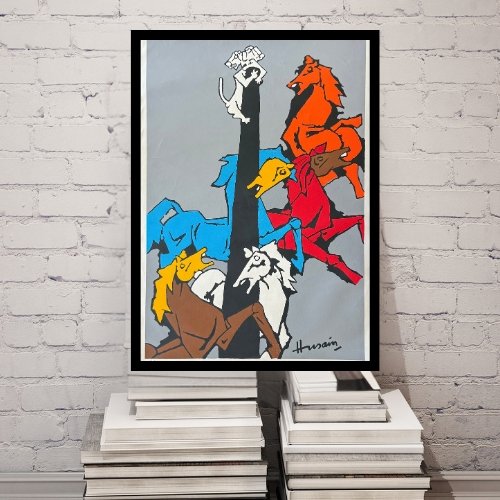
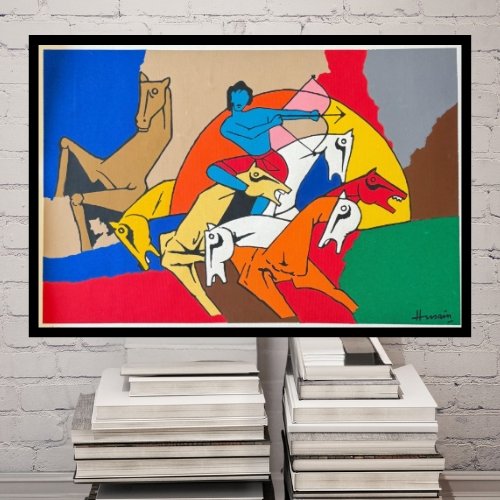
Begin with a simple background and the shape of the vase. Add the flowers as loose patches of colour, then use a smaller brush for a few petals and stems. Let some edges remain soft instead of outlining every flower. The same loose approach brings energy to subjects like these galloping horse paintings.
Repeating one flower colour in a small area of the background can help the composition feel connected.
5. Moonlit Sky with a Tree
A moonlit scene works well with a limited palette of blue, white, and a dark tone.
Paint a dark sky, leaving a slightly lighter area around the moon. Once the background dries, add the moon and a tree silhouette. Build the trunk first, followed by larger branches and a few smaller ones.
Keep the branches uneven and varied. A perfectly symmetrical tree can look stiff, while irregular shapes make the silhouette more convincing.
6. Abstract Color Blocks
Abstract painting gives you a chance to explore color and composition without drawing a recognisable object.
Choose three main colors and arrange a few large shapes across the surface. Vary their sizes so they do not all compete for attention. Leave some open space, then add a small contrasting area as a focal point. If you enjoy working with bold color and shape, our digital fine art collection shows how these ideas carry into other mediums.
Before introducing texture or extra lines, step back and check whether the main shapes already feel balanced.
Indian Painting Ideas Inspired by Art and Everyday Life
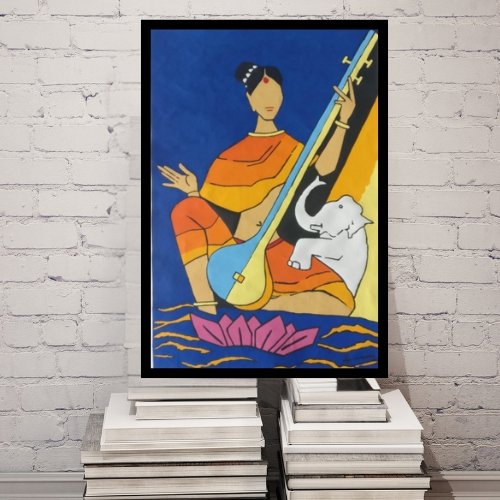
Indian-inspired painting can draw on a specific artistic tradition or on subjects such as architecture, clothing, festivals, and everyday scenes. These are different starting points: a temple courtyard is a subject, while a traditional art form has its own visual language and cultural context. Devotional subjects such as Hanuman, Ganesha and Lord Buddha are also popular choices once you feel confident with figures.
When exploring a named tradition, study reliable examples and learn about its background. Describe a personal practice piece as “inspired by” that tradition when appropriate.

7. Warli-Inspired Everyday Scenes
For a beginner exercise, study the simplified figures and repeated arrangements found in Warli art. Plan a small scene around one activity rather than filling the surface with unrelated motifs.
Use a single background color and a contrasting color for the figures. Lightly map out the composition before painting, paying attention to spacing and rhythm.
Keep the shapes consistent and allow room between groups. This exercise can help you practice line control and visual storytelling while encouraging further learning about the tradition.
8. An Indian Courtyard or Doorway
A doorway or courtyard offers an architectural subject with room for color and texture. Choose a reference with a clear entrance, a few steps, and one or two decorative elements.
Sketch the main rectangles and check their proportions before painting. Establish the light and shadow first, then add surface details such as weathered walls, a planter, a hanging decoration, or a small carved idol like these handcrafted sculptures.
Use colors drawn from your reference rather than trying to fit every Indian scene into the same palette.
Portrait Painting Ideas for Beginners
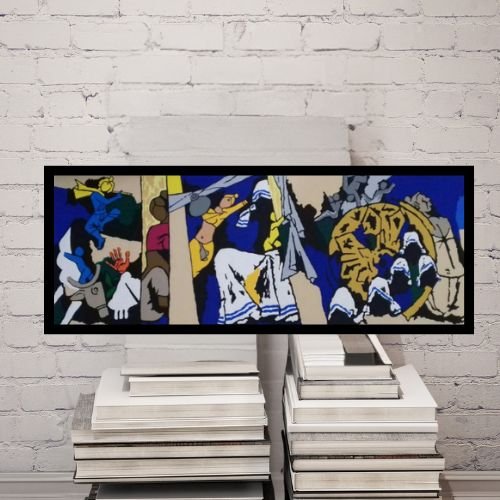
Portraits become more manageable when you simplify the lighting, colors, and pose. Begin with the overall head shape and broad areas of light and shadow before painting individual features. For inspiration, see how a Mother Teresa portrait captures expression through simple tonal shifts.
9. A Monochrome Portrait
A monochrome portrait lets you practice tonal values without also managing skin-color mixtures. Choose a clear reference photograph with light coming from one side. This strong contrast between light and dark is known as chiaroscuro.
Use one color with white to create light, middle, and dark tones. Block in the head, neck, and shoulders, then place the largest shadow areas. Check the position of the features before adding smaller details.
Step back regularly. The portrait should read as a complete face before eyelashes, hair strands, or other fine marks become necessary.
10. A Stylized Side-Profile Portrait
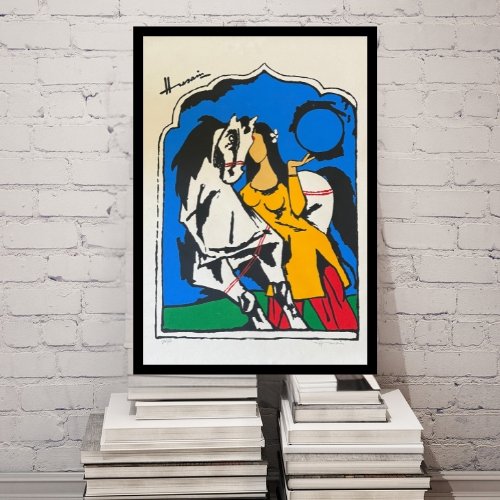
A side profile is useful for practicing the outline of the forehead, nose, lips, and chin. It can still be challenging, so choose a reference with a clear silhouette.
Draw the outer shape lightly and compare the angles before applying paint. Use a few broad color areas for the face, hair, and background. Add detail selectively, concentrating on the features that define the expression.
A stylized approach allows you to explore color and mood without aiming for photographic realism.
Peacock Painting Ideas
Peacock subjects offer opportunities to practice curved lines, repeated patterns, and contrasting colors. India’s national bird, the Indian peafowl, also appears in devotional art, most famously as the feather in Lord Krishna’s crown. Start with a single feather before attempting a bird with a fully spread tail.
11. A Single Peacock Feather
A feather study is a manageable way to explore the subject’s distinctive shapes. Use blue, green, and warm accent colors against a simple background.
Sketch the curved central stem and the eye-shaped pattern near the top. Paint the larger color areas first, then use a fine brush for selected feather strands.
You do not need to paint every strand. Concentrate detail around the eye pattern and keep the surrounding marks lighter and looser.
12. A Peacock with a Simplified Tail
For a more developed composition, paint a side-profile peacock with its tail flowing across the canvas.
Establish the body and neck before adding the tail. Group the feathers into larger shapes, then introduce a few repeated eye patterns to suggest detail. A quiet background will help the bird remain the focal point.
Check that the tail supports the composition rather than crowding the entire surface.
How to Choose the Right Painting Idea
Choose your subject according to the skill you want to practice. Sunsets help with blending, field paths introduce perspective, flowers encourage loose brushwork, and monochrome portraits develop your understanding of light and shadow.
Consider the time and materials you have, too. A feather study or small abstract painting may suit a short session, while a portrait or courtyard scene may need several sittings.
If a subject feels too difficult, simplify it. Crop the reference, remove background objects, reduce the number of colors, or paint a smaller study before beginning the final piece.
Common Beginner Painting Mistakes
Adding detail too early can make it harder to correct the composition. Establish the largest shapes first and check their placement before moving to smaller marks.
Too many colors can also make mixing difficult to manage. Begin with a limited palette and add another color only when the painting needs it.
When working with acrylics, allow layers to dry when you want clean shapes or sharp edges. For soft blends, work while the paint is wet. Understanding that difference will help you control the result.
Frequently Asked Questions
What is the easiest painting idea for a beginner?
A sunset with hill silhouettes is an approachable starting point. It combines a blended background with simple foreground shapes and requires little detailed drawing.
Can I start painting without strong drawing skills?
Yes. Abstract compositions, loose flowers, and simple landscapes allow you to practice painting while developing your drawing skills gradually.
How do I simplify a reference photograph?
Identify the main subject, the largest shapes, and the strongest light and shadow areas. Remove small background details that do not help the composition.
What should I practice before painting a realistic portrait?
Practice basic proportions and tonal values. A monochrome head study can help you understand the face’s larger forms before you introduce skin colours and fine detail.