
A well-chosen painting can do more than complete a room. It can shape the atmosphere, influence how a space feels, and create a sense of calm that lasts long after you first notice it. Among the many styles of wall art available today, Buddha paintings for home decor have become a timeless choice for homeowners, interior designers, and art collectors alike. Their peaceful expressions, meaningful symbolism, and elegant designs make them suitable for both traditional and modern interiors. Whether you are decorating a new home, creating a meditation corner, or looking for artwork with lasting significance, understanding the meaning and placement of Buddha paintings can help you choose a piece that brings both beauty and balance to your space.
The Silent Pull Of Buddha Art
Ask ten people why they like Buddha paintings and you will get ten different answers, yet they will all circle the same idea. Peace. Not the vague, greeting-card kind of peace, but a specific, physical sense of slowing down.
Lord Buddha is the founder of Buddhism, and within that tradition his image carries deep religious weight. But the pull of a meditation Buddha painting reaches well past any one faith. Compassion, patience, humility, and self-awareness are not owned by a single belief system. They are qualities most people are quietly trying to build into their own lives, whether they meditate every morning or have never set foot in a temple.
That is why this artwork shows up in homes, boutique hotels, yoga studios, therapy offices, and corporate lobbies with equal ease. It is rarely there to make a religious statement. More often, it is there as a quiet reminder to breathe.
Interior designers have picked up on this too. In a design world that constantly chases the next trend, Buddha paintings hold a strange kind of immunity. A minimalist apartment, a maximalist living room, a traditional family home, and a sleek corporate lobby can all display the same painting and have it feel exactly right, because the emotion behind it never changes even when the furniture around it does.
Reading The Smile And Symbols
Look closely at almost any Buddha painting and the first thing you notice is the expression. It is not joyful. It is not sad. It sits somewhere in between, in a state that artists and scholars often describe as contentment that does not depend on outside circumstances.
Buddhist art developed an entire visual vocabulary long before most viewers could read the texts behind it, and each element in a painting was chosen to carry meaning on its own. A lotus growing from muddy water became shorthand for purity rising out of difficulty. Half-closed eyes suggested attention turned inward rather than outward. Flowing, unadorned robes stood for simplicity over excess. Even the earliest depictions of the Buddha were symbolic rather than literal, using footprints, an empty throne, or a sacred tree long before artists began painting him in human form, a shift traced in detail on Wikipedia’s overview of Buddhist iconography.
Once you know a handful of these cues, a painting stops being decoration and starts being a small, silent conversation.
Different Poses Tell Different Stories
Not every Buddha painting is saying the same thing. The posture, the hand gesture, and the surrounding details all shift the meaning, sometimes in ways that are easy to miss at a glance.
Meditating Buddha For Deep Calm
Seated, eyes closed, spine relaxed. This is the pose most people picture first, and it is popular for a reason. It represents concentration and inward awakening, which makes it a natural fit for bedrooms, reading nooks, and any corner meant for winding down.
Abhaya Mudra For Quiet Courage
Here the right hand is raised, palm facing outward, in a gesture known as the Abhaya Mudra. It signals protection, reassurance, and fearlessness. Homeowners often choose this version for entryways and living rooms because it feels welcoming rather than passive.
Laughing Buddha For Everyday Joy
Technically a depiction of Budai rather than Gautama Buddha, the laughing figure has become a beloved symbol of abundance and good humor in its own right. It suits spaces where you want warmth and optimism more than stillness, such as a family room or a reception area.
Teaching Buddha For Wisdom Seekers
Shown with raised hands or seated among listeners, this version represents the ongoing pursuit of understanding. It works well in home libraries, studies, and offices, where it acts as a small daily nudge toward curiosity.
Finding The Right Room Placement
Where a painting hangs changes how it feels almost as much as the painting itself does. A serene meditation Buddha painting tucked into a cluttered hallway will struggle to do its job, while the same piece given a clean wall and soft lighting can transform an entire room.
A useful rule of thumb, borrowed from professional stylists, is to keep the canvas roughly two-thirds the width of whatever sits beneath it, whether that is a sofa, console table, or headboard. This keeps proportions balanced instead of lopsided. Eye level placement, gentle ambient lighting, and a bit of breathing room around the frame all help the artwork read as intentional rather than accidental.
Many families also lean on Vastu-inspired guidance when deciding where to hang spiritual art, favoring calm, uncluttered walls in living rooms or meditation corners. These are cultural preferences rather than fixed rules, so the honest advice is simpler than it sounds. Choose the wall that makes you pause when you walk past it.
It also helps to think about what a painting is competing with. A Buddha canvas hung beside a busy gallery wall of family photos and travel souvenirs will rarely get the quiet attention it needs. Give it its own patch of wall, even a small one, and the painting instantly reads as intentional rather than squeezed in as an afterthought.
Living Room And Bedroom Ideas
The living room carries a lot of emotional weight. It hosts guests, absorbs everyday arguments and celebrations alike, and is usually the first room anyone sees when they walk through the door. A large Buddha canvas above the main sofa can anchor the entire space without demanding constant attention, which is exactly the balance most people are after.
Bedrooms ask for something gentler. Soft palettes, minimal detail, and a meditating or lotus-themed painting tend to support rest rather than compete with it. The goal in a bedroom is not to impress anyone. It is to make the last thing you see before sleep, and the first thing you see after waking, feel unhurried.
Office Spaces And Meditation Corners
Work spaces benefit from a different kind of calm, one that supports focus instead of drowsiness. Abstract or minimalist Buddha canvas art, with clean lines and restrained color, tends to fit better here than heavily detailed traditional pieces. It adds character to a home office without pulling attention away from the task at hand.
Dedicated meditation or prayer corners are the one place where the artwork can take full center stage. A serene expression, an uncluttered background, and soft natural light are usually enough to turn even a small nook into a space that genuinely encourages reflection.
A softly lit meditation corner, similar in spirit to the calm a well-placed Buddha painting can create at home. Photo by Rutpratheep Nilpechr on Unsplash.
Buddha Art As Meaningful Gifts
Here is a detail that rarely makes it into home decor articles. Spiritual wall art has quietly become one of the more thoughtful entries in the world of corporate art gifts, and the trend is backed by more than instinct.
Research from the University of Exeter found that employees working in spaces enriched with art and greenery were up to 32 percent more productive and reported 45 percent higher wellbeing than those in plain, purely functional offices. A gift that decorates a desk or a boardroom wall is not just a nice gesture anymore. It is a small, evidence-backed investment in how someone feels at work.
That shift shows up in the numbers too. Corporate gifting is projected to grow into a market worth well over a trillion dollars by the end of the decade, and the direction of that spending is moving away from generic branded merchandise and toward pieces that feel personal, premium, and worth keeping. A handmade Buddha painting, gifted to a retiring executive, a valued client, or a new business partner, communicates something a mug or a pen simply cannot.
Our corporate art gifts collection is built around exactly this idea, and the reasoning behind it is laid out further in why more companies are choosing art for gifting.
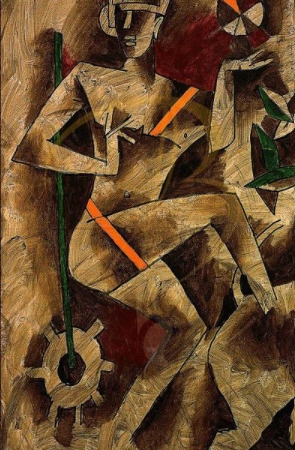
Craftsmanship detail from a piece prepared for bulk corporate gifting, showcasing the texture handmade canvases carry.
Choosing Colors For Peaceful Rooms
Color does more work in a Buddha painting than most buyers give it credit for. Soft whites, greys, and blues tend to read as calm, which is why they suit bedrooms and meditation corners so well. Gold accents introduce warmth and a sense of quiet luxury, while earthy browns and terracottas ground a room and make it feel more settled.
Monochrome palettes suit sleek, contemporary interiors, while richer, warmer tones sit more naturally in homes filled with wood, textiles, and traditional furniture. Rather than trying to match every cushion and curtain in the room, choose the palette that supports the mood you are actually trying to create.
Picking The Right Size Matters
Scale can make or break even the most beautiful painting. A small canvas on a large, empty wall tends to disappear, while an oversized piece squeezed into a compact room can start to feel heavy rather than peaceful.
Large statement canvases work best above sofas, in entryways, or on dedicated feature walls where they have room to breathe. Medium sizes suit console tables, hallway walls, and desks, while smaller pieces are often better suited to reading nooks or layered gallery-style arrangements. Before buying, it helps to measure the wall itself and picture the painting in place rather than judging size from a screen alone.
Quality Craftsmanship That Lasts Years
A Buddha painting is usually bought with the expectation that it will still be on the wall in ten or twenty years, so craftsmanship matters more here than with most other decor purchases. Canvas weight, pigment quality, frame construction, and finishing all affect how well a piece holds up against sunlight, humidity, and everyday wear.
Photographs online can only tell you so much. Texture, brush depth, and the subtle variation in hand-applied color are qualities that become obvious the moment a painting is hanging in natural light. Investing in that quality upfront tends to be far cheaper than replacing a faded or peeling piece a few years later.
Ask about the canvas backing, the protective coating, and how the piece is framed before you buy. A well-built painting resists warping in humidity and holds its color under normal indoor light for decades, while a poorly made one can start looking tired within a single year.
Handmade Versus Printed Canvas Art
Both handmade and printed Buddha canvas art have a place, and the right choice depends on what you value more, individuality or budget predictability.
Handmade paintings carry visible brushstrokes and small, natural variations that make every piece one of a kind. They tend to have more depth and character, especially up close. Printed canvas art offers consistency, faster turnaround, and a lower price point, which makes it a practical option for large spaces or for anyone furnishing an entire home at once. Neither option is objectively better. They simply serve different priorities.
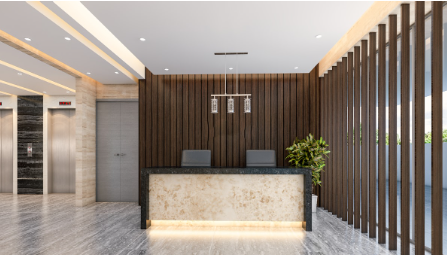
Wall art transforms a corporate reception area the same way it does a living room, reinforcing why art has become such a popular corporate gift. Photo by Aalo Lens on Unsplash.
Caring For Your Painting Properly
Good care is simple, but it does need to be consistent. Keep paintings out of prolonged direct sunlight, since UV exposure gradually fades even high-quality pigments. Excess humidity can warp canvas and loosen framing over time, so bathrooms and uninsulated spaces are usually poor choices for display.
Dust gently with a soft, dry microfiber cloth rather than reaching for household cleaning sprays, which can damage varnish or paint layers. A little consistency here goes a long way. Paintings cared for properly can stay vivid and structurally sound for decades.
Trusting Your First Emotional Reaction
Practical details like size, color, and placement matter, but they should support a decision rather than drive it entirely. The first emotional reaction to a painting, that instinctive pull or sense of calm, is usually the most honest signal you will get.
Many homeowners later admit that the piece they love most years on is the one that stopped them mid-scroll or mid-walk through a gallery, long before they thought about where it might hang. That instinct is worth trusting.
Where To Start Your Collection
Buddha paintings for home decor are not a passing trend chasing this year’s color palette. They are rooted in ideas, stillness, compassion, and quiet strength, that do not go out of style. Whether you are furnishing a first apartment, refreshing a family home, or sourcing a thoughtful corporate art gift for a client, the right piece tends to reveal itself once you know what to look for.
Explore the full range of handcrafted original paintings or browse the broader art and sculpture collection from The Brushstrokes Company to find a piece worth keeping for years.
Frequently Asked Questions
Can Buddha paintings go in any room?
Yes. Living rooms, bedrooms, home offices, meditation corners, and entryways can all work, as long as the style and color palette match the mood you want that specific room to have.
Do you have to be Buddhist to display Buddha art?
No. Most people who buy Buddha wall art are drawn to what it represents, calm, patience, and compassion, rather than to a specific religious practice.
Which Buddha painting suits a living room best?
Meditating Buddha paintings and contemporary Buddha canvas art are the most popular living room choices because they create a welcoming focal point without overwhelming the space.
Is handmade Buddha art worth the extra cost?
For many buyers, yes. Handmade pieces offer visible texture and one-of-a-kind variation that printed reproductions cannot fully replicate, though printed canvas art remains a solid, budget-friendly alternative.
How do I keep a Buddha painting looking new?
Avoid direct sunlight and excess humidity, dust with a soft microfiber cloth, and skip harsh cleaning chemicals entirely.
Are Buddha paintings a good corporate gift?
Increasingly, yes. They are premium, personal, and tied to real wellbeing benefits, which is why more companies are folding them into client and employee gifting programs.
What size Buddha painting should I buy?
Match the canvas to the wall and the furniture beneath it. As a rough guide, aim for a width around two-thirds that of the sofa, console, or headboard it will hang above.
Can Buddha art fit a minimalist, modern home?
Absolutely. Monochrome and abstract Buddha paintings were practically made for clean, minimalist interiors, where their simplicity reinforces the room rather than competing with it.
Where should I avoid hanging a Buddha painting?
Bathrooms, cluttered storage walls, and spots directly above a bed headboard are generally discouraged, both for practical reasons like humidity and out of respect for what the artwork represents.