
Corporate gifting is more than sending a box of sweets during Diwali or placing a company logo on a notebook. When thoughtfully planned, a corporate gift can help a business thank employees, strengthen client relationships, celebrate important milestones and create a more memorable connection with the people who contribute to its growth.
The challenge is choosing a gift that feels appropriate rather than routine.
Businesses today can choose from corporate gift hampers, branded merchandise, employee welcome kits, technology products, sustainable gifts, handcrafted pieces, artwork, sculptures and premium client gifts. With so many options available, successful corporate gifting begins by understanding who the gift is for, why it is being given and what impression the company wants it to leave.
This guide explains how corporate gifting works in India, how to establish a realistic budget, which types of gifts suit different recipients, how to evaluate suppliers and why long-lasting art-based gifts are becoming an interesting alternative to conventional corporate merchandise.

What Is Corporate Gifting?
Corporate gifting is the practice of a company giving gifts to employees, clients, customers, business partners or other professional stakeholders.
The purpose can vary considerably. A company may use corporate gifting to welcome a new employee, thank an important client, celebrate a work anniversary, recognise an achievement, mark a company milestone or celebrate festivals such as Diwali.
A successful corporate gifting programme therefore starts with the occasion rather than the product.
A Diwali gift for several hundred employees requires a different approach from an anniversary gift for a long-standing client. Similarly, an onboarding gift should feel welcoming and useful, whereas a gift presented to an important business partner may need to feel more personal, distinctive and lasting.
Understanding this difference helps businesses avoid buying gifts simply because they fit within a catalogue or budget.
Why Corporate Gifting Matters
Business relationships are built through repeated interactions, and appreciation plays an important role in maintaining those relationships. As SHRM’s guidance on workplace gift giving points out, thoughtfulness generally matters more than the price tag of a gift.
For employees, corporate gifting can recognise contribution and make significant occasions feel acknowledged. For clients and partners, a thoughtfully selected gift can act as a professional expression of gratitude.
The value of a corporate gift does not necessarily depend on how expensive it is. Relevance, quality, timing and presentation are often more important.
A modest but thoughtfully selected gift can create a stronger impression than an expensive product that feels generic or unrelated to the recipient.
This is why companies planning corporate gifting should consider not only what they can spend, but also whether the recipient is likely to use, display, appreciate or remember the gift.
Who Should You Consider When Planning Corporate Gifting?
Different recipients require different gifting strategies.
Corporate Gifting for Employees
Employee corporate gifting often needs to work at scale. Companies may be purchasing gifts for tens, hundreds or even thousands of people, which means consistency, price and logistics become especially important.
Popular employee gifting occasions include joining the company, completing a work anniversary, receiving an award, achieving a performance milestone, celebrating Diwali or another festival and marking the end of the year.
For larger teams, businesses generally benefit from choosing gifts that are broadly suitable rather than highly personal. Quality stationery, desk accessories, curated hampers, décor, prints and useful lifestyle products can all work depending on the budget and occasion.
The important part is ensuring that the quality remains consistent across the entire order.
Corporate Gifting for Clients
Client gifting usually requires a more considered approach because the gift represents the company directly.
A client who receives the same generic hamper from several businesses during the festive season may struggle to remember which company sent which gift.
For this reason, businesses often look for distinctive corporate gifts for important clients, such as artwork, handcrafted décor, premium accessories, carefully curated hampers or personalized pieces.
The accompanying message also matters. A short note acknowledging the specific relationship can make the gift feel considerably more thoughtful than a generic printed greeting.
Corporate Gifting for Business Partners
Partners, consultants, vendors and other professional collaborators can also be included in corporate gifting programmes.
The most suitable option usually depends on the importance and length of the relationship. For an established partnership, something more permanent such as artwork, décor or a premium keepsake may communicate appreciation more effectively than a conventional promotional item.
Corporate Gifting Ideas by Purpose
Rather than beginning with a catalogue, businesses can narrow their options by deciding what they want the gift to accomplish.
Employee Appreciation Gifts

Employee appreciation gifts should acknowledge contribution without feeling excessively promotional.
Desk accessories, useful office products, curated gift boxes, personalized keepsakes, art prints and small décor pieces can work well because they can become part of the employee’s workspace or home.
The goal should be appreciation rather than advertising.
Client Appreciation Gifts

For important clients, uniqueness becomes more valuable.
Original paintings, limited-edition art prints, sculptures, handcrafted décor, premium hampers and personalized objects can provide a more distinctive experience.
Art is especially relevant when a business wants the gift to remain visible for a long time rather than being consumed or stored away shortly after it is received.
Employee Onboarding Gifts
An onboarding gift introduces a new employee to the company culture.
These gifts often include useful workplace items such as notebooks, bottles, bags and desk accessories. A small art print, motivational desk piece or personalized welcome card can make a standard onboarding kit feel more considered.
The most effective onboarding kits balance practicality with a sense of welcome.
Corporate Diwali Gifts

Diwali remains one of the major corporate gifting occasions for Indian businesses.
Traditional sweets, dry fruits and festive hampers remain widely used because they are easy to distribute and suit a broad audience. However, companies that want the gift to last beyond the festival can combine consumable items with something permanent such as décor, an art print or a small handcrafted piece from The Brush Strokes Co.’s festive art gifts collection.
Businesses planning a large festive order should begin early because customization, packaging and delivery take additional time during periods of high demand.
For more detailed festive ideas, you can also explore why corporates should choose art for gifting.
Corporate Gifts for Milestones and Anniversaries
Company anniversaries, employee milestones, major partnerships and important client achievements often justify a more permanent gift.
Artwork, sculptures and personalized keepsakes are especially suitable for these occasions because the gift itself can continue representing the milestone after the event has passed.
Types of Corporate Gifts Businesses Can Consider
Corporate gifting covers many different categories, and each serves a different purpose.
| Corporate Gift Type | Suitable For | Approximate Budget Level | Customization |
| Promotional merchandise | Events and mass distribution | Low | Logo branding |
| Gift hampers | Employees and festive gifting | Low to medium | Packaging and contents |
| Employee welcome kits | Onboarding | Medium | High |
| Technology gifts | Employees and clients | Medium to high | Branding and bundles |
| Sustainable gifts | ESG-conscious businesses | Low to medium | Moderate |
| Art prints and décor | Employees, clients and milestones | Medium | High |
| Original paintings | Important clients and senior recipients | Premium | High |
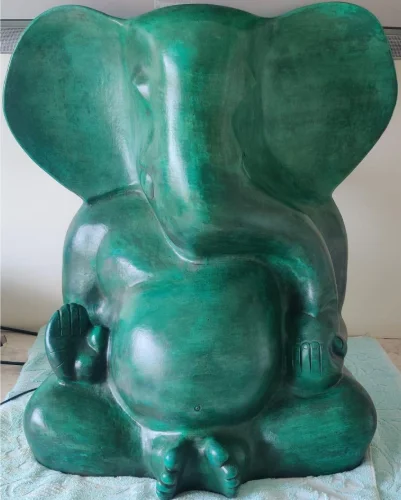
| Sculptures | Client gifting and milestones | Premium | Moderate to high |
Prices can vary considerably depending on quantity, materials, artist, customization, packaging and delivery requirements, so companies should request a detailed quote before finalising an order.
How Much Should Businesses Spend on Corporate Gifting?
There is no single correct corporate gifting budget.
The right amount depends on the recipient, occasion, relationship and number of gifts required.
For large employee gifting programmes, businesses often need to prioritise consistency and scalability. A smaller per-person budget may therefore be appropriate.
Client gifting can justify a higher budget, particularly when the relationship is strategically important or the gift marks a significant milestone.
Instead of applying one budget across every recipient, companies can create several gifting tiers.
For example, general employee gifts might use one price range, managers or long-serving employees another, and important clients or senior business partners a premium category.
This approach makes it easier to allocate the overall corporate gifting budget according to the importance and purpose of each relationship.
Corporate Gifting Under ₹500
A smaller budget can still produce a thoughtful corporate gift when expectations are realistic.
Options under ₹500 may include stationery, compact desk accessories, small décor products, festive items and selected art prints or reproductions where available.
Businesses should avoid describing mass-produced prints as original paintings merely to make a product sound more premium. Original artwork generally belongs in a different price category because it is individually created by an artist.
At this budget level, quality and presentation matter more than trying to fit too many inexpensive items into one box.
Corporate Gifting Between ₹500 and ₹2,000
This range offers considerably more flexibility for employee appreciation, festive gifts and selected client gifting.
Companies can consider premium stationery, better-quality hampers, handcrafted products, framed art prints, desk décor, lifestyle products and carefully curated combinations.
For larger teams, this range can provide a balance between presentation and cost while still allowing some customization.
Premium Corporate Gifting

Premium corporate gifting is generally reserved for key clients, business partners, senior executives, important achievements and significant milestones.
This is where original artwork, sculptures, limited-edition prints and carefully sourced handcrafted gifts can become particularly relevant. Browsing The Brush Strokes Co.’s art collections online is a useful starting point when scoping this tier.
Unlike a consumable hamper, a piece of art may remain displayed in an office or home for years, giving it a fundamentally different role as a corporate gift.
How to Choose the Right Corporate Gifting Supplier
Choosing the right product is only part of the process. The supplier must also be able to deliver the required quantity, quality and timeline.
Businesses should first establish the required number of gifts, budget per recipient, delivery location, event date and level of customization.
They should then compare suppliers based on the complete cost rather than the product price alone.
A low unit price can become considerably more expensive when packaging, printing, shipping and personalization are added.
Before placing a large corporate gifting order, requesting a physical sample is also valuable. Product images may not accurately communicate material quality, finishing, colours or packaging.
Businesses should also confirm what happens if an item arrives damaged or a delivery is delayed.
For customised orders, ask to approve the final artwork, engraving, packaging or message card before full production begins.
Important Questions to Ask Before Placing a Corporate Gifting Order
Before selecting a supplier, businesses should understand the entire fulfilment process.
Ask about minimum order quantities, sample availability, customization charges, packaging, delivery timelines, GST invoicing, replacement policies and whether shipping can be managed to multiple locations.
For artwork and handcrafted gifts, ask who created the piece, whether the work is original or a reproduction and whether a certificate of authenticity or provenance is available where applicable.
These questions make it easier to compare suppliers on quality and service rather than simply choosing the lowest quotation.
Corporate Gifting for Small Teams vs Large Organisations
Corporate gifting becomes more operationally complex as the number of recipients increases.
A company ordering twenty client gifts may be able to choose individually selected pieces. A company gifting one thousand employees needs consistency, repeatability and efficient logistics.
Small corporate gifting orders allow greater personalization.
Large orders usually require standardized packaging, predefined product options and stricter production timelines.
Neither approach is inherently better. The correct strategy depends on scale.
Personalization in Corporate Gifting
Personalization can make a corporate gift feel more thoughtful, but that does not necessarily mean placing a large company logo on everything.
For some gifts, subtle branding is more appropriate.
A personalized note, employee name, custom packaging, selected artwork theme or discreet inscription may create a more refined experience than prominent promotional branding.
This is particularly true for client gifts and premium corporate gifting, where the recipient should ideally feel that the gift was selected for them rather than simply taken from a promotional inventory.
Sustainable Corporate Gifting
Sustainability is increasingly considered when companies evaluate gifting options.
Businesses interested in sustainable corporate gifting should look beyond vague terms such as “eco-friendly” and ask how products are made, packaged and transported. Apartment Therapy’s coverage of eco-friendly gifts is a useful reference point for the kind of questions worth asking.
Reusable items, durable products, responsibly sourced materials and reduced packaging can all contribute to a more considered gifting programme.
However, companies should verify specific sustainability claims rather than relying solely on marketing language.
The longevity of a product also matters. A carefully chosen object that remains in use or on display for years creates a different consumption pattern from a single-use promotional product.
Why Art Works Well for Corporate Gifting

Art occupies a unique position within corporate gifting because it can function both as a gift and as part of someone’s environment.
A painting displayed in an office, an art print placed in a workspace or a sculpture used as décor continues to be seen after the gifting occasion has passed.
Art can also provide greater individuality.
Instead of sending every client the same branded item, businesses can select pieces based on themes such as growth, creativity, nature, heritage, success or celebration.
For companies looking for premium gifts, original paintings and sculptures can also communicate a level of thoughtfulness that standard promotional merchandise may not provide.
At The Brush Strokes Co., businesses can explore corporate art gifts including paintings, art prints, sculptures and other options suitable for employee, client and festive gifting.
Art-Based Corporate Gifting for Employees
Art does not need to be restricted to high-budget client gifting.
Depending on the format and budget, companies can use art prints, compact framed works, desk pieces and small décor as employee gifts.
For important employee milestones such as long-service anniversaries, awards or retirements, a more significant artwork can also become a meaningful recognition gift.
The key is matching the format to the occasion and budget.
Art-Based Corporate Gifting for Clients

Client gifts often benefit from being less generic.
Artwork provides an opportunity to select something that reflects the recipient, company values or the relationship itself.
A business associated with innovation may choose contemporary abstract art. A heritage-focused organization may prefer traditional Indian artwork. A client celebrating the opening of a new office may appreciate a piece specifically selected for that space.
The gift therefore becomes part of a story rather than simply another product.
How Early Should You Plan Corporate Gifting?
Standard gifting orders should ideally allow enough time for product confirmation, sampling, personalization, packaging and shipping.
Customized and handcrafted orders generally require more planning because additional production steps may be involved.
Festive corporate gifting should be planned particularly early because supplier and courier capacity becomes tighter as the event approaches.
For premium or art-based orders, businesses should discuss availability and quantities before committing to an event date.
Planning early also gives teams enough time to correct samples or make design changes without compromising the final delivery.
Common Corporate Gifting Mistakes
One of the most common mistakes is choosing a gift entirely on price.
Businesses can also create problems by ordering too late, skipping product samples, ignoring delivery charges or selecting a gift that has little relevance to the recipient.
Another mistake is excessive branding.
A corporate gift should remind recipients of the company without necessarily turning the item into an advertisement.
Companies should also avoid assuming that one gift is appropriate for every recipient. Employees, clients and business partners may require different budgets and different levels of personalization.
The most effective corporate gifting programmes are usually simple, clearly segmented and planned around the recipient rather than the catalogue.
Corporate Gifting in India: A More Thoughtful Approach
Corporate gifting works best when businesses move away from asking, “What can we buy?” and instead ask, “What would be appropriate for this person and this occasion?”
Once the recipient, purpose and budget are clear, the product becomes easier to choose.
For some occasions, a practical employee kit may be ideal. For others, a festive hamper may be the simplest solution. Important clients and significant milestones may justify something more permanent, such as original art, a sculpture or a carefully selected handcrafted piece.
There is no single corporate gift that works for every situation.
The aim is to select something that reflects appreciation while remaining appropriate to the relationship.
For businesses looking beyond conventional merchandise and hampers, The Brush Strokes Co. offers corporate art gifting options designed for client gifting, employee recognition, festive occasions and business milestones — you can get in touch with the art team to discuss bulk or custom requirements.
Frequently Asked Questions About Corporate Gifting
What is corporate gifting?
Corporate gifting is the practice of businesses giving gifts to employees, clients, customers, partners or other professional stakeholders to show appreciation, recognise milestones or celebrate specific occasions.
What are good corporate gifting ideas for employees?
Suitable employee gifts can include useful desk products, curated hampers, welcome kits, lifestyle products, art prints, décor and personalized keepsakes. The best option depends on the occasion, team size and budget.
What are good corporate gifts for clients?
Client gifts generally benefit from being distinctive and well presented. Premium hampers, original artwork, sculptures, limited prints, handcrafted décor and personalized gifts can all work depending on the relationship and budget.
How much should a company spend on corporate gifting?
There is no fixed amount. Employee gifting generally requires a scalable budget, while important clients and senior recipients may justify a higher amount. Creating separate gifting tiers is often more practical than using the same budget for everyone.
Can corporate gifts be customized?
Yes. Depending on the supplier, customization can include names, logos, packaging, gift notes, inscriptions, product selection and artwork themes.
How far in advance should corporate gifts be ordered?
The timeline depends on the product and quantity. Standard items can often be arranged faster, while customized, handcrafted and festive orders require additional planning. Businesses should allow extra time during peak festive periods.
What should I ask a corporate gifting supplier before ordering?
Confirm minimum order quantity, samples, final unit cost, customization charges, packaging, delivery time, shipping costs, GST invoicing and replacement policies before placing a bulk order.
Are paintings suitable for corporate gifting?
Yes. Paintings can work particularly well for important clients, company milestones, employee recognition and premium festive gifting because they can remain on display long after the occasion.
Is corporate gifting useful for small businesses?
Yes. Corporate gifting does not have to involve hundreds of recipients. A small business can use carefully selected gifts to thank important clients, employees and partners without running a large gifting programme.
Where can businesses find art for corporate gifting?
The Brush Strokes Co. offers paintings, art-based gifts and other pieces that businesses can explore for corporate gifting, client appreciation, employee recognition and festive occasions.