
A thoughtfully chosen painting can completely change the atmosphere of a room, adding character, energy, and a sense of purpose to an otherwise ordinary wall. Among the many subjects available in wall art, horses paintings have remained a timeless favorite for homes, offices, hotels, and commercial interiors. Their graceful movement, powerful symbolism, and striking visual presence make them a versatile choice for both traditional and contemporary spaces. Whether you are selecting artwork for a living room, workspace, or decorative feature wall, understanding the meaning, style, and placement of a horses painting can help you choose a piece that enhances your space and remains visually appealing for years to come.
A Painting That Changes Every Room
Picture two identical rooms, same furniture, same paint, same lighting. Add one striking horses painting to a single wall in one of them and the difference is immediate. Nothing structural has changed, yet the room suddenly feels more alive.
That reaction is not accidental. Horses have represented courage, freedom, and forward motion for so long that most people respond to the symbolism instinctively, even without consciously thinking about it. A horse frozen mid-gallop on canvas still manages to suggest motion, energy, and intent, which is a rare trick for a still image to pull off. This is the quiet power that makes horse art such a dependable choice for anyone trying to give a space real character.
The Ancient Roots Of Horse Art
Horses were among the very first subjects early humans chose to paint, appearing on cave walls thousands of years before the animal was even domesticated. According to the history collected on Wikipedia’s overview of horses in art, the horse has remained one of the most consistently depicted animals across nearly every major art tradition, from ancient Egyptian friezes to Renaissance anatomical studies to modern Chinese ink painting.
That long history matters because it explains why a horses painting rarely feels like a passing trend. Every generation of artists has found something new to say with the same subject, whether through realistic detail, bold abstraction, or minimalist line work. The animal stays the same while the interpretation keeps evolving, which is exactly why the theme has never gone out of style.
Strength That Radiates From The Canvas
Strength is usually the first thing people notice in a horse painting, and artists lean into it deliberately. Muscular forms, a flowing mane caught mid-motion, and a powerful stance all work together to make the animal feel present rather than posed.
This is why a horses painting so often ends up in offices, study rooms, and boardrooms, spaces where a reminder of resilience and forward momentum genuinely fits the purpose of the room. The painting does not need bright colors or a large canvas to make its point. A well-composed stride is usually enough to communicate confidence on its own.
Freedom Painted Across Open Landscapes
There is a reason running horses show up so often in art set against beaches, open plains, or wide skies. Speed combined with open space creates an unmistakable feeling of independence, one that very few other subjects manage to capture so directly.
A painting of horses moving freely across a landscape tends to suggest possibility rather than restriction, and that emotional register travels well across cultures and interiors. Whether the piece hangs in a family home or a creative studio, it tends to carry the same quiet invitation to think beyond whatever boundaries the room might otherwise imply.
Why Seven Horses Painting Symbolize Success
Among every horse composition available, the seven horses painting shows up in more homes and offices than almost any other. Seven horses running together in coordinated motion is widely read as a symbol of progress, unity, and shared success, and the balanced, rhythmic composition gives the piece a natural sense of optimism.
Many buyers also connect the number seven to Vastu principles, where the artwork is associated with growth and forward movement, a topic covered in more depth in this dedicated guide on horse painting placement and Vastu tips. Even for buyers who are not particularly focused on Vastu, the composition holds up purely on visual merit, since synchronized movement across a canvas tends to feel inherently satisfying to look at.
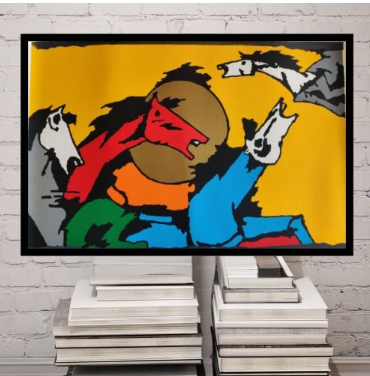
A seven horses composition from the collection, shown here as artwork available at The Brush Strokes Co.
The Quiet Power Of One Stallion
A single stallion sends an entirely different message than a running herd. Instead of speed and momentum, it communicates composed authority. Artists typically slow everything down here, emphasizing a dignified stance and expressive eyes rather than motion, which gives the painting a commanding presence without ever feeling aggressive.
This restrained strength is why a solitary stallion painting tends to end up in libraries, entrance halls, and executive cabins, spaces where quiet confidence matters more than raw energy. M.F. Husain built much of his artistic identity around exactly this kind of interpretation, and the range of Husain inspired horse paintings still available today shows just how much personality a single standing horse can hold.
White Horses And Their Peaceful Charm
White horses occupy a completely different emotional space than dark, muscular compositions. Across many traditions, they are associated with purity, hope, and inner calm rather than power or speed, and artists tend to paint them against soft skies or still water to reinforce that mood.
A white horses painting works particularly well in bedrooms, reading corners, and other spaces meant for rest rather than energy. The contrast between light and shadow in these compositions often creates a majestic quality without ever feeling overwhelming, which is part of why they remain such a popular choice for buyers who want elegance without intensity.
Energy That Fills An Empty Space
The influence of a horses painting rarely stays confined to the canvas itself. Once it is hanging on a wall, it starts shaping how the entire room feels, sometimes more than the furniture or lighting around it. A composition full of movement can make a quiet corner feel active, while a single calm horse can settle a room that otherwise feels too busy.
This happens because horse paintings combine visual beauty with genuine symbolism, which gives them an unusual ability to become the emotional anchor of a space rather than just another decorative object. A contemporary apartment and a traditional heritage home can both benefit from the same underlying idea, even if the specific painting chosen looks completely different. What stays consistent is the sense of depth and personality the artwork adds to a space that might otherwise feel flat.
Living Rooms Offices And Luxury Spaces
A horse painting earns its place differently depending on the room. In a living room, a large canvas above the sofa or on a feature wall becomes an instant focal point, and bold running-horse compositions tend to energize the space while a single calm horse offers something quieter and more refined.
In offices, the same idea shifts. Executive cabins usually suit a composed stallion, open workspaces often benefit from the energy of a running herd, and conference rooms frequently land somewhere in between. Luxury interiors, meanwhile, tend to favor statement pieces with textured finishes or monochrome palettes that add sophistication without unnecessary complexity, which explains why horse art continues to show up in high-end hotels and premium residences just as often as in family homes.
Picking Colors That Suit Your Mood
Color changes how a painting is read almost as much as the subject itself. Warm browns, golds, and earthy tones create a welcoming, established atmosphere that suits traditional interiors, while black and white compositions read as clean and contemporary, fitting comfortably into modern apartments and minimalist offices.
Vibrant backdrops such as blue skies or dramatic sunsets bring extra energy into a room, which is worth considering for spaces meant to feel active rather than restful. The broader logic here lines up with what interior designers already know about color psychology in interior design, where tone and saturation shape mood just as directly as furniture or lighting choices do.
Getting Size And Style Right
Proportion is where a lot of otherwise good choices go wrong. A large statement canvas needs a wall spacious enough to let it breathe, while a small painting on an oversized wall tends to disappear rather than stand out. As a rough guide, artwork should occupy roughly two thirds to three quarters of the available wall space above a piece of furniture for the proportions to feel balanced.
Style should follow the room rather than a passing trend. Realistic, detailed paintings suit classic and traditional interiors, abstract interpretations pair naturally with clean, modern spaces, and textured canvases add depth to luxury settings that already lean toward simplicity elsewhere. Browsing a full collection of curated artwork side by side is often the easiest way to see which style genuinely fits a specific wall rather than guessing from a single image online.
Craftsmanship You Can Actually See
The difference between a forgettable painting and a lasting one usually comes down to details that are easy to overlook at first glance. Properly prepared canvases, rich pigments, and careful brushwork all add a depth that becomes more noticeable the longer the piece hangs on a wall, rewarding a closer look years after it was first purchased.
This is where it pays to be a little more particular than usual. A painting meant to anchor a room for years deserves the same attention to quality that any other long-term purchase would get, and skipping on framing or finishing undercuts the whole investment. Careful presentation, from canvas preparation to the final frame, is what separates artwork that stays impressive from artwork that starts looking tired within a year or two.
Texture is another detail worth paying attention to in person rather than through a screen. Visible brushwork catches light differently depending on the time of day, which is part of why a handmade horses painting often looks slightly different at sunrise, midday, and evening. That subtle shift keeps the piece feeling alive rather than static, something a flat, mass-produced print rarely manages to replicate no matter how sharp the image looks online.
Original Art Versus Quality Prints
Original paintings carry a uniqueness that no reproduction can fully match, since every brushstroke reflects a decision the artist made in that exact moment. No two originals are ever completely identical, which is part of why collectors describe them as feeling genuinely alive rather than simply decorative.
Reproduced canvas prints have their own place, offering a more accessible way to enjoy strong design at a range of price points without sacrificing visual impact. Buyers who want the texture and individuality of handmade work can explore the original paintings collection, while those looking for a more budget-conscious option often find that limited-edition serigraph prints strike a fair balance between quality and affordability.
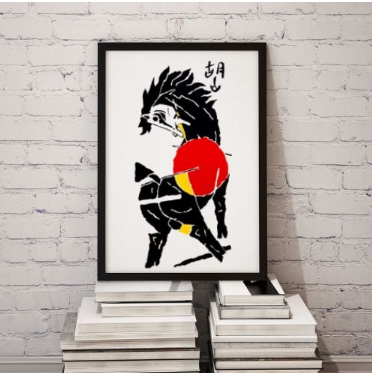
A Chinese-influenced horse composition, part of the range available for browsing at The Brush Strokes Co.
Trusting Your First Real Reaction
Buying wall art can feel unnecessarily complicated when every option is compared side by side for too long. In practice, the paintings people end up loving the most are usually the ones that created an immediate reaction the first time they saw them, whether that was excitement, calm, or simple curiosity.
Practical details such as size and color absolutely matter, but they work best when they support that initial connection rather than replace it entirely. A painting chosen purely because it matched the cushions rarely holds the same long-term appeal as one chosen because it genuinely resonated with the buyer from the very first glance.
Artwork That Outlasts Every Trend
Interior trends shift every few years, but a well-chosen horses painting tends to sit outside that cycle entirely. The qualities it represents, strength, freedom, grace, and quiet determination, do not go out of fashion the way a color palette or furniture style eventually does.
This is really what separates meaningful art from simple decoration. A great painting becomes part of everyday life rather than a passing choice, quietly present during family celebrations, work milestones, and ordinary weekday mornings alike. Over time, it stops feeling like an object in the room and starts feeling like a permanent part of the space itself, which is the clearest sign that the original choice was the right one.
Where To Find Your Horse
Every collector responds to something slightly different. Some are drawn to the raw energy of a galloping herd, others to the composed dignity of a lone stallion, and many specifically to the layered symbolism of a seven horses painting. The Brush Strokes Co. has built its collections around that variety, working with artisans and designers to curate pieces that suit everything from a compact study to a sprawling living room.
More about the studio’s approach can be found on the about us page, and browsing the wider artwork collection is usually the fastest way to find a piece that matches both the room and the story you want it to tell.
It also helps to think about the buying process itself as part of the experience. A rushed purchase, picked in a hurry to fill an empty wall before guests arrive, rarely holds up the same way a considered choice does. Spend a little time comparing compositions, checking how a piece looks in different lighting if possible, and reading about the artist or tradition behind the style. A horses painting bought with even a small amount of research tends to feel more meaningful the longer it hangs, simply because the buyer understands why they chose it in the first place.
The History Behind Horse Symbolism
Much of what makes a horses painting resonate goes back further than most buyers realize. Historians tracing the symbolism of horses across cultures point to associations with power, loyalty, and freedom that stretch across nearly every major civilization, from ancient warrior cultures to royal courts that used horse imagery to project strength and status.
That inherited symbolism is part of why a horses painting rarely needs much explanation to feel meaningful. A viewer does not need an art history background to sense the confidence in a running herd or the calm in a single grazing horse. The emotional shorthand has been built up over thousands of years of shared visual culture, and a good painting simply taps into it.
Common Questions About Horses Painting
Is A Horses Painting Suitable Everywhere?
Yes. Horse paintings come in realistic, abstract, traditional, and minimalist styles, which makes it possible to find a suitable piece for almost any interior, from heritage homes to contemporary offices.
What Does A Running Horse Symbolize?
Running horses are widely associated with progress, determination, freedom, and continuous forward movement, which is why they are such a popular choice for offices and creative spaces.
Why Do People Choose Seven Horses?
The seven horses painting is valued for its balanced composition and its connection to growth, harmony, and shared success, a symbolism that resonates with both Vastu-conscious buyers and those simply drawn to the visual rhythm.
Which Room Suits A Horse Painting?
Living rooms, offices, reception areas, hallways, and study spaces all work well, since the painting naturally becomes a focal point wherever there is enough wall space to let it stand out.
How Do I Pick The Size?
Measure the wall first. As a general rule, artwork should cover roughly two thirds to three quarters of the available space above the furniture it hangs near for the proportions to feel balanced.
Are Original Paintings Worth The Cost?
Original paintings offer texture, individuality, and craftsmanship that prints cannot fully replicate, making them a strong choice for a centerpiece. Quality prints remain a practical option for buyers who want strong visual impact at a more accessible price.
Do These Paintings Need Vastu Alignment?
No. Many buyers choose horse paintings purely for their symbolism, movement, and visual appeal, with or without factoring in Vastu principles, and both approaches are equally valid.
A Room Worth Coming Home To?
A blank wall says nothing. A thoughtfully chosen horses painting says quite a lot, quietly working in the background of everyday life long after the excitement of a fresh purchase has faded. Whether the pull is toward the raw energy of running horses, the calm of a white horse standing near still water, or the layered meaning behind seven horses moving together, the right piece does more than fill space. It gives a room a story worth living with for years to come.