
Why Abstract Art Feels So Personal
Abstract art is one of the few artistic styles that asks nothing of its audience except an open mind. It does not expect you to identify a landscape or understand a hidden story. Instead, it invites an experience that belongs entirely to you, and that openness is what has made abstract wall art timeless in homes, offices, hotels, and galleries alike.
According to Tate’s definition of abstract art, the style uses shapes, colors, and gestural marks rather than an attempt to depict visual reality. That single distinction explains why the same canvas can read as calm to one viewer and energetic to another. Nothing about the painting changes. What changes is the person standing in front of it.
Every Mind Reads Color Differently
The human brain is a pattern-hunting machine. The moment it sees an image, it tries to recognize a familiar object, a face, or a place. Abstract art quietly interrupts that habit by offering something that resists a single, tidy explanation.
Feelings Arrive Before Familiar Shapes
Instead of showing a recognizable scene, abstract paintings speak through color, texture, movement, and composition. A deep blue can settle a room, while bold red strokes suggest energy or urgency. Soft curves create comfort, sharp lines introduce tension, and the emotional response almost always arrives before the mind identifies anything at all.
Why Every Viewing Feels Unique
No two people experience the same abstract painting identically, because no two people carry the same memories into the room. A canvas that reminds one person of the ocean might remind another of a childhood afternoon. Neither reading is more correct, and that openness is precisely why people return to the same piece of modern abstract art for years without losing interest.
When Art Stopped Copying Reality
For centuries, a painting’s worth was measured by how closely it resembled real life. Artists spent years mastering anatomy, perspective, and light to recreate the world with precision. Then a different question began to surface. What if art could do more than copy reality? What if it could express what a photograph never could?
That question, explored in depth in Tate’s brief history of abstract art, changed the direction of art permanently. The arrival of photography accelerated the shift. Cameras could already capture faces and landscapes with total accuracy, so painters no longer needed to compete with a machine. Instead, they turned toward emotion, memory, and imagination, and abstract art emerged from that creative freedom.
A New Kind Of Creative Freedom
As artists embraced this direction, painting became more personal than it had ever been. Every brushstroke reflected a feeling or a state of mind rather than a physical object. The relationship between artist and viewer changed too. Instead of dictating what people should see, abstract paintings invited them to form their own reading, and that shift reshaped how the world understood creativity itself.
The Pioneers Who Rewrote The Rules
Abstract art did not appear because a single artist decided to paint differently one morning. It evolved through a handful of visionaries who believed emotion, shape, and color could communicate as powerfully as any recognizable image. Their work was often misunderstood at first, dismissed by critics and audiences alike, yet their willingness to experiment reshaped the future of modern art and continues to influence interior design today.
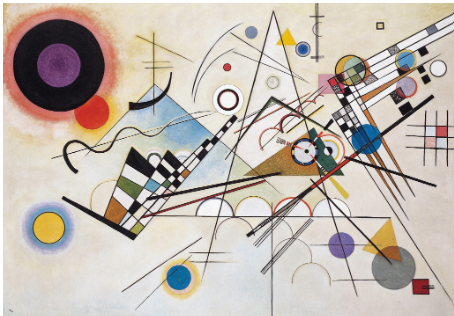
Wassily Kandinsky, Composition VIII, 1923. Image via Wikimedia Commons, public domain.
Kandinsky Painted Colors Like Music
Russian painter Wassily Kandinsky is widely regarded as the pioneer of abstract art. He believed colors and shapes could evoke emotion the same way music does, and the Guggenheim’s teaching notes on Composition 8 describe how he arranged forms into visual compositions built to be felt rather than identified. His philosophy challenged the assumption that art needed a recognizable subject to hold meaning.
Malevich And The Radical Square
Kazimir Malevich pushed abstraction even further, arguing that art could exist without depicting any object from the physical world. His painting Black Square became one of the most discussed works in modern art history. As Tate explains in its analysis of the piece, it looked remarkably simple yet represented a bold declaration that ideas could matter more than realistic images, and it went on to inspire generations of minimalist and conceptual artists.
Mondrian Searched For Quiet Balance
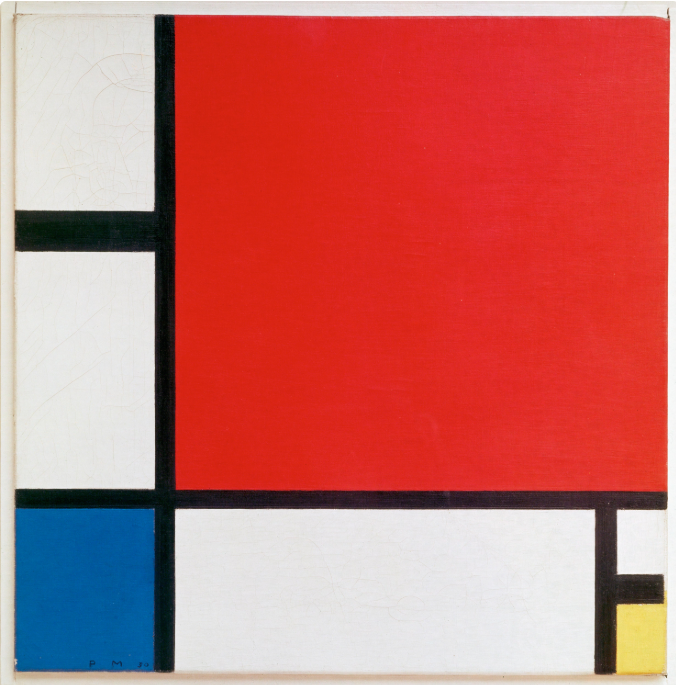
Piet Mondrian, Composition with Red, Blue, and Yellow, 1930. Image via Wikimedia Commons, public domain.
Dutch artist Piet Mondrian approached abstraction with precision. Using straight black lines and blocks of primary color, he searched for harmony through simplicity, proving that even the most basic visual elements could create rhythm and elegance. His influence still shows up in architecture, furniture, and branding decades later.
Pollock Turned Motion Into Art
Jackson Pollock challenged nearly every convention of traditional painting by placing large canvases on the floor and applying paint through dripping and splashing rather than a brush and easel. As the Museum of Modern Art’s collection notes on Pollock point out, his technique captured motion itself, proving that powerful expression does not always require careful precision.
Together, these four artists proved that abstract art was never about abandoning reality. It was about expanding what a painting could say.
Abstract Art Inside Modern Interiors
The appeal of abstract art is no longer confined to museums. It has become a working part of modern interior design, appearing in homes, offices, hotels, and cafés across the world. Its strength lies in versatility. Unlike a realistic painting that often tells one fixed story, an abstract canvas adapts to whatever room it hangs in. The same piece can feel calming in a bedroom, energizing in a workspace, or refined in a living room without a single brushstroke changing.
Matching Artwork To Room Function
Every room serves a different purpose, and the art inside it should support that purpose. A living room often benefits from a bold, expressive composition that becomes a natural focal point and encourages conversation. Bedrooms tend to feel better with softer palettes and gentler movement that support rest. Home offices and creative studios often do well with structured forms or energetic color that keep focus sharp without becoming distracting. Reading more on color theory for art and interiors can help you match a palette to the mood you are trying to create.
How Abstract Art Shapes A Mood
Interior designers rarely treat artwork as an afterthought, because it often shapes the mood of an entire room before the furniture does. Earthy tones create warmth, cool blues and soft neutrals bring calm, and vibrant colors introduce confidence. Texture plays its own role too, adding depth that paint color and furniture alone cannot achieve.
Styles Within The Abstract World
One of the greatest strengths of abstract art is its range. There is no single approach that defines it, and every artist brings a different lens to the canvas.
Geometric Abstract Art For Order
Geometry has anchored abstract art since its earliest days. Circles, squares, and carefully arranged lines create balance and structure, and this style tends to work especially well in modern homes and offices where clean design and uncluttered interiors take center stage.
Fluid Abstract Art For Energy
Not every abstract painting follows structure. Many artists prefer movement over precision, letting colors blend and interact freely across the canvas. Layered brushstrokes and sweeping textures create a sense of motion that shifts depending on the light and the angle you are viewing from, which is why these pieces suit living rooms and lounges so naturally.
Minimalist Abstract Art For Calm
Some of the most memorable abstract paintings achieve their impact through restraint. Limited colors, subtle texture, and generous empty space let every brushstroke stand out, encouraging quiet observation rather than overwhelming the eye. This understated elegance suits contemporary interiors built around openness and balance.
Spiritual Themes In Abstract Form
Abstract art has also found a meaningful place in spiritual expression. Rather than portraying divine figures with intricate realism, many contemporary artists communicate their essence through color, texture, and symbolic form.
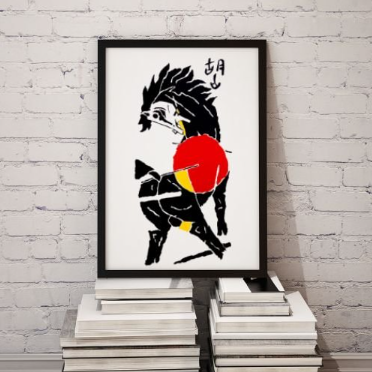
A contemporary abstract interpretation of Ganesha, part of The Brushstrokes Company’s curated collection.
An abstract Ganesha piece can express wisdom through flowing form and bold color, while a contemporary Durga artwork can convey strength through texture, and abstract Krishna or Buddha paintings for a living room often lean on calming blues and graceful lines. This modern interpretation lets spiritual artwork sit naturally within a contemporary interior while preserving its cultural and emotional weight, making it a thoughtful choice for homes that value both tradition and modern design. You can browse a full range of Lord Ganesha paintings reimagined in this spirit.
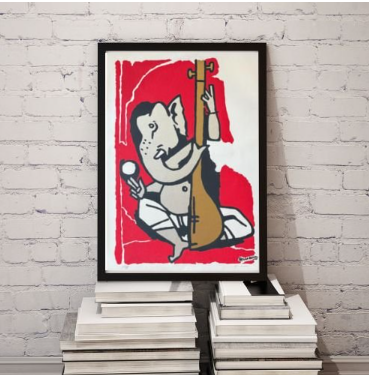
Abstract prints styled within a modern reading corner, showing how easily the medium adapts to everyday spaces.
Choosing Abstract Art With Confidence
Finding the right abstract painting is often easier than people expect, but the most important factor is frequently overlooked. Many buyers spend their time comparing colors, dimensions, and styles while missing the one detail that actually matters. The best artwork creates an emotional connection. A painting can complement the furniture perfectly, but if it fails to stir a feeling, it rarely becomes memorable. A piece that resonates emotionally can transform a room even when it was never chosen to match anything at all.
Start With The Feeling You Want
Before choosing a painting, think about how you want the space to feel. A bedroom may call for calm compositions and soothing color. A living room often welcomes greater energy and visual impact. A workspace may need balance and creative stimulation. Focusing on emotion first turns the question from what will match the room into what will actually improve the experience of being in it.
Getting Proportion And Scale Right
Size matters, but not in the way most people assume. Large walls do not always need oversized paintings, and small rooms are not limited to compact artwork. A thoughtfully chosen medium sized canvas can carry more visual weight than a larger piece that feels disconnected from its surroundings. The goal is balance, where the artwork commands attention without overwhelming the room around it.
Why Craftsmanship Truly Changes Everything
Quality is difficult to judge from a photograph alone. Original paintings and carefully crafted canvas work carry a depth that reproductions rarely replicate. Layers of paint create texture, brushstrokes catch light differently across the day, and small details only reveal themselves in person. That craftsmanship gives a painting presence, reflecting an artist’s process in ways a printed alternative simply cannot. If you are comparing formats, this guide to canvas art and how to choose it breaks down what to look for before you buy.
Timeless Art Outlasts Passing Trends
Interior design trends shift constantly. One year favors bold color, the next embraces neutral palettes. Artwork chosen purely because it follows a trend can feel dated the moment that trend fades. Abstract art tends to sidestep this problem because its value is rooted in emotion rather than fashion, which is what makes a thoughtfully chosen piece a lasting decision rather than a temporary one.
Where Great Art Collections Begin
As demand for abstract art keeps growing, buyers now have more choice than ever, and that variety makes quality and authenticity more important, not less. Not every artwork is created with the same level of care. Some pieces exist simply to fill a wall, while others are made to build a lasting connection with the people who live alongside them, and that difference becomes obvious over time.
The most meaningful abstract paintings are usually the ones that evoke a personal response, whether that is a memory, an ambition, or a mood someone wants to feel more often. Collections that prioritize originality and craftsmanship over mass production tend to create these deeper connections, which is why many homeowners now look for curated sources rather than generic prints. Whether a space is contemporary, traditional, minimalist, or eclectic, The Brushstrokes Company’s artwork collection brings together pieces designed to complement a wide range of interiors, from bold statement paintings to calming compositions and spiritually rooted works. If you are just starting to build a collection, this guide on where to buy original paintings online in India is a useful place to begin.
A painting worth remembering is rarely the one that simply matches a room. It is the piece guests ask about, the canvas that quietly becomes part of family photographs and everyday life. Over time, it stops feeling like a decorative object and becomes part of the story of a home, and that is the real difference between purchasing art and living with it.
Frequently Asked Questions About Abstract Art
Is Abstract Art Hard To Understand?
Abstract art is not meant to be understood in one fixed way. Its purpose is to encourage personal interpretation, so every viewer experiences the same painting differently, and there is no single right answer to look for.
Does Abstract Art Suit Traditional Homes?
Yes. Abstract paintings complement both contemporary and traditional interiors. The key is choosing a piece whose color, mood, and composition suit the overall atmosphere of the space rather than trying to match every other design element exactly.
Why Do People See Different Things?
Every person brings different memories and emotions into a room, and those individual experiences naturally shape how an abstract composition gets read. That is why the same canvas can mean completely different things to two different viewers.
Is Handmade Artwork Better Than Prints?
Handmade artwork tends to offer richer texture, visible brushwork, and greater originality, qualities that create a stronger visual and emotional presence than most printed reproductions can match.
How To Choose The Right Painting?
Start by considering how you want the room to feel. The emotional atmosphere you are trying to create is usually a more reliable guide than simply matching colors or furniture.
Does Abstract Art Work In Offices?
Yes, and often very well. Many offices choose abstract artwork because it encourages creativity, adds visual interest, and creates a professional yet inspiring environment for the people working in it.
Can Spiritual Art Leave Prayer Spaces?
Yes. Contemporary spiritual artwork now appears in living rooms, entrances, and meditation corners just as often as prayer spaces, because it blends symbolic meaning with modern design sensibility.
What Makes A Painting Feel Timeless?
A timeless painting creates an emotional connection that stays meaningful even as trends and interior styles shift around it. That appeal comes from expression and craftsmanship rather than passing fashion.
Why Is Abstract Art So Popular?
Its versatility, emotional depth, and ability to suit almost any interior have made abstract art one of the most widely appreciated styles in modern homes and commercial spaces alike.
What Makes Abstract Art Unique?
Unlike many artistic styles, abstract art does not rely on a single interpretation. It invites viewers to participate in the experience, which is what makes every encounter with it personal and constantly evolving.