
Hyper Realistic portraits have a way of making people pause and look twice. At first glance, they often appear to be photographs, but every detail has been created by hand through hours of careful observation, patience, and artistic skill. As interest in Hyper Realistic art continues to grow, more people are discovering how these lifelike portraits transform ordinary photographs into one-of-a-kind works of art.
A friend might ask you to turn their favorite photograph into a portrait they can proudly display at home. During that conversation, the term Hyper Realistic often comes up. You may have also seen it used online for paintings that look exactly like photographs or even for AI-generated images labeled as ultra realistic. Although they may look similar at first, a handcrafted Hyper Realistic portrait and an AI-generated image are fundamentally different in how they are created and the value they hold.
This guide explains what Hyper Realistic art really means, how skilled artists create these incredibly detailed portraits by hand, and what separates genuine artwork from images produced by software in seconds. By the end, you’ll understand why Hyper Realistic portraits continue to be admired by art collectors, gift buyers, and anyone who appreciates exceptional craftsmanship.
What Does Hyper Realistic Mean
Hyper realistic art is a style of drawing or painting so precise in detail, light, and texture that it can be mistaken for a photograph, typically taking fifteen to over two hundred hours to complete depending on size and medium. It differs sharply from an AI generated ultra realistic image, which software produces in seconds rather than an artist building each layer by hand. The term gets used loosely online now for a lot of things, sharp phone photos, video game graphics, AI generated images, so it helps to pin down what actually separates this level of detail from something merely clean or sharp.
Three qualities separate work like this from an ordinary detailed drawing. Every surface, skin, fabric, hair, metal, gets rendered with its own distinct behavior under light. Reflections, shadows, and color temperature match what a camera lens would actually capture, not what memory or imagination suggests. Most importantly, the piece is built by an artist’s hand, layer by layer, using pencil, charcoal, or paint rather than generated instantly by software.
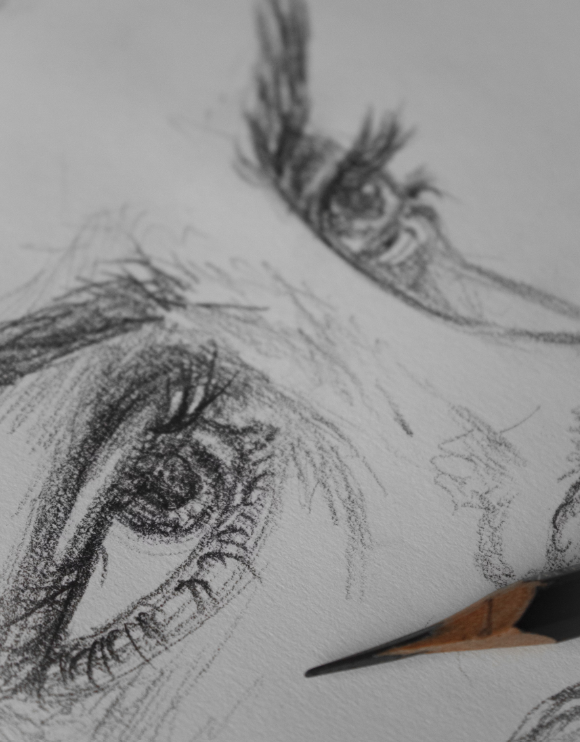 A close up graphite study of the eyes, the feature most artists use to judge whether a drawing like this is working. Photo by Liana Horodetska, Pexels.
Hyper Realistic Versus Photorealistic Art
Photorealism and hyper realistic art are related but not identical, and serious collectors care about the difference. Photorealism took shape in the United States during the late 1960s, when painters including Chuck Close and Richard Estes pushed back against abstract expressionism by copying a photograph as faithfully as possible, using a grid or projector to transfer every detail onto canvas.
Hyperrealism pushes past that goal. Rather than only copying a photo, a hyperrealist artist treats the photo as a starting reference, then adds detail, texture, and emotional weight that were never in the original image at all. Chuck Close worked from a grid system, applying paint with an airbrush and scraping away excess with a razor blade to match each square of his reference photo exactly, according to Britannica’s biography of Chuck Close. A hyperrealist working today typically goes further still, sharpening details a camera blurred and building a version of the subject that feels more present than the photo it came from.
Where Did Hyperrealism Actually Begin
Hyperrealism got its name in 1973, when Belgian art dealer Isy Brachot titled a Brussels gallery exhibition L’hyperrealisme, borrowing directly from the photorealist painters already working in America. The movement grew out of photorealism but split off within a few years. Artists including Duane Hanson and John De Andrea carried the style into sculpture, casting lifelike human figures so convincing that gallery visitors sometimes assumed they were looking at a real person standing still.
India has its own, older thread of realism worth knowing too. Raja Ravi Varma, working between 1848 and 1906, combined European oil painting technique with Hindu mythological subjects long before hyperrealism existed as a named movement, producing portraits so naturalistic that they reshaped how Indian audiences expected art to look. Britannica’s entry on Ravi Varma still credits that body of work as foundational to modern Indian portraiture. That same appetite for lifelike detail runs straight through to the hyper realistic pencil and charcoal portraits artists produce today.
What Materials Create This Detail
Graphite pencil is the most common starting material for a hyper realistic drawing, prized because a single pencil line can produce dozens of distinct tonal values depending on pressure and grade, from a hard 2H for the faintest highlight to a soft 8B for the deepest shadow. Charcoal takes over where graphite runs out of range, laying down richer blacks fast, which is why many artists blend the two within a single piece rather than picking just one.
Colored pencil and soft pastel extend the same approach into skin tone and hair color, building up dozens of thin layers instead of one flat application. Oil paint remains the material of choice for larger, full color portrait work at this level of detail, since its slow drying time lets an artist blend edges until a transition looks exactly as soft, or as sharp, as it does in life. Airbrush technique, the same method Chuck Close relied on, adds an almost printed smoothness that a brush alone struggles to match.
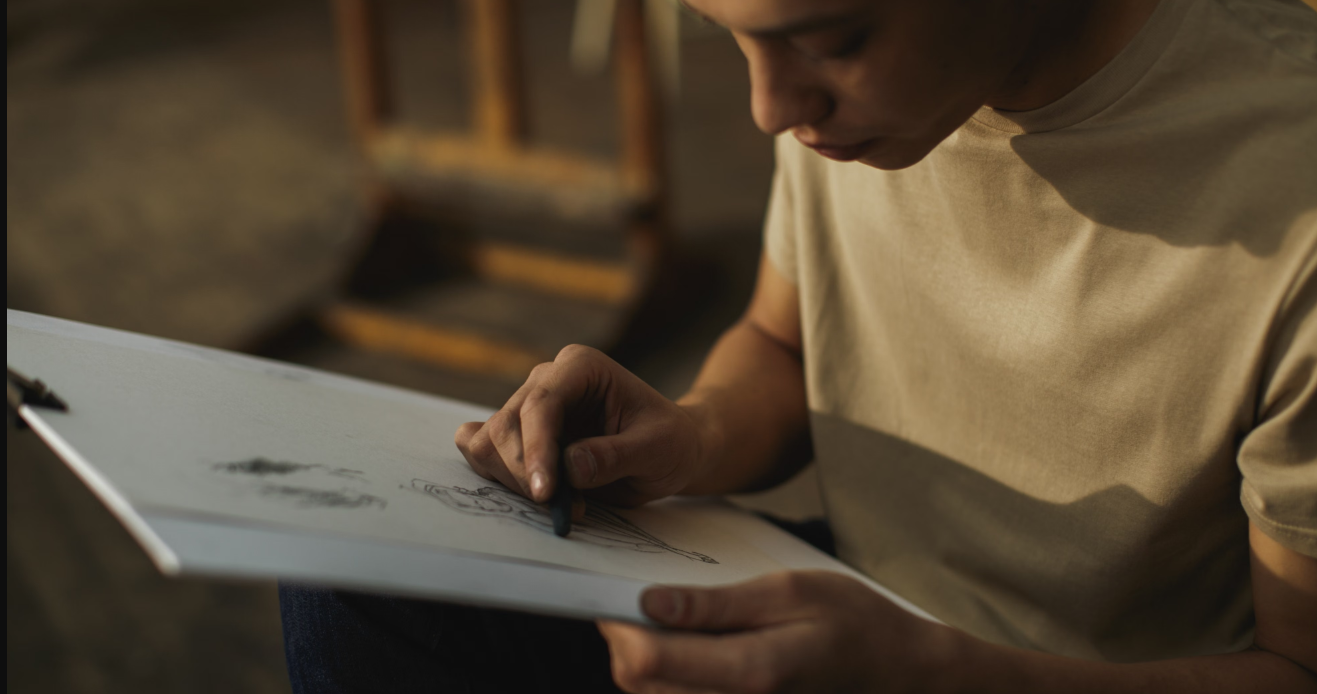 Charcoal builds deep, rich blacks fast, which is why many artists blend it with graphite for this level of detail. Photo by cottonbro studio, Pexels.
Hyper Realistic Sketch Versus Drawing
A hyper realistic sketch usually means a smaller, faster study, often just a face or a single feature like an eye, built to test proportion and value before a larger piece begins. The full sized version is the finished product, worked across many sessions, with every plane of the face carried to a finished level of detail rather than left loose.
Both stages matter for a strong commission. Skipping the sketch stage and jumping straight to a large finished piece is how proportion mistakes get baked in permanently, since a face that reads slightly wrong at postcard size reads badly wrong once it fills an entire frame.
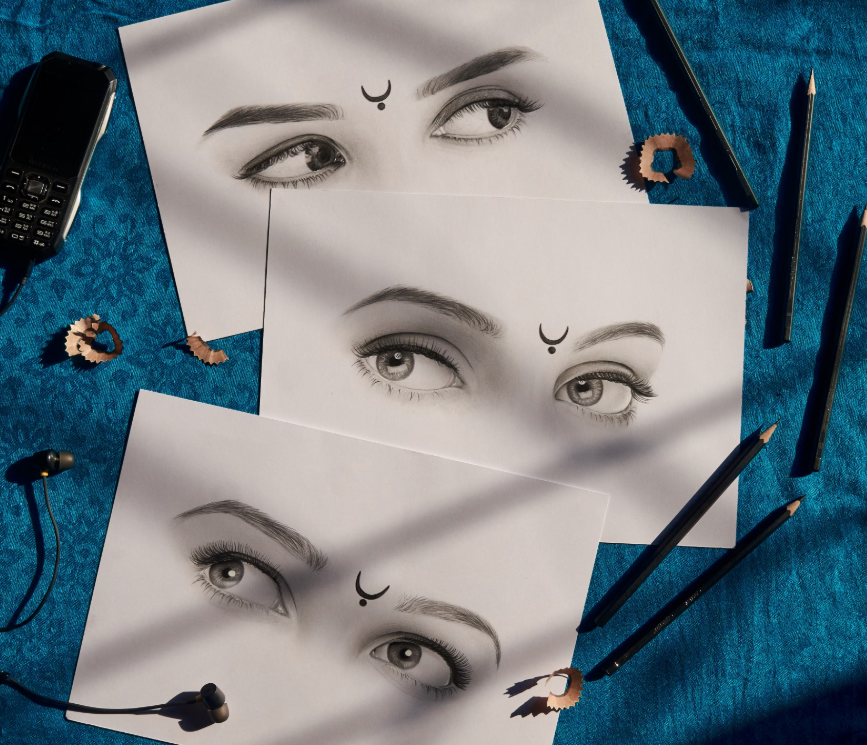 Early eye studies like these help an artist test proportion and value before committing to a full sized piece. Photo by Sutej Arts, Pexels.
How Artists Achieve This Realism
Reference photography does most of the early work, and a skilled hyperrealist artist can usually tell within minutes whether a submitted photo has the sharpness, lighting, and resolution needed to support a large finished piece. From there, most artists work in a grid, dividing both the photo and the drawing surface into equal squares so proportion, feature placement, and spacing transfer accurately from one to the other.
Value work comes next, covering the full range from the darkest shadow to the brightest highlight, built up gradually rather than guessed at in one pass. A trained eye moves back and forth constantly between the reference and the drawing, checking value against value under the same light source. The final stage adds the details that make skin look like skin and hair look like hair, individual strands, pore texture, the faint sheen along a lower lip, work that can add dozens of extra hours to a piece that already looked finished to an untrained eye.
Hand Drawn Art Versus AI
Ultra realistic 8k cinematic is a phrase that shows up constantly now, mostly typed into AI image generators such as Midjourney or Stable Diffusion as a prompt modifier rather than as a description of hand drawn art. Someone searching ultra realistic 8k might genuinely want either thing, a software generated image produced in seconds, or a commissioned hyper realistic portrait an artist spends weeks building by hand. It is worth being honest about the difference before spending money on either one.
An AI generated image is a file. It can be recreated, altered, or deleted with another prompt, and no two people asking for the same description will ever own something truly unique. A hand drawn one is a physical object built from a real photo of a real person, carrying small human variations, a slightly heavier shadow here, a softer edge there, that no two artists would ever repeat identically. For a gift, a memorial piece, or anything meant to last on a wall for decades, that difference tends to matter far more than it first appears.
How A Hyper Realistic Portrait Forms
Commissioning one starts with a single conversation about the photo, the size, and the medium, well before any pencil touches paper. At The Brushstrokes Co, a commission like this typically begins with the artist reviewing two or three candidate photos from the client, checking each for sharp focus, even lighting, and a clear view of the face, since a blurry or badly lit photo limits how much genuine detail any artist can recover later.
Once a photo is approved, the grid transfer and rough value blocking happen first, followed by progressively finer layers of shading, texture, and detail across several sessions. Most studios share a progress photo partway through, both to confirm likeness while changes are still easy to make, and because clients genuinely enjoy watching a portrait take shape gradually rather than seeing it only once finished.
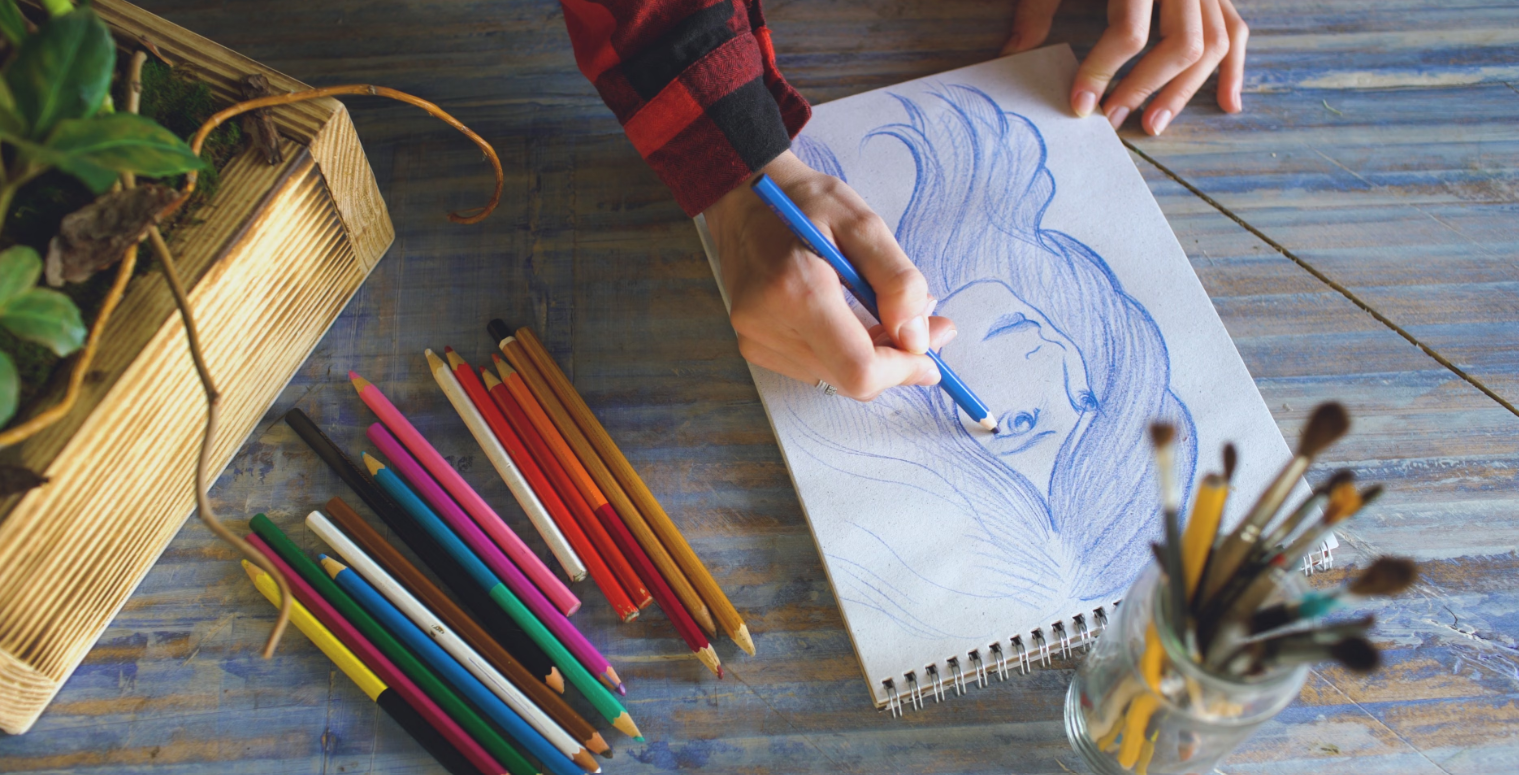 Layer by layer color work like this is how a portrait builds toward its finished likeness. Photo by Vitaly Gariev, Pexels.
How Long Does A Hyper Realistic Portrait Take
A small sketch like this, roughly postcard to A5 size, can take an experienced artist anywhere from fifteen to thirty hours. A full hyper realistic portrait drawing at a larger, frameable size regularly runs sixty to one hundred hours, and highly detailed pieces can run well beyond that. New York based artist Dylan Eakin, for example, spent close to two hundred hours across twenty five days on a single graphite and charcoal portrait titled Nothing But a Foundation, a timeline My Modern Met documented step by step.
Turnaround time for a commission usually runs longer than the drawing hours alone suggest, since most artists are working on more than one piece at once. Four to eight weeks from an approved photo to a finished, framed piece is a realistic window to plan around for most gifting occasions.
What Do These Portraits Cost
Price scales mainly with size, medium, and how many subjects appear in a single piece, not with marketing or fame. A small graphite portrait of one face generally sits at the lower end of the pricing range. A larger, multi subject piece in charcoal or oil sits considerably higher, and adding background detail, pets, or a full family group adds cost on top of the base size price.
Framing deserves its own line in the budget, since a hyper realistic portrait deserves conservation grade glass and a frame suited to the room it is going into, not a bargain frame that yellows or warps within a few years. Buyers planning a commissioned piece around a wedding or anniversary specifically can also check our wedding gift painting guide, which breaks down commissioned portrait pricing and lead times for that occasion in more depth than this guide repeats.
Choosing The Right Reference Photo
Natural light beats flash photography every time for this kind of commission, since flash flattens shadow detail an artist actually needs to build convincing depth. A photo taken outdoors on an overcast day, or near a large window indoors, usually gives an artist far more usable shadow and highlight information than one taken at night under a single ceiling light.
Resolution matters more than most clients expect going in. A photo that looks sharp on a phone screen can turn out too soft once an artist zooms in to check eye detail or hair texture, so sending the original file rather than a compressed copy from a messaging app makes a real difference. A straight on or slight three quarter angle, with both eyes clearly visible and an expression the person actually makes often, tends to produce a likeness people recognize instantly rather than one that merely resembles them.
Which Medium Suits Your Portrait
Every medium suits a different budget, timeline, and finished look, and a table makes the trade offs easier to weigh at a glance.
| Medium | Typical Look | Turnaround | Best For |
| Graphite pencil | Fine detail, soft tonal range, black and white | 3 to 5 weeks | Single face portraits, understated gifts |
| Charcoal | Deep blacks, dramatic contrast, black and white | 3 to 5 weeks | Bold statement pieces, larger sizes |
| Colored pencil | Full color, soft and precise | 4 to 6 weeks | Skin tone accuracy, smaller sizes |
| Oil paint | Full color, rich texture, visible brushwork | 6 to 10 weeks | Large statement pieces, heirloom gifts |
| AI generated image | Full color, instant, no physical original | Minutes | Quick digital mockups, not gifting or resale |
No single medium wins every situation. A quiet, single face graphite portrait for a study suits a completely different moment than a large, full color oil portrait meant to anchor a living room wall.
Common Mistakes When Commissioning Portraits
A handful of mistakes repeat across most hyper realistic portrait commissions, and each one is simple to avoid once flagged.
- Sending one low resolution photo instead of a few high quality options for the artist to choose between.
- Assuming price scales only with size and ignoring how much subject count and background detail add to the total.
- Skipping the mid progress check in, then requesting major changes once a piece is nearly finished.
- Choosing a size based on how the photo looks on a screen rather than measuring the actual wall it will hang on.
- Confusing an AI generated ultra realistic image with a hand drawn commission, then feeling disappointed by what either one actually delivers.
- Framing a finished piece with cheap, non archival glass that lets detail fade within a few years of direct light.
How To Care For It
Direct sunlight is the single biggest threat to a hyper realistic portrait, whether it is done in graphite, charcoal, or oil, since UV exposure fades pigment and yellows paper gradually over years of daily exposure. Hanging a piece away from a west facing window, or behind UV filtering glass, protects decades of detail that took weeks to build in the first place.
Dust gently with a soft, dry brush rather than any cloth or liquid cleaner, since graphite and charcoal both smear easily under pressure. Humidity deserves attention too, particularly for unframed paper pieces, so keeping a portrait away from a bathroom or an uninsulated wall reduces the risk of warping or mold over time.
Turning Your Photo Into Art
A photograph freezes one second. A hyper realistic portrait takes that same second and gives it weight, texture, and a kind of permanence a phone screen never will. Whether the reference is a wedding photo, a childhood picture of a parent, or a portrait meant to mark a retirement, the process rewards patience far more than speed, and the artists who do it well treat every pore and eyelash as worth the extra hour.
If a photo on your phone has been waiting for this kind of treatment, browse The Brushstrokes Co’s original paintings collection for a sense of the studio’s finished work, look at the corporate gifting collection for a leadership or retirement portrait, or get in touch directly to talk through your own photo before committing to a size or medium.