
Mumbai’s gallery calendar rarely sits still, and anyone searching for an art exhibition in Mumbai right now has a genuine cluster of shows to choose from, heritage venues running new solo exhibits, a contemporary gallery opening a fresh body of work, and a citywide art fair drawing collectors from across the country later this year. Whether you are planning a weekend gallery hop, scouting a specific art exhibition near me in Mumbai, or trying to work out which pieces are worth bringing home afterward, this piece covers what is actually showing, where, and how to turn that gallery visit into something that lives on your own wall. Listings change month to month, so treat the current show section below as the live snapshot and the rest as the part that stays useful long after this particular art exhibition in Mumbai has closed.
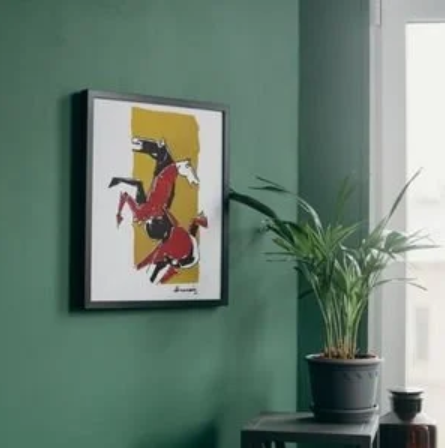
The most reliable way to track an upcoming art exhibitions in Mumbai listing is to check the venues directly rather than relying on stale roundups, since gallery calendars turn over weekly. As of this month, three spaces have new shows running side by side. Jehangir Art Gallery is hosting Untold Stories by Rajesh Kedare and Beyond The Shapes by Shailaja Kamat, both running through the second week of September, alongside a group sculpture show called Spandan and a solo painting exhibition, Uchchaihshrava, by Vijay Jadhav. A short walk away, Jhaveri Contemporary is showing The Distance We Inherit by Jake Grewal, a solo exhibition running into the middle of the month. Anyone chasing a same week art exhibition in Mumbai should start with these three addresses before anything else, since they represent the freshest work currently on view.
Jehangir Art Gallery Exhibitions This Week
Jehangir Art Gallery exhibitions turn over almost every week because the venue runs multiple independent halls at once, which is exactly why it remains the default answer to where is the best art exhibition in Mumbai for first time visitors. This month, Hirji Jehangir Art Gallery is showing Kedare’s cityscapes under Untold Stories, while Exhibition Gallery 4 carries Kamat’s Beyond The Shapes. Exhibition Gallery 3 has Spandan, a group sculpture show that is worth seeing in person since sculpture rarely photographs the way it reads in a room, and Exhibition Gallery 1 has Jadhav’s Uchchaihshrava. You can confirm the current week’s line-up directly on the gallery’s own events page before visiting, since halls rotate on a roughly weekly cycle and printed listings go out of date fast.
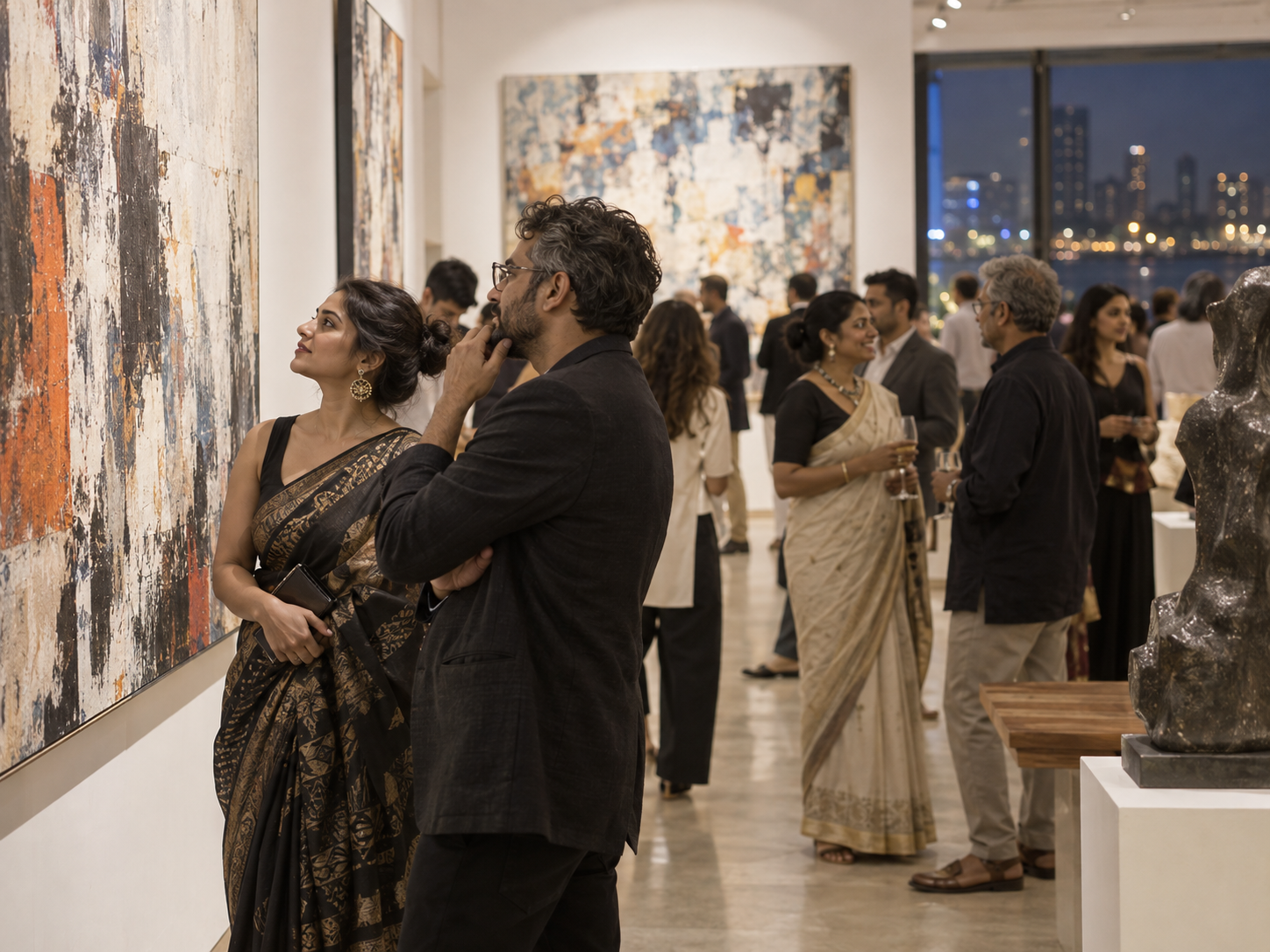
Contemporary Art Exhibitions Mumbai Galleries Host
Contemporary art exhibitions Mumbai galleries put on tend to sit outside the traditional gallery circuit and lean into single artist, concept driven shows rather than the mixed group exhibitions common at heritage venues. Jhaveri Contemporary’s current show, The Distance We Inherit, is a good example, a solo presentation built around one artist’s practice rather than a survey of many. Chemould Prescott Road, another long running contemporary space in Fort, has built its reputation on the same model, championing newer voices well before they show at larger institutions. If your interest in an art exhibition in Mumbai leans toward newer, more experimental work rather than established masters, these contemporary spaces are the better starting point than the heritage circuit. Many also run smaller viewing rooms alongside their main exhibition space, useful for a quieter second visit once the opening week crowds have thinned out.
National Gallery Adds Scale And Depth
Where Jehangir and the contemporary galleries run tight, frequently changing shows, the National Gallery of Modern Art in Mumbai operates on a different scale entirely, with larger curated exhibitions that stay up for months and pull from a permanent collection alongside touring shows. It is the closest thing the city has to a museum grade art exhibition in Mumbai, and it is the venue most likely to have historical and modern Indian masters on view at any given time rather than only contemporary or emerging artists. For visitors who want context and depth alongside new work, pairing an NGMA visit with a Jehangir or Chemould stop in the same day covers both ends of the spectrum well. Entry to NGMA is ticketed but affordable, and the building itself, a converted colonial era hall, is worth the visit even in the rare week when nothing new has just opened. Students and researchers looking specifically for a museum grade art exhibition in Mumbai tend to gravitate here first, before branching out to the smaller commercial galleries nearby.
Art Galleries In Mumbai Worth Visiting
Beyond the handful of venues already mentioned, art galleries in Mumbai worth visiting span a wider geography than most first time visitors expect, running from Kala Ghoda and Fort through Colaba and increasingly into Bandra and Lower Parel as newer spaces open. Kala Ghoda itself hosts the annual Kala Ghoda Arts Festival, a multi day public art event that turns the whole precinct into an open air exhibition. Corporate lobbies and boutique hotels across the city have also started curating rotating shows, which means an art exhibition in Mumbai is no longer confined to dedicated gallery buildings the way it was a decade ago. Bandra and Lower Parel in particular have seen a wave of smaller, independently run spaces open in the last few years, often inside converted warehouses or mill compounds, and they tend to show younger and more experimental artists than the older Kala Ghoda venues. Checking a gallery’s own social media alongside its website is often the fastest way to confirm a show is actually still running before making the trip across town.
Art Exhibition Near Me In Mumbai
Finding an art exhibition near me in Mumbai usually comes down to picking a neighborhood rather than a single venue, since most of the city’s serious galleries cluster within a few walkable pockets. Kala Ghoda and Fort hold the highest density, with Jehangir Art Gallery, Chemould Prescott Road, and several smaller project spaces within a ten minute walk of each other. Colaba adds a handful of contemporary galleries including Jhaveri Contemporary, while Worli and Lower Parel are where NGMA and several newer commercial spaces sit. Picking a neighborhood and walking it on a weekend afternoon remains the most efficient way to catch two or three shows in a single trip. Weekday mornings tend to be quieter at almost any art exhibition in Mumbai, which suits visitors who prefer to spend real time with individual pieces rather than navigating a crowded room, while weekend afternoons draw the biggest crowds and the most active buying conversations with gallery staff.
Mumbai Art Exhibitions 2026 Fair Season
Mumbai art exhibitions 2026 season builds toward a clear peak in November, when ART MUMBAI returns to the Mahalaxmi Racecourse from the twelfth through the fifteenth. Unlike a single gallery show, the fair brings together galleries such as Vadehra Art Gallery and PHOTOINK under one roof, alongside a sculpture park and a programme of talks and walks aimed at both new and experienced collectors. It is the single biggest date on the city’s art calendar and the moment when an art exhibition in Mumbai stops being a niche weekend activity and becomes a genuinely citywide event, drawing visitors and collectors from well outside Maharashtra.
What To Look For At Exhibitions
Walking into any art exhibition in Mumbai without a sense of what to look for tends to produce the same result, a fast lap through the room and nothing remembered afterward. Slow down at pieces that hold your attention for more than a few seconds rather than trying to see everything with equal weight. Read the wall text after forming your own reaction, not before, so the label does not shape what you notice first. Pay attention to scale in person, since photographs flatten the difference between a small study and a large statement canvas in a way that matters enormously once you are deciding what would actually work on your own wall.
It also helps to ask who curated the show and why these particular works were grouped together, since a themed art exhibition in Mumbai often has a logic that is not obvious from the wall text alone. Group shows especially reward this kind of question, because pieces placed near each other are usually chosen to be read in conversation rather than in isolation. If you find yourself returning to the same corner of the room more than once, that is usually a stronger signal than any single label about what genuinely interests you.
How Exhibition Paintings Differ From Prints
A question that comes up at nearly every art exhibition in Mumbai is whether the piece on the wall is an original painting or a limited edition print, and the difference matters more than it might first appear. An original carries brush texture, layered paint, and small imperfections that make it genuinely one of one, while a print reproduces that image at a fixed, repeatable quality. If you are new to the distinction, our piece on what painting actually is breaks down the techniques and materials that separate an original from a reproduction in more depth. Exhibition context makes this easier to judge than buying online, since you can examine brushwork and surface texture directly before deciding. It is also reasonable to ask a gallery directly whether a piece is a unique original or part of a numbered edition, since that detail is not always obvious from wall labels and it materially affects both price and how the work will hold value over time.
Bringing Exhibition Art Into Your Home
The gap between admiring a piece at an art exhibition in Mumbai and actually living with it at home comes down to scale, light, and colour temperature, three things a gallery’s white walls and even lighting tend to hide. A painting that reads as bold under gallery spotlights can feel overwhelming in a smaller room with warmer household lighting, so it helps to photograph the piece and hold it up against your own wall on your phone before committing. Sculpture needs the same consideration for floor space and sightlines. If the exhibition itself was not built around home sized pieces, browsing paintings chosen for specific occasions is a useful next step for finding something with similar energy at a scale that actually fits a living room or study. It is also worth thinking about how a piece will sit alongside furniture and other art you already own, since a work that stood alone beautifully at an art exhibition in Mumbai can compete for attention once it is placed near existing decor. Taking a photo of the empty wall space before you go shopping, and referring back to it while viewing new work, keeps that scale and colour comparison honest.
Gallery Etiquette Every First Timer Needs
First time visitors to an art exhibition in Mumbai often worry more about etiquette than the art itself, so a few basics help. Most galleries are free to enter and do not require appointments for regular shows, though larger fairs and some contemporary spaces do ask for prior registration. Photography is usually allowed without flash, but it is worth asking gallery staff before assuming, since policies vary by venue and by artist. Keep a respectful distance from unframed canvases and sculpture, and never touch a piece even briefly. Staff at most galleries are happy to talk about the work and the artist if you ask, and that conversation is often more useful than any wall text.
Dress codes are informal at almost every art exhibition in Mumbai, so there is no need to overthink what to wear beyond comfortable shoes for standing and walking between halls. Children are generally welcome at gallery shows, though large fairs can get crowded enough that strollers become impractical. If you plan to ask about pricing or purchasing, it is perfectly normal to do so directly with gallery staff rather than waiting to be approached, since most galleries expect and welcome that conversation from visitors who show genuine interest.
Building A Collection After The Show
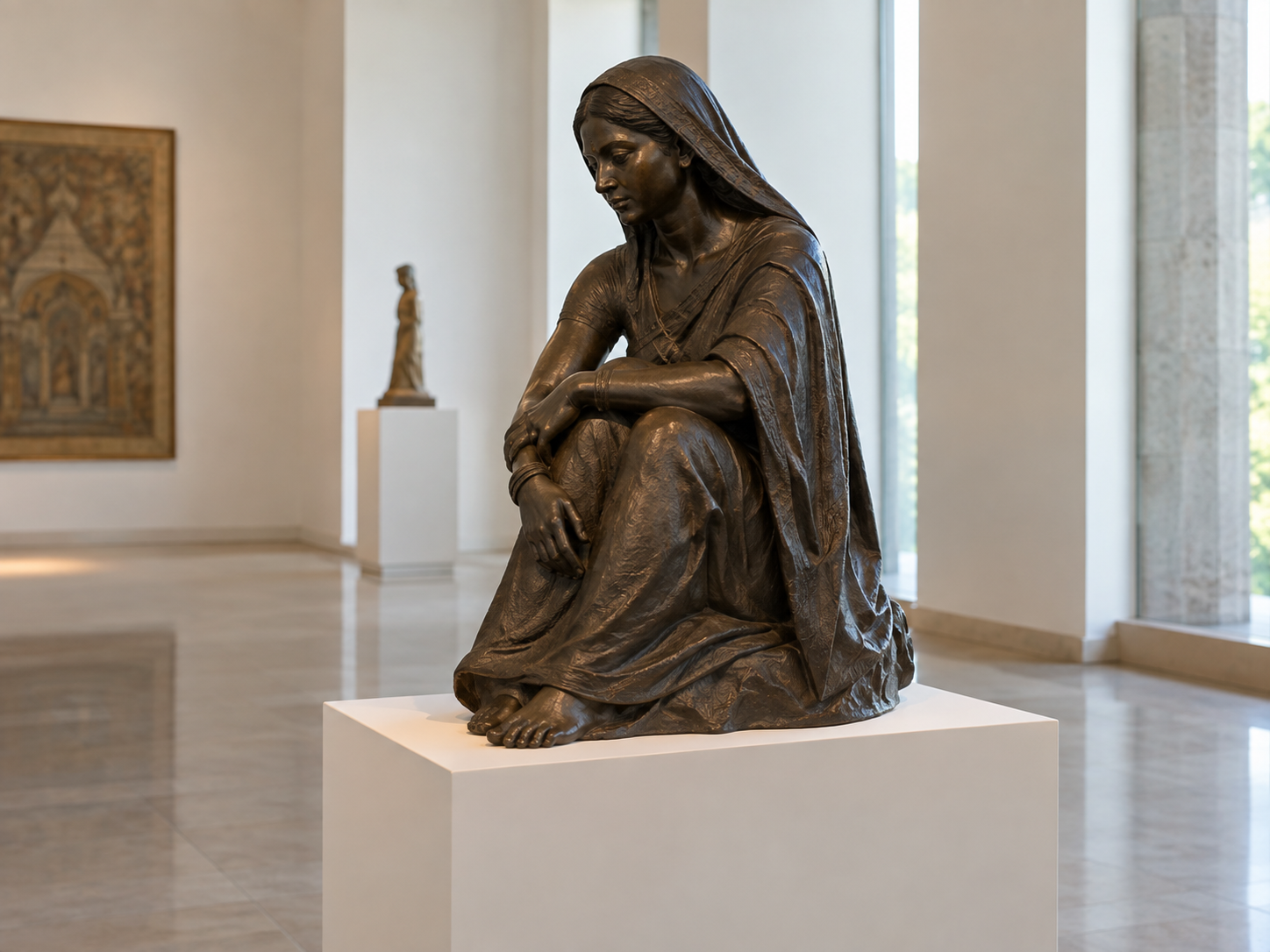
Attending an art exhibition in Mumbai regularly is how most serious collections start, one piece at a time rather than as a single large purchase. After a show closes, many galleries can still connect you with the artist or point you toward similar available work, so it is worth asking before assuming a piece is gone forever once the exhibition ends. For sculpture specifically, our breakdown of why sculpture art continues to inspire collectors is a useful next read if the Spandan group show or similar work caught your attention. If your interest runs toward gifting rather than personal collecting, our festival art gifting page covers pieces suited to that instead.
A useful habit is keeping a short list after every art exhibition in Mumbai you visit, noting the artist, the gallery, and roughly what drew you to a particular piece, even if you do not buy anything that day. Over a year of visits, that list tends to reveal a clearer pattern in your own taste than trying to decide everything on the spot, and it makes the next purchase, whenever it happens, a far more confident one.
Comparing Gallery Shows And Art Fairs
Deciding between a single venue art exhibition in Mumbai and a large fair like ART MUMBAI depends on what you are actually trying to do, browse casually, buy seriously, or simply see as much work as possible in one visit. Neither format is strictly better, and most regular gallery goers end up doing both across a year, using weekly gallery shows to track individual artists and the annual fair to see the wider market in one place. Budget matters here too, since fair tickets, travel, and the sheer volume of work on display can make a single day at a large fair a bigger commitment than a quiet weekday visit to one gallery hall. The two comparison tables below lay out the practical differences.
| Factor | Single Gallery Show | Citywide Art Fair |
|---|---|---|
| Typical duration | One week per hall | Four days, once a year |
| Number of galleries | One venue, one or few artists | Dozens of galleries under one roof |
| Entry | Usually free | Ticketed |
| Best suited for | Focused viewing, one artist deep dive | Comparing many artists and price points quickly |
| Factor | Original Exhibition Painting | Limited Edition Print |
|---|---|---|
| Uniqueness | One of one, no duplicates | Reproduced across a fixed edition size |
| Surface and texture | Visible brushwork, layered paint | Flat, consistent surface |
| Typical price range | Higher, reflects singular ownership | Lower, more accessible entry point |
| Long term value | Can appreciate with the artist’s career | Value tied to edition scarcity, not uniqueness |
Neither table is meant to crown a winner, since a gallery show and a fair genuinely serve different visits. If your goal for this particular art exhibition in Mumbai is to understand one artist deeply, a single venue show wins every time. If the goal is comparing price points and styles across dozens of galleries in a single afternoon, a fair like ART MUMBAI is the more efficient format, even though it demands more planning and a ticket in advance.
Frequently Asked Art Exhibition Questions
Is there an art exhibition in Mumbai happening this week?
Yes, Jehangir Art Gallery and Jhaveri Contemporary both have shows running in overlapping weeks this month, alongside standing programming at NGMA. Check gallery event pages directly since exact dates shift weekly, and treat any published list of a current art exhibition in Mumbai as a snapshot rather than a permanent schedule.
Where can I find an art exhibition near me in Mumbai without travelling far?
Kala Ghoda and Fort hold the highest concentration of galleries within walking distance of each other, making that pocket the easiest starting point for most visitors.
Do I need tickets for a regular gallery show?
Most standalone gallery exhibitions are free and open without booking. Larger events like ART MUMBAI require tickets bought in advance.
Can I buy the art on display at an exhibition?
Yes, most gallery shows are commercial in nature and pieces are available for purchase, though pricing and availability should be confirmed with gallery staff directly.
What is the difference between visiting NGMA and a commercial gallery?
NGMA is a public institution showing curated and often historical work, while commercial galleries like Jehangir and Chemould represent living artists whose work is generally for sale.
When is the next major art fair in Mumbai?
ART MUMBAI returns from November twelfth through the fifteenth at the Mahalaxmi Racecourse, bringing together galleries from across India and abroad, alongside a sculpture park and a full programme of talks and curated walks for visitors at every level of experience.
Should I go alone or with someone who knows more about art?
Either works well, and there is no real barrier to visiting solo, but going with someone more familiar with the local scene can help you move past unfamiliar names faster and get a better sense of which galleries consistently show strong work.