
Think back to the last corporate hamper you received. Can you name three things that were inside it? Most people can’t. That’s the quiet problem at the heart of business gifting. Every festive season, companies spend heavily on bottles, diaries, and gadgets that vanish into drawers within weeks. Corporate art gifts are the answer more businesses are turning to instead, a single painting, sculpture, or curated print that doesn’t get used up or forgotten, but hangs on a wall and keeps doing its job long after the season ends. This piece looks at why that shift is happening, what’s driving it, and how to get it right.
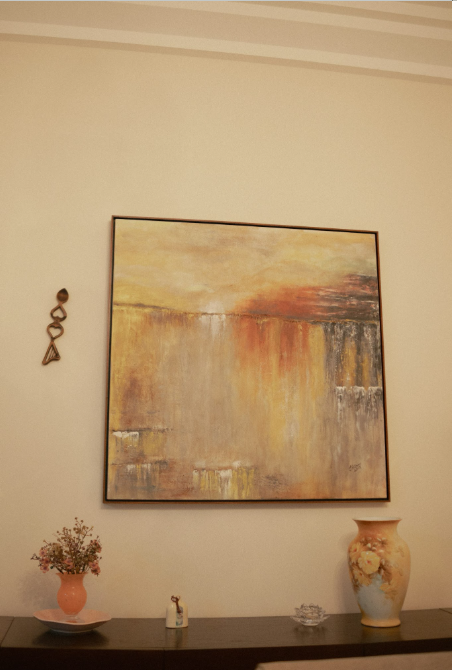
A well-placed piece of art changes how a room feels, and how a relationship is remembered.
Why Most Corporate Gifts Get Forgotten
People don’t remember objects. They remember how something made them feel. A branded mug or a box of chocolates rarely registers as anything more than routine, because the brain filters out experiences that feel interchangeable with a hundred others. That’s the trap most corporate gifting falls into. The intention is thoughtful, but the object itself carries no distinct memory.
Art breaks that pattern simply by refusing to disappear. A painting placed in an office doesn’t get consumed or replaced. It becomes part of the daily backdrop of someone’s working life, visible in meetings, noticed by visitors, and asked about for years.
The Emotional Math Behind Great Gifting
Psychologists describe this as repeated emotional exposure. The more often someone encounters a positive cue, the stronger the memory tied to it becomes. A gift that’s consumed once creates one moment. A gift that stays visible creates hundreds of small ones, each quietly reinforcing appreciation, trust, and partnership without a single follow-up email.
What Makes Corporate Art Gifts Different
A corporate art gift doesn’t announce itself as a transaction. Instead of saying “here’s something because the calendar demanded it,” it communicates something closer to “we wanted to give you something worth keeping.” That distinction changes how the gift lands, whether it’s going to a long-standing client, a retiring executive, or a team that just hit a major milestone.
The Science Behind Repeated Emotional Exposure
This isn’t just marketing language. Workplace psychology research backs it up. A long-running study from the University of Exeter’s School of Psychology found that enriching lean office spaces with art and greenery lifted productivity by 15%, and that letting employees help choose that decor pushed the gains even higher. Visual environments aren’t neutral background. They measurably affect mood, focus, and how “cared for” a space feels.
Where Real Business Trust Gets Built
No contract manufactures trust. It’s built through small, consistent signals of respect over time, and gifting has always been one of those signals. The challenge companies face isn’t whether to gift. It’s choosing something that actually reflects the value of the relationship instead of just filling a line item in the festive budget.

Presentation and intention shape how a gift is received, long before the recipient sees what’s inside.
How Art Changes Workplace Energy
Walk into two identical offices, one with bare walls and one with a thoughtfully chosen art collection, and most people will find the second one more welcoming without being able to say exactly why. Colour, texture, and imagery introduce warmth into spaces that would otherwise feel purely functional, which is part of why art given as a gift tends to accumulate emotional value over time instead of losing it, unlike most consumable luxury items.
From Bigger Budgets To Better Meaning
Corporate gifting used to follow a simple formula. A bigger budget meant a more luxurious gift, crystal sets, imported chocolates, premium electronics. The problem was that almost anyone with the same budget could buy the same thing. As businesses increasingly compete on experience rather than price, the defining question has shifted from “how much did we spend?” to “will this be remembered?” That’s precisely the space where luxury corporate gifts built around original art now compete and win.
Letting Artwork Speak For Your Brand
Every organization has a personality, whether it leans toward innovation, heritage, sustainability, or craftsmanship, and a corporate gift should reinforce that identity rather than contradict it. A technology company might lean toward contemporary abstract paintings that suggest movement and forward motion. A hospitality brand might prefer calming landscapes. A company with deep cultural roots might choose Madhubani, Gond, Warli, or Pichwai art, which celebrates heritage while supporting skilled artisans. Instead of stamping a logo on a product, the business expresses its identity through what it chooses to give.
Why People Display Art For Years
Here’s a mistake many companies make without realizing it. They design gifts around their own branding rather than the recipient’s taste. Oversized logos and promotional colours might boost short-term visibility, but they rarely earn a permanent spot on a wall. Art works the opposite way. It puts the recipient first, which is exactly why it tends to stay displayed. Every visitor who admires it, every employee who walks past it, becomes a quiet reminder of where it came from.
Matching Artwork To Every Occasion
Loyal clients, milestone employees, retiring leaders, and new business partners are all different relationships, yet many companies still hand everyone the same generic hamper. Art adapts far better. A limited-edition serigraph print can mark a decade-long partnership, a handcrafted sculpture can suit a leadership milestone, and a serene landscape can make a thoughtful retirement gift representing a new chapter. Choosing based on emotion and occasion, rather than price alone, turns gifting into storytelling.
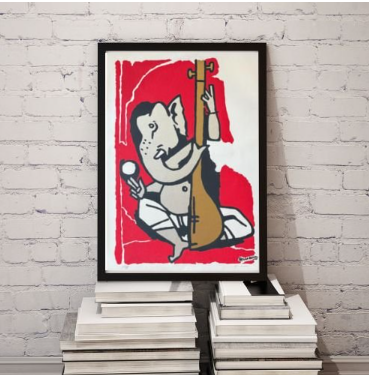
Traditional motifs like Ganesha paintings remain a favourite for milestone and festive corporate gifting. View this piece.
Personalization That Whispers Instead Of Shouting
Personalized corporate gifts are growing fast, but personalization doesn’t mean printing a logo across a canvas. Heavy branding usually cheapens the gift rather than elevating it. The most memorable pieces tell a subtle story. A manufacturing company marking twenty-five years might commission artwork inspired by craftsmanship and progress, while a financial institution might lean toward compositions that suggest stability and growth. The best personalization is discovered slowly, not announced loudly.
India’s Renewed Appreciation For Cultural Art
Corporate gifting in India has shifted noticeably in recent years. The Indian corporate gifting industry is expanding fast, and companies are moving beyond festive hampers toward gifts that reflect identity and values. Traditional Indian art forms such as Madhubani, Gond, Warli, Pichwai, and Kalamkari have become especially meaningful for businesses working with international clients, functioning almost as cultural ambassadors while supporting local artisans and preserving craft traditions. At the same time, abstract and contemporary paintings remain popular for their clean fit with modern office aesthetics.
Mistakes That Undercut A Thoughtful Gift
Even excellent artwork loses impact when chosen carelessly. A large statement painting might be stunning but impractical for a compact office. Over-branding turns an elegant gift into promotional merchandise. And poor presentation, a piece that isn’t properly framed or thoughtfully packaged, can undercut the emotional weight of an otherwise great choice. A handwritten note and professional framing usually matter more than people expect.
When Offices Start Resembling Art Galleries
Step into many of today’s leading workplaces and the walls are no longer empty. Reception areas display curated pieces, meeting rooms feature contemporary paintings, and executive cabins showcase sculptures and handcrafted wall art. This isn’t purely a design trend. It reflects a growing recognition that visual environment shapes creativity and wellbeing, and that a welcoming office signals confidence to clients before a single word is spoken.
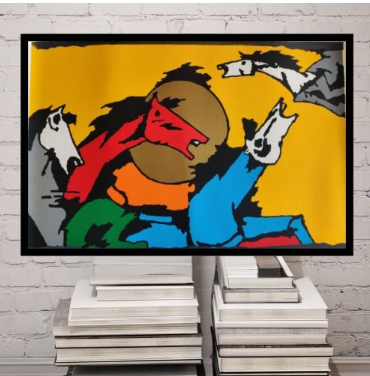
Dynamic, energy-driven pieces like this horse painting suit leadership offices and milestone gifting alike. View this piece.
Choosing Artwork That Tells Your Story
The better question isn’t “which painting is the best corporate gift.” It’s “why does this particular piece deserve to represent this relationship.” That starts with the occasion, the recipient’s environment, and the message worth sending. Working with an experienced curator such as The Brushstrokes Company makes this easier. Instead of choosing on appearance alone, businesses gain insight into symbolism, craftsmanship, sizing, and presentation, so the piece feels selected rather than mass-produced.
Why Art Remains The Smarter Investment
Corporate gifting trends will keep shifting, new products, new luxury collections, more elaborate hampers, but art occupies a place few trends can touch. It doesn’t get eaten, used up, or thrown away. It becomes part of an office wall, a leader’s desk, a client’s reception area, quietly reminding people that the strongest business relationships are built on trust and shared experience, not just transactions.
Explore The Brushstrokes Company’s corporate art gift collection, browse the full art collections online, or get in touch to discuss a bulk or custom order for your next milestone. For more on this shift, read our related piece on corporate art gifts in India.
Common Questions About Corporate Art Gifts
Are corporate art gifts suitable for small businesses?
Yes. Meaningful gifting isn’t determined by company size. Even a single, thoughtfully framed piece can create a lasting impression and strengthen a professional relationship.
Which occasions suit corporate art gifting best?
Employee recognition, client appreciation, office inaugurations, retirements, festive gifting, partnership anniversaries, leadership awards, and major business milestones all suit art well.
Is handcrafted artwork better than mass-produced gifts?
Handcrafted artwork offers a uniqueness and authenticity that mass-produced gifts rarely match, reflecting care and selection rather than convenience.
How can a gift be personalized without looking promotional?
Subtle personalization, theme, colour palette, a meaningful quote, or a milestone date, usually creates a stronger impression than a large company logo.
Should businesses choose original paintings or limited-edition prints?
It depends on occasion and budget. Original paintings offer exclusivity and craftsmanship, while high-quality limited-edition serigraph prints provide elegance and consistency for larger gifting programs.
Why are traditional Indian art forms popular in corporate gifting?
Traditional art celebrates India’s cultural heritage while supporting skilled artisans, giving international clients a meaningful gift that represents authenticity and craftsmanship.