
Indian art gifts offer something that many conventional presents cannot: a combination of visual beauty, cultural meaning and lasting display value. From colourful Madhubani paintings and minimalist Warli compositions to detailed Pichwai works and contemporary Indian art, there are options for different occasions, interiors and budgets.
Art can be given for Diwali, weddings, housewarmings, anniversaries, corporate celebrations and important personal milestones. The right choice depends less on finding the most expensive artwork and more on understanding the recipient, the occasion and the space where the piece may eventually be displayed.
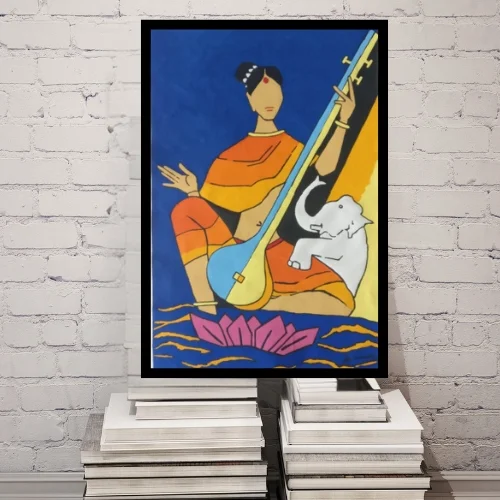
If you are considering Indian art for gifting, this guide explains the major styles to explore, which artworks suit different occasions, how to choose between originals and prints, what to check before buying and how to select a piece that feels personal rather than generic.
Why Indian Art Makes a Meaningful Gift
A good gift should feel connected to the person receiving it.
Indian art gives buyers many ways to create that connection. A recipient may relate to a particular region, colour palette, artistic tradition, spiritual theme or subject. Another person may simply appreciate a work because it suits the design of their home.
Unlike many consumable gifts, artwork can remain part of a home or office long after the occasion has passed.
That does not automatically make art the right gift for everyone. The recipient’s taste, available space and interest in art still matter. But when those elements align, a thoughtfully chosen painting, print or sculpture can become a memorable gift with a much longer life than the event itself.
Indian art gifts also offer considerable variety. Buyers can choose between traditional, folk, devotional, modern and contemporary works rather than being limited to a single aesthetic.
Popular Indian Art Gifts by Style
India’s artistic traditions vary widely by region, community and technique. Understanding a few prominent styles can make choosing a gift considerably easier.
| Indian Art Style | Region or Tradition | Common Visual Features | Suitable Gifting Occasions |
| Madhubani | Mithila region, particularly Bihar | Bold outlines, detailed patterns, nature and figurative themes | Weddings, housewarmings, festive gifting |
| Warli | Maharashtra | Geometric figures, village life and community scenes | Housewarmings, offices, modern homes |
| Gond | Central India | Detailed patterns, animals, trees and nature-inspired compositions | Birthdays, corporate gifting, contemporary interiors |
| Pichwai | Rajasthan | Krishna-related imagery, cows, lotus motifs and decorative compositions | Diwali, festive occasions, devotional gifting |
| Tanjore | Tamil Nadu | Devotional imagery and elaborate decorative treatment | Religious occasions and premium gifting |
| Indian Miniature Art | Various court traditions | Fine details, figures, nature and historical themes | Collectors, anniversaries and premium gifts |
| Contemporary Indian Art | Pan-India | Abstract, figurative and experimental styles | Corporate gifts, modern homes and special milestones |
These categories should be treated as starting points rather than strict rules. An artwork should ultimately suit the recipient and the individual piece should be evaluated on its own merits.
If you want to understand individual traditions in greater depth before making a purchase, explore our guide to Gond art paintings or browse famous Indian paintings for wider context on these traditions.
Madhubani Paintings as Indian Art Gifts
Madhubani art is well suited to people who appreciate intricate detail and vibrant visual storytelling.
The tradition is associated with the Mithila region and is known for strong outlines, highly filled compositions and recurring imagery drawn from nature, community life and religious narratives. The Smithsonian Institution’s archive on Mithila painting documents how deeply this tradition and its symbolism run in the region’s history.
For gifting, Madhubani paintings can work particularly well for weddings and housewarmings because many compositions feature themes connected with relationships, nature and celebration.
When buying Madhubani art as a gift, pay attention to the colours already present in the recipient’s home. A highly detailed, colourful painting can become a focal point, so it usually benefits from enough visual space around it.
Warli Paintings for Modern Homes
Warli art offers a very different visual language.
Its geometric human figures and scenes of village or community life often create compositions that feel clean and rhythmic. Because of this simplicity, Warli paintings can work particularly well in contemporary homes, studies and offices.
Warli art is also a natural Indian art gift for recipients with a connection to Maharashtra or an appreciation for folk traditions.
A smaller framed Warli piece may suit a desk area, passage or study, while a larger composition can become an interesting feature in a living room or office.
Pichwai Art for Festive and Devotional Gifting
Pichwai art can be a strong choice for recipients who appreciate devotional or highly decorative Indian artwork.
Traditionally associated with the worship of Shrinathji, Pichwai compositions frequently include Krishna-related imagery along with lotus flowers, cows and other decorative motifs.
Because of its devotional context, it is particularly important to consider the recipient before choosing Pichwai as a gift.
For someone who appreciates this tradition, it may be suitable for Diwali, a housewarming, a wedding or another auspicious occasion. For someone whose preferences you do not know well, a more neutral nature-based or contemporary work may be safer.
Gond Art for Nature Lovers and Contemporary Interiors
Gond art is instantly recognisable for its detailed use of lines, dots, patterns, animals and natural forms.
This can make it particularly appealing to recipients who enjoy colourful, nature-inspired art without necessarily wanting devotional imagery.
Gond works can fit well in living rooms, offices, children’s spaces and creative work environments depending on the individual composition.
For gifting, consider the subject as much as the style. A tree, bird or animal composition may have very different visual impact from a densely patterned narrative scene. Our guide to Gond art paintings goes deeper into this tradition’s motifs and history.
Indian Art Gifts for Diwali
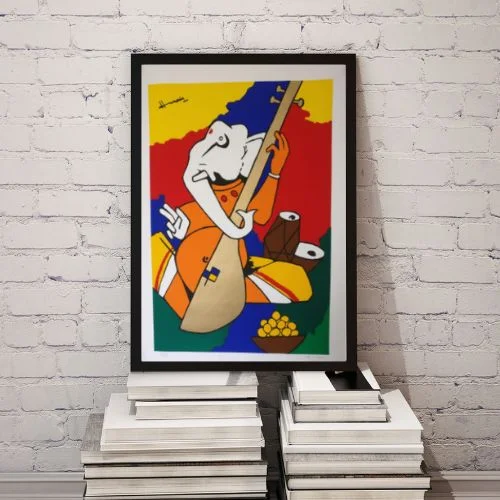
Diwali gifting is often associated with sweets, dry fruits, hampers and decorative products. Art provides an alternative for buyers looking for something the recipient can retain after the festival.
Pichwai paintings, Ganesha-inspired artworks, contemporary Indian paintings and selected traditional works may all be considered depending on the recipient’s preferences.
The key is not to choose religious imagery automatically simply because the occasion is Diwali. Some recipients may prefer spiritual art, while others may be happier with abstract, nature-inspired or contemporary pieces.
Presentation also matters. Appropriate framing, secure packaging and a personal note can make an art gift feel complete without requiring an elaborate hamper.
For a wider selection of seasonal options, explore our Festive Art Gifts collection.
Indian Art Gifts for Weddings
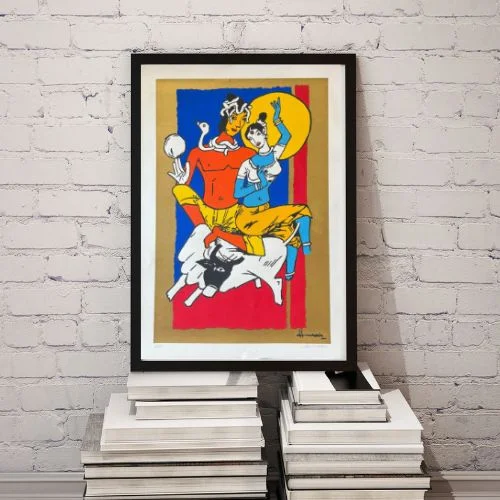
Artwork can be particularly suitable for weddings because it can become part of the couple’s new home.
Instead of choosing a piece purely because it carries a romantic theme, consider how the artwork may fit into their interior.
Madhubani paintings, contemporary Indian art, nature-inspired works and selected sculptures can all work depending on the couple’s preferences.
If you know their home has a neutral or minimalist interior, a highly elaborate traditional painting may not be the easiest fit. Similarly, a very subtle contemporary work may not suit someone who loves colourful traditional décor.
When buying art for a wedding gift, size is important. Medium-sized work is generally easier for the couple to place than a very large statement painting unless you already know where they plan to display it.
Indian Art Gifts for Housewarming
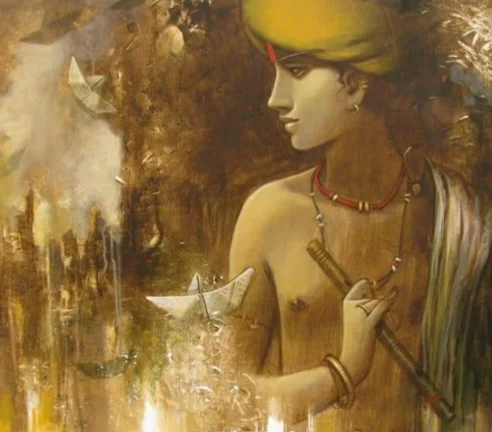
A housewarming is one of the most natural occasions for gifting art because the recipient is actively shaping a new space.
However, avoid assuming that any decorative painting will work simply because the recipient has an empty wall.
Look at their existing preferences if possible. Do they prefer modern furniture or traditional interiors? Strong colours or neutrals? Figurative work or abstract art? Spiritual imagery or completely secular décor?
Warli and Gond paintings can work beautifully in modern homes, while Madhubani and Pichwai can add strong colour and traditional character.
Contemporary paintings and sculptures may suit buyers looking for something less region-specific.
A thoughtful housewarming gift should feel like something the recipient would have chosen for the home themselves.
Indian Art Gifts for Anniversaries
Anniversary gifts often benefit from a stronger personal connection.
Rather than choosing a painting based only on its value, consider themes that relate to the couple. Nature, companionship, travel, shared cultural roots or colours used in their home can all guide the selection.
An original painting may make sense for a significant anniversary if the budget allows, while a carefully selected limited-edition print can work well for a smaller occasion.
The significance of the artwork should come from the selection rather than simply from its price.
Indian Art Gifts for Corporate Gifting
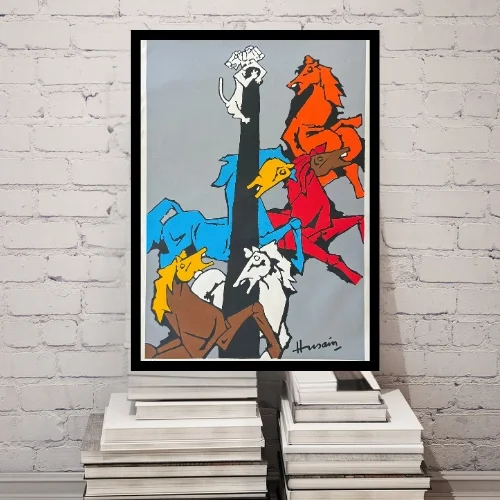
Corporate gifting requires a somewhat different approach because the relationship is professional and the recipient’s personal preferences may not always be known.
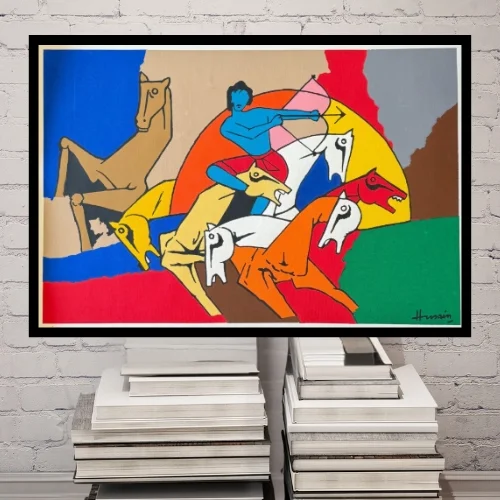
Indian art can work well for important clients, leadership teams, company milestones, retiring employees and selected recognition programmes. Our article on why corporates should choose art for gifting looks at this in more detail. Horses are a particularly popular motif for corporate and office gifting, often associated with momentum and success.
For professional gifting, neutral or broadly appealing subjects may be easier to place than highly personal or devotional imagery.
Abstract art, nature-inspired paintings, modern interpretations of traditional styles and sculptures can all work depending on the recipient and budget.
Size is particularly important for corporate gifts. A piece that can be displayed easily in either a home or office gives the recipient more flexibility.
Businesses should also consider packaging, invoices, quantities, delivery timelines and whether multiple pieces are required.
Indian Art Gifts for Different Recipients
The best Indian art gift depends as much on the person as it does on the occasion.
For parents, buyers may choose a style connected to family heritage, spiritual preferences or the décor of the family home.
For newlyweds, consider art that works comfortably in a shared living space rather than choosing something highly specific to one person’s taste.
For clients, neutral but distinctive works tend to be easier to gift. Professional presentation and authenticity information become especially important.
For an art collector, the artist, provenance, medium, edition and significance of the work may matter more than decorative compatibility.
For someone buying their first home, versatile artwork that can work in several rooms is usually easier to place than a highly specific statement piece.
The more you know about the recipient, the more personal the selection can become.
Indian Art Gifts by Budget
Indian art exists across a broad price range, so buyers should establish a budget before beginning their search.
At accessible price points, buyers can consider art prints, selected reproductions, small decorative works and compact framed pieces.
A mid-range budget may open up more handmade works, larger pieces, limited editions or works requiring more detailed techniques.
Premium budgets can include significant original paintings, collectible editions, larger artworks and sculptures.
Rather than treating price as a measure of how meaningful the gift is, think about what you are receiving for the budget. Consider originality, artist, size, medium, technique, edition, framing, provenance and presentation.
A carefully selected smaller artwork can be a better gift than a larger piece chosen only because it appears expensive.
Original Indian Art vs Art Prints: Which Is Better for Gifting?
One of the most important decisions when buying Indian art gifts is whether to choose an original or a print.
Original Artwork
An original work is created by the artist as an individual artwork rather than mechanically reproduced from another image.
Original paintings can be appropriate for weddings, anniversaries, significant milestones, important clients and collectors. Prices vary considerably depending on the artist, medium, size and market.
When purchasing an original, ask for clear information about the artist and artwork.
Limited-Edition Prints
Limited-edition prints are produced in a predetermined quantity. Depending on the work, they may be numbered and sometimes signed.
They can provide a middle ground for buyers who want something more collectible than a standard decorative print but do not necessarily want to purchase a unique original painting.
Open-Edition Prints
Open-edition prints can be produced in larger quantities and are generally more accessible.
They can work for employee gifts, casual housewarming gifts, smaller festive presents or situations where several similar pieces are required.
There is nothing wrong with gifting a print. The important thing is that it should be described accurately.
A print should not be presented as an original painting, and buyers should understand exactly what they are purchasing.
How to Choose the Right Indian Art Gift
Begin with the recipient rather than the artwork.
Consider the person’s existing décor, preferred colours, available wall space and whether they enjoy traditional, contemporary, spiritual or abstract work.
Next, think about where the art may be displayed.
A devotional work may be appropriate for a puja space but less suitable for an office. A bold contemporary piece may work beautifully in a modern living room but clash with a heavily traditional interior.
Size is another important factor.
If you do not know the recipient’s wall dimensions, avoid extremely large artwork. Medium and smaller pieces generally provide more placement flexibility.
Finally, think about the occasion. A casual festive gift and a major wedding present do not necessarily require the same type of artwork.
The goal is not to find the universally “best” Indian art gift. It is to find an appropriate piece for one particular recipient.
How to Check Authenticity Before Buying Indian Art
When buying an original or artist-made work, ask for clear information about what you are purchasing.
The seller should be able to explain the artist’s name where applicable, the medium used, dimensions, whether the piece is an original or reproduction and whether any certificate or documentation accompanies it.
Do not judge authenticity solely from visible irregularities or assumptions about natural pigments. Indian artists work with a wide range of traditional and contemporary materials.
Instead, focus on transparent documentation and accurate product descriptions.
For limited editions, ask about edition size, numbering and signatures where relevant.
If a seller avoids explaining whether an artwork is original, limited edition or reproduction, request clarification before purchasing.
How to Present Indian Art as a Gift
Presentation can significantly improve the experience of receiving artwork.
If the work is framed, make sure the frame complements the piece without overpowering it. Neutral frames tend to provide greater flexibility when you do not know the recipient’s interior design closely. Apartment Therapy’s expert art hanging tips are a useful reference if you are advising the recipient on where to place the piece.
Include information about the artist and artwork where available.
A short card explaining why you selected the piece can also make the gift feel more personal.
For corporate gifting, branded packaging can be used carefully, but avoid allowing the company logo to dominate the artwork or presentation.
If the work requires special care or hanging instructions, include them with the gift.
Caring for Indian Art
Proper care depends on the material and medium of the artwork.
As a general rule, avoid placing paintings and works on paper in prolonged direct sunlight because exposure can affect colours and materials over time.
Artwork should also be kept away from persistent moisture and extreme humidity.
For framed work, use appropriate hanging hardware and avoid cleaning painted surfaces with household chemicals or wet cloths unless the artist or conservator specifically recommends it.
Works on paper, canvas, textiles and other materials may have different requirements, so follow any care instructions supplied with the artwork.
When gifting an original or valuable piece, adding a simple care card is useful.
Common Mistakes When Buying Indian Art Gifts
A common mistake is choosing solely according to price.
The cheapest and most expensive options are not automatically the worst and best choices. What matters is whether the artwork is appropriate for the recipient and whether the seller describes it accurately.
Another mistake is ignoring scale. Large artworks can be difficult to place in smaller homes.
Religious imagery also requires consideration. Never assume that devotional artwork is appropriate simply because the recipient celebrates an Indian festival.
Buyers should also avoid confusing prints and reproductions with originals. Ask before purchasing if the product description is unclear.
Last-minute purchasing can create problems too, particularly if the artwork requires custom framing, special packaging or delivery before a specific occasion.
Choosing earlier gives you more time to compare pieces and make a thoughtful decision.
Why Indian Art Gifts Can Last Beyond the Occasion
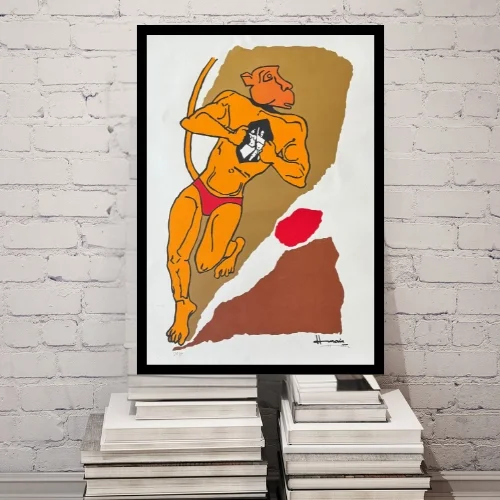
The strongest reason to consider Indian art for gifting is not that it is automatically more meaningful than every other type of gift.
It is that artwork has the potential to become part of the recipient’s environment.
A painting placed in a living room, an art print displayed in a study or a sculpture positioned in an office continues to be encountered long after the celebration has ended.
The meaning of the gift can also grow over time. An artwork received at a wedding may eventually become associated with the couple’s first home. A retirement gift may become connected with a long career. A client gift may remain displayed in an office years after a project has been completed.
That lasting presence is what makes thoughtfully selected Indian art gifts worth considering for occasions where you want the gift itself to remain memorable.
Explore Indian Art Gifts at The Brush Strokes Co.
The Brush Strokes Co. brings together paintings, prints, sculptures and art-led gifting options for different occasions and spaces.
Whether you are searching for an Indian art gift for Diwali, a wedding, housewarming, corporate milestone or personal celebration, start by considering the recipient, the available space and the type of artwork they are likely to enjoy.
Explore our Art Collection for a broader selection, browse Festive Art Gifts for seasonal gifting, or read why corporates should choose art for gifting for professional occasions.
If you are unsure what to choose, get in touch with our art team with the recipient, occasion, approximate budget and preferred style. These details make it easier to narrow the selection to pieces that are genuinely suitable.
FAQ About Indian Art Gifts
What are the best Indian art gifts?
There is no single best Indian art gift. Madhubani, Warli, Gond, Pichwai, contemporary paintings, prints and sculptures can all make suitable gifts depending on the recipient, occasion, budget and interior style.
Which Indian painting is suitable for Diwali gifting?
Pichwai, Ganesha-inspired art and selected festive or nature-themed works may suit Diwali, but the recipient’s personal and religious preferences should always be considered before choosing devotional imagery.
Is Indian art a good wedding gift?
Yes. Artwork can be a thoughtful wedding gift because it can become part of the couple’s new home. Madhubani paintings, contemporary works, sculptures and other art styles may all work depending on the couple’s taste.
What Indian art is suitable for a housewarming gift?
Warli, Gond, Madhubani, contemporary paintings and decorative sculptures can all work as housewarming gifts. Choose according to the recipient’s interior style and available space rather than selecting purely by art tradition.
Can I give Indian art as a corporate gift?
Yes. Artwork can be suitable for important clients, company milestones, senior employees, retirement gifts and selected recognition programmes. Neutral subjects are generally easier to gift when you do not know the recipient’s preferences closely.
Is an original painting better than an art print for gifting?
Not necessarily. Original artwork can be more unique and collectible, while prints are often more affordable and easier to buy in quantity. The better option depends on the recipient, occasion and budget.
How do I know whether an Indian painting is original?
Check the product description and ask the seller about the artist, medium, dimensions and whether the work is an original, limited edition or reproduction. Request relevant documentation or certification where applicable.
How much should I spend on an Indian art gift?
There is no fixed amount. Decide your budget according to the relationship and occasion, then compare suitable originals, editions, prints or sculptures within that range.
Which Indian art style works well in a modern home?
Warli and Gond can work particularly well in contemporary interiors because many compositions have strong graphic qualities. Contemporary Indian paintings are another option. However, the individual artwork and the recipient’s décor matter more than the style name alone.
Can Indian art gifts be personalised?
Personalisation depends on the artist and seller. Some may accept custom sizes, subjects, colour palettes, framing or commissioned artwork. Custom work should be planned well before the gifting date.
What should I check before buying Indian art online?
Check the artist or maker information, medium, dimensions, originality or edition status, framing details, shipping method, return terms and any available authenticity documentation before purchasing.