
The first thing most guests do when they see a photorealistic painting is step closer. From across the room it reads like a photograph, crisp, bright and perfectly still. Up close, the brush marks, the layered glazes and the tiny decisions an artist made over weeks of work start to show. That moment of discovery is exactly why photorealistic paintings have found a comfortable place in modern Indian homes, where clean lines, open layouts and neutral walls leave room for one piece of art to do a lot of talking.
This guide explains what photorealistic art actually is, which rooms it suits best, how to size, light and frame it, and how to protect it through heat, dust and monsoon humidity. It also covers the styling mistakes that quietly flatten realistic art, so the piece you choose looks as good on your wall as it did in the gallery.
Quick Facts About Photorealistic Paintings
| Question | Short Answer |
|---|---|
| What is it? | A painting style that recreates a photograph by hand with extreme detail and precision |
| Where did it begin? | The USA and Europe in the late 1960s |
| Well known names | Richard Estes, Chuck Close, Audrey Flack, Ralph Goings |
| Common mediums | Oil, acrylic, and occasionally watercolour or graphite |
| Best rooms at home | Living room, dining area, entryway, home office, calm bedrooms |
| Popular subjects | Landscapes, seascapes, waterfalls, wildlife, still life, city scenes |
| Key care rule | Keep away from direct sun, damp exterior walls and cooking heat |
What Makes A Painting Truly Photorealistic
A photorealistic painting is a hand-made artwork that aims to look like a high-resolution photograph. According to Tate’s definition of photorealism, the style emerged in Europe and the USA in the late 1960s and is marked by “painstaking detail and precision,” along with a deliberate move away from visible, expressive brushwork.
The early photorealists worked directly from photographs rather than from life. Britannica’s entry on Photo-realism describes how many of them projected a photo onto canvas and used an airbrush to reproduce the glossy look of a printed image, while Chuck Close laid down a pencil grid to scale up his reference before painting in the details. Names often linked with the movement include Richard Estes, Ralph Goings, Audrey Flack and Robert Bechtle.
Three qualities separate genuine photorealistic art from a painting that is simply detailed:
- Accurate light. Reflections, highlights and shadows behave the way a camera would record them, not the way memory suggests.
- Surface truth. Water, glass, metal, bark, fabric and skin each carry their own texture and sheen.
- Hidden hand. Brushstrokes are smoothed so carefully that the viewer forgets a person painted it, until they look closely.
 Smooth blending and soft light on the face show how fine, realistic detail pulls a viewer closer. Subrata Das Buddha Painting, acrylic on canvas, 24 x 24 inches.
Photorealistic Versus Hyper Realistic Art
The two terms get used interchangeably online, but collectors treat them a little differently. Photorealism aims to copy the photograph faithfully. Hyperrealism uses the photo as a starting point and then pushes further, sharpening details and adding emotional weight the camera never captured. If you are weighing a portrait or a commission from a family photo, our guide to hyper realistic portraits walks through that side of the style in depth. For home décor, both work on the same principle. The realism draws people in, and the craftsmanship keeps them looking.
Why Realism Suits Indian Homes Today
Modern Indian apartments tend to share a few traits. Walls are often white, off-white or soft grey. Furniture is lower and cleaner in line. Open-plan living and dining areas mean one wall can be seen from several spots in the home. In that kind of setting, a busy mix of décor pieces can feel cluttered, while one strong artwork gives the eye a clear place to land.
A photorealistic painting fills that role well because it is instantly readable. A guest does not need to know anything about art to understand a misty Western Ghats valley, a Kerala backwater at dusk or a bowl of mangoes on a brass plate. The subject is clear, and the skill involved is obvious the moment someone walks closer.
Realism also has deep roots in Indian art. Raja Ravi Varma, working in the late nineteenth century, combined European oil technique with Indian subjects and changed what Indian audiences expected a painting to look like. Britannica’s biography of Ravi Varma still credits his work as a turning point for realistic painting in India. A photorealistic painting in a Mumbai flat or a Bengaluru villa carries a little of that same tradition forward.
Photorealistic Paintings For Your Living Room
The living room is where most families place their first serious artwork, and it is where photorealistic paintings make the strongest impression. A large landscape or seascape above the sofa works almost like a window, adding depth to a room that may not have much of a view of its own. This is especially useful in city apartments where the actual windows face another building.
A few practical rules help realistic paintings for the living room feel intentional:
- Size to the sofa. Choose a painting roughly two-thirds to three-quarters the width of the sofa or console beneath it.
- Leave breathing room. Keep about 15 to 25 centimetres between the top of the sofa and the bottom of the frame.
- Hang at eye level. Place the centre of the painting around 145 to 150 centimetres from the floor, the height most designers use as a starting point.
- Pick one hero. Let the photorealistic piece be the main feature and keep surrounding décor quieter.
Colour is the next decision. Pull one or two secondary shades from the painting, such as the teal of a river or the ochre of a hillside, and repeat them in cushions, a throw or a ceramic vase. This ties the art to the room without making everything match.
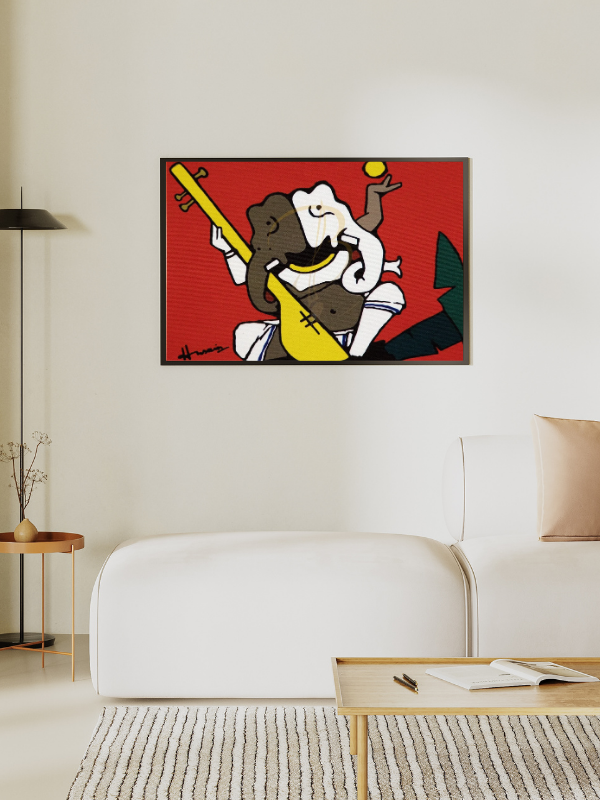 One framed piece above a low sofa gives a modern living room a clear focal point. Styled image from our corporate art gifts collection.
Calm Bedroom Walls With Realistic Art
Bedrooms need a softer hand. The same high-contrast city scene that energises a living room can feel restless across from a bed. Muted, open subjects work better here, such as a quiet lake at dawn, a hazy mountain range, a field of tall grass or a soft seascape with a wide horizon.
Placement matters as much as subject. Hanging the painting above the headboard, sized to the bed rather than the full wall, keeps the room balanced. A piece placed on the wall opposite the bed will be the first thing you see every morning, so choose something you will still enjoy on your hundredth viewing. Photorealistic landscape paintings in cool blues and greens usually suit this spot, while warm golden-hour scenes feel cosy in north-facing rooms that lack natural warmth.
 Muted, warm tones and a quiet subject suit a bedroom wall. Buddha Art by Subrata Das, acrylic on canvas, 30 x 24 inches.
Dining Areas That Deserve Realistic Art
The dining area is one of the most overlooked walls in Indian homes, even though it is where families gather every day and where guests sit longest. A still life painting is a natural fit here. Fruit, flowers, glassware, copper vessels or a simple arrangement of spices on a wooden surface all echo the purpose of the space.
Photorealistic still life also rewards long looking, which suits a room where people sit for an hour over dinner. Light catching the curve of a glass or droplets on a mango skin gives conversation a starting point. In open-plan homes where the dining table sits next to the living area, choose a painting that shares at least one colour with the main living room artwork so the two spaces feel connected rather than competing.
Keep dining room art away from the cooking zone. Steam, grease and heat from the kitchen can damage varnish over time, so a wall at least a few metres from the hob is the safer choice.
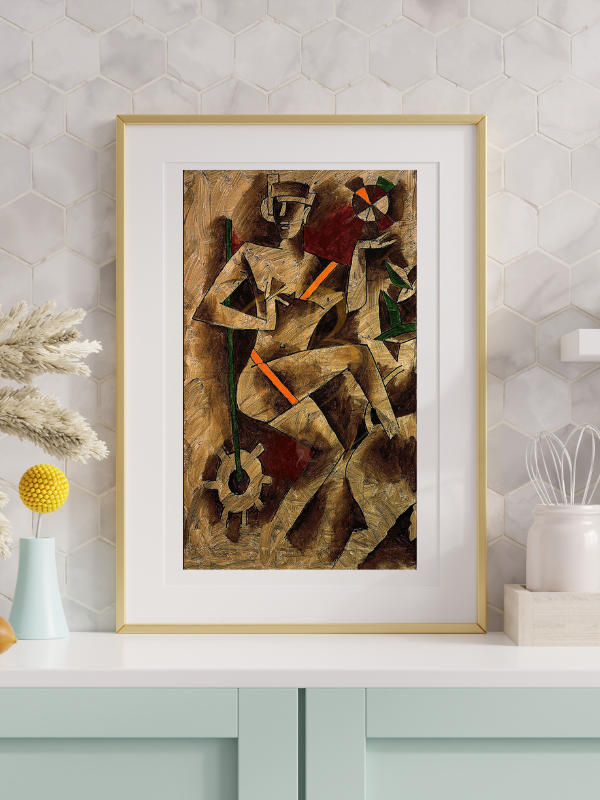 A sideboard wall in the dining area is an easy, safe spot for framed art, well away from cooking heat. Styled image from our festive art gifts collection.
Small Walls And Entryways Done Right
Not every home has a large blank wall, and that is fine. Entryways, corridors and the narrow wall beside a staircase are excellent spots for smaller realistic pieces. A compact painting above a console table at the entrance sets the tone for the whole home before anyone reaches the living room.
For narrow corridors, a vertical composition such as a tall waterfall, a single tree or a doorway in an old haveli draws the eye upward and makes the space feel taller. Two or three small, matched pieces hung in a row also work well along a passage, provided the spacing between them stays consistent, usually around 5 to 8 centimetres.
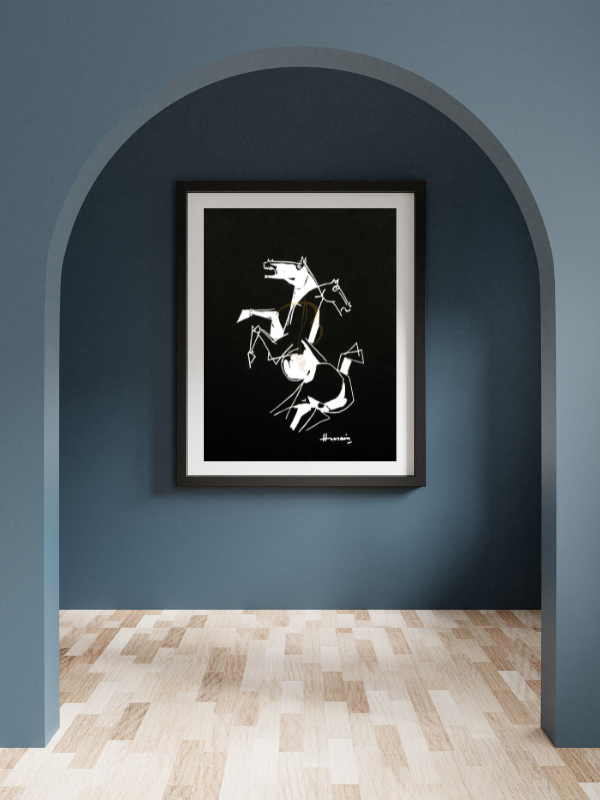 A single framed piece at the end of a corridor draws the eye through the home. Styled image from our wedding art gifts collection.
Home offices deserve the same care. A calm realistic landscape behind your desk looks polished on video calls and gives you something restful to look at between tasks. Check how it frames on camera before you fix the nail.
Subjects That Feel Right At Home
Choosing a subject is the most personal part of buying realistic art. The table below matches popular subjects with the rooms and moods they suit best.
| Subject | Mood It Creates | Best Room |
|---|---|---|
| Mountain and valley landscapes | Calm, open, spacious | Living room, bedroom |
| Waterfalls and rivers | Fresh, flowing, energising | Living room, entryway |
| Seascapes and beaches | Airy, relaxed | Bedroom, living room |
| Still life with fruit or flowers | Warm, inviting | Dining area |
| Wildlife and horses | Strong, dynamic | Home office, living room |
| City streets and rain scenes | Modern, lively | Home office, study |
| Village and heritage scenes | Nostalgic, rooted | Living room, dining area |
Landscapes remain the most popular choice by a wide margin, and our guide to landscape painting styles and famous artists is a useful read if you want to understand the genre before buying. Water scenes have their own appeal, which we explore in what makes paintings of waterfalls so captivating. If you are drawn to running horses, which many Indian families place in living rooms and offices, see our note on horse painting placement and Vastu tips.
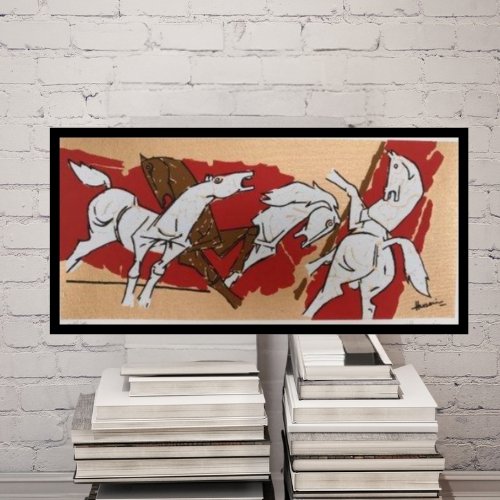 Running horses remain a favourite subject for Indian living rooms and home offices. M.F. Husain Horse, limited edition serigraph on canvas.
Pairing Realism With Modern Interior Styles
Realism is flexible, but it still needs to agree with the room around it. Here is how it pairs with the interior styles most common in Indian homes.
| Interior Style | Pairing Approach | Frame Suggestion |
|---|---|---|
| Minimal or Scandinavian | One large landscape with lots of sky or water | Thin black or natural oak |
| Contemporary Indian | Heritage scene or still life with brass and copper tones | Slim gold or walnut |
| Modern luxury | Dramatic seascape or night city scene | Floating frame or gallery wrap |
| Warm traditional | Village, temple town or monsoon landscape | Carved wood |
| Industrial or loft | Urban street, rain reflections, vintage cars | Matte black metal |
Mixing styles also works when done with intention. A photorealistic still life beside a folk art piece can look curated rather than confused if the two share a colour. The trick is contrast, a principle we unpack in our piece on the importance of contrast in paintings. If you want to pair smooth realism with something tactile, texture art placed on a neighbouring wall creates a pleasing push and pull. In the same way, a realistic landscape in the living room can sit comfortably beside a bold M.F. Husain horse serigraph in the study, or a softly realistic Subrata Das Buddha painting in a quiet reading corner.
Sizing And Lighting That Flatter Detail
Photorealistic paintings live or die by light. All that fine detail disappears if the painting sits in a dim corner, and it can wash out under harsh glare.
- Use warm, soft light. A picture light or an adjustable ceiling spot angled at about 30 degrees highlights detail without creating glare on varnish.
- Avoid direct sunlight. The Canadian Conservation Institute’s guidance on light damage explains that light fades and bleaches colours over time, and some pigments are far more sensitive than others.
- Test before you drill. Tape a sheet of newspaper cut to the painting’s size on the wall for a day or two and see how it reads in morning and evening light.
- Go bigger than you think. Most homeowners underestimate size. A painting that looks large in the shop often looks modest once hung on a full wall.
Frames That Let Detail Breathe
Framing should support the painting, not compete with it. Realistic art usually looks best in a simple, slim frame that lets the image carry the room. A floating frame, where a small gap separates canvas and frame edge, adds a gallery-like finish to a modern space. Heavy, ornate frames suit traditional rooms, but they can make a clean contemporary interior feel dated. If you are weighing a stretched canvas against a framed print, our overview of canvas art explains the differences in finish and durability.
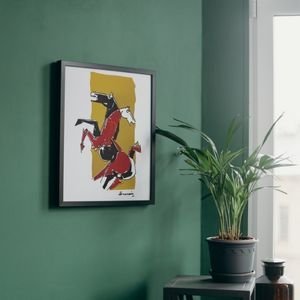 A slim black frame keeps attention on the art rather than the border. From our art collections.
Protecting Detail Through Indian Monsoons
India’s climate is tough on artwork. Months of high humidity, dust from open balconies and strong afternoon sun all take a toll on canvas and pigment. The Canadian Conservation Institute’s environmental guidelines for paintings recommend a stable relative humidity between 40 and 60 percent and warn that high heat combined with high humidity can soften paint and varnish layers. The same guidance advises against displaying paintings on exterior perimeter walls or near air vents.
Simple habits make a big difference at home:
- Hang paintings on interior walls wherever possible, especially during the monsoon.
- Keep them away from AC vents, bathroom walls and kitchen steam.
- Dust gently with a soft, dry brush. Never use water, sprays or cleaning cloths.
- Run a dehumidifier in closed rooms during the wettest months if you notice damp.
- Check the back of the canvas once a season for spots, sagging or mould.
- Handle the painting by its frame or stretcher bars, not the painted surface.
Realistic art relies on fine detail, so even minor fading or a dull film of dust is more noticeable than it would be on a loose, expressive painting. A little care keeps the surface crisp for decades.
Styling Mistakes That Flatten Realistic Art
Even a beautifully painted piece can fall flat if the room works against it. These are the most common mistakes to avoid:
- Hanging too high. Art placed near the ceiling feels disconnected from the furniture and the people in the room.
- Choosing too small. A small painting floating on a large wall looks like an afterthought.
- Crowding the wall. Shelves, clocks and mirrors placed too close pull attention away from the detail.
- Matching everything. Copying every colour in the painting into cushions and curtains makes the room feel staged.
- Ignoring the view line. Paintings behind a TV or tall plant are only ever half seen.
- Forgetting the light. Without a light source aimed at it, realistic art loses its depth after sunset.
Understanding how a painting is built also helps. Our guide to painting composition explains how artists guide the eye across a canvas, which makes it easier to choose a wall position that works with the composition instead of against it.
Choosing Your First Photorealistic Painting
Buying realistic art for the first time does not need to be complicated. Start with the room, then the mood, then the subject. Measure the wall and the furniture below it before you shop, and take a photo of the space in daylight so you can compare colours.
Ask a few questions before you commit. Is the piece hand-painted or printed? What medium was used? Is it varnished, and does it arrive ready to hang? A hand-painted photorealistic oil painting will carry texture and depth that a printed reproduction cannot match, and it will be the only one of its kind.
At The Brushstrokes Co., our art collections bring together original works by Indian artists across styles, from traditional folk forms to contemporary and realistic pieces. You can learn more about our curators and artists, or contact our art team with your room size, colours and preferred subject for personal recommendations. Realistic art also makes a thoughtful housewarming or festive present, and our festive art gifts collection is a good place to start.
A well-chosen photorealistic painting does more than fill a wall. It gives a modern home a focal point, a conversation starter and a small daily reminder of the patience and skill behind handmade art.
FAQ Photorealistic Painting
What is a photorealistic painting?
A photorealistic painting is a hand-made artwork that recreates a photograph in such fine detail that it can be mistaken for a photo at first glance. The style emerged in the USA and Europe in the late 1960s.
Is photorealistic art hand-painted or printed?
Original photorealistic art is hand-painted, usually in oil or acrylic, over many hours or weeks. Prints of these works exist, but an original carries surface texture and depth that a print cannot reproduce.
Which room is best for a photorealistic painting?
The living room is the most popular choice because it has the largest walls and the most visitors. Dining areas, entryways, home offices and calm bedrooms also suit realistic art when the subject matches the room’s mood.
What size photorealistic painting should I hang above a sofa?
Aim for a painting about two-thirds to three-quarters the width of the sofa, hung so its centre sits roughly 145 to 150 centimetres from the floor.
Do photorealistic paintings suit small apartments?
Yes. A single landscape or seascape can make a compact room feel larger by adding a sense of depth, and smaller pieces work well in entryways and corridors.
How do I protect a painting from humidity in India?
Hang it on an interior wall away from bathrooms, kitchens and AC vents, keep it out of direct sunlight, dust it with a soft dry brush and check the back of the canvas each season.
What is the difference between photorealism and hyperrealism?
Photorealism aims to copy a photograph faithfully. Hyperrealism uses the photo as a starting point and exaggerates detail or emotion beyond what the camera captured.
Which subjects work best for photorealistic wall art?
Landscapes, waterfalls, seascapes, still life, wildlife and heritage scenes are the most popular, since they suit most rooms and age well as tastes change.