
Mughal art painting is one of the most distinctive traditions in Indian art. Known for intricate details, refined portraiture, rich colours and beautifully composed court scenes, Mughal paintings developed through the meeting of Persian artistic traditions with Indian influences.
From royal portraits and hunting scenes to detailed studies of birds, animals and flowers, Mughal artists created works that documented both imperial life and the natural world around them.
The tradition reached important stages of development under emperors such as Akbar, Jahangir and Shah Jahan. Today, Mughal miniature paintings continue to attract art lovers, historians, collectors and homeowners interested in traditional Indian art.
In this guide, we explore the history of Mughal art painting, its main characteristics, famous themes, important artists and its influence on Indian art.
Mughal Art Painting Quick Facts
| Detail | Information |
|---|---|
| Period | 16th century onward |
| Foundations laid by | Emperor Humayun |
| Major expansion | Emperor Akbar’s imperial workshops |
| Key influences | Persian miniature painting, Indian traditions, later European imagery |
| Famous manuscripts | Hamzanama, Akbarnama |
| Well-known painters | Basawan, Daswanth, Ustad Mansur, Bishandas |
| Common subjects | Court scenes, royal portraits, hunting, animals, birds, gardens |
| Signature features | Fine detailing, rich colours, gold work, decorative borders |
What Is Mughal Art Painting?
Mughal art painting refers to a style of painting that developed under the Mughal emperors in India from the 16th century onward.
The tradition was strongly influenced by Persian miniature painting but gradually incorporated Indian artistic ideas, local colours, natural observation and, later, selected European influences.
Many early Mughal paintings were created as illustrations for manuscripts. These works were usually small in scale yet incredibly detailed, allowing artists to create elaborate scenes filled with architecture, clothing, landscapes, animals and individual figures.
Over time, portraiture, court scenes and studies of nature became increasingly important.
History of Mughal Art Painting
The foundations of Mughal painting can be traced to Emperor Humayun.
During his exile, Humayun spent time at the Persian court, where he encountered the highly developed tradition of Persian miniature painting. He later brought Persian artists including Mir Sayyid Ali and Abd al-Samad into his court.
However, Mughal painting truly expanded under Humayun’s son, Emperor Akbar.
Akbar established a large imperial painting workshop where Persian and Indian artists worked together on ambitious illustrated manuscripts.
This collaboration helped create an artistic language that was different from purely Persian miniature painting.
Indian artists introduced new approaches to colour, human expression, landscape and storytelling, while Persian traditions contributed disciplined drawing, composition and miniature techniques.
The result gradually became what we now recognise as the Mughal school of painting. The Metropolitan Museum of Art’s essay on early Mughal art offers a useful overview of this formative period.
Mughal Painting During Akbar’s Reign
Akbar played one of the most important roles in the development of Mughal art.
His imperial workshops employed numerous painters who worked together on manuscripts depicting history, literature, legends and royal events.
One of the most celebrated projects associated with his reign was the Hamzanama, an ambitious illustrated narrative containing dynamic scenes of adventure and battle.
The Akbarnama, which recorded events from Akbar’s reign, also became an important source of Mughal painting.
Paintings from this period often contain energetic compositions with several figures, architectural settings, animals and dramatic action.
Artists such as Basawan and Daswanth became prominent figures in Akbar’s workshops.
Mughal Painting During Jahangir’s Reign
Mughal painting became increasingly refined during the reign of Emperor Jahangir.
Jahangir had a strong personal interest in painting and was particularly interested in portraiture and the natural world.
Artists began creating highly observed studies of birds, flowers and animals along with individual portraits of members of the royal court.
Instead of focusing only on large historical narratives, artists increasingly explored individual subjects.
One of the best-known painters associated with Jahangir’s court was Ustad Mansur, celebrated for detailed studies of animals, birds and plants.
Portrait painting also became increasingly sophisticated during this period.
The combination of observation, delicate brushwork and elegant composition made Jahangir’s period especially significant in Mughal art history.
Mughal Art Under Shah Jahan
During the reign of Shah Jahan, Mughal painting became more formal and decorative.
Royal portraits, court ceremonies, luxurious interiors and elegant compositions became prominent themes.
The visual refinement associated with Mughal architecture during Shah Jahan’s reign, seen most famously in the Taj Mahal, could also be seen in painting.
Artists gave considerable attention to jewellery, textiles, architectural decoration and royal clothing.
Gold detailing and decorative borders further enhanced the luxurious appearance of many works.
Portraits from this period often emphasised the emperor’s authority, elegance and elevated position within the court.
Main Characteristics of Mughal Art Painting
Several visual qualities make Mughal paintings easy to recognise.
Fine Detailing
One of the most striking characteristics of Mughal miniature paintings is their level of detail.
Artists carefully depicted jewellery, facial features, fabrics, weapons, architecture, plants and animals even within relatively small compositions.
Detailed Portraiture
Portraiture became an especially important part of Mughal painting.
Emperors, princes, nobles and members of the court were often represented with carefully observed individual features.
Rich Colours
Mughal paintings frequently feature reds, blues, greens, gold and earthy tones.
Traditional painters worked with carefully prepared pigments, often combining vivid colour with finely controlled linework.
Decorative Borders
Many Mughal paintings were surrounded by elaborate borders containing flowers, patterns, calligraphy or ornamental designs.
These borders often became part of the overall artistic composition.
Observation of Nature
Birds, plants, flowers and animals appear frequently in Mughal painting.
During Jahangir’s reign in particular, artists produced remarkably detailed natural studies.
Courtly Subjects
Because Mughal painting developed largely under imperial patronage, royal life became one of its most important subjects.
Durbar scenes, processions, royal meetings and portraits provide fascinating visual records of Mughal court culture.
Popular Themes in Mughal Paintings
Mughal artists worked with a wide variety of subjects.
Royal Court Scenes
Durbar paintings show emperors surrounded by courtiers, nobles, visitors and attendants.
The placement of figures often reflects their position and importance within the court.
Hunting Scenes
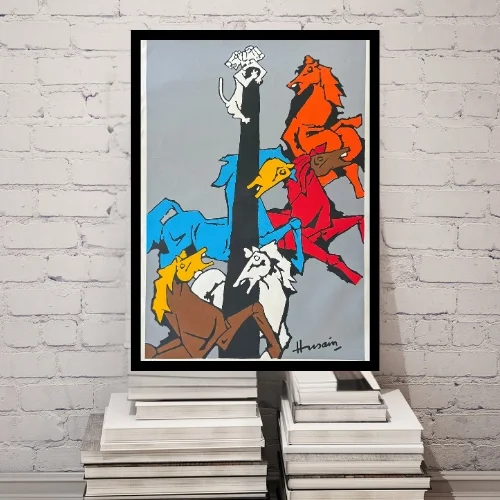
Royal hunting expeditions allowed painters to create energetic compositions filled with horses, elephants, wildlife and landscapes.
These scenes combined detailed observation with dramatic movement. The horse remains one of the most loved subjects in Indian art even today, and our guide to horse paintings and Vastu placement explores how this subject works in modern homes.
Royal Portraits
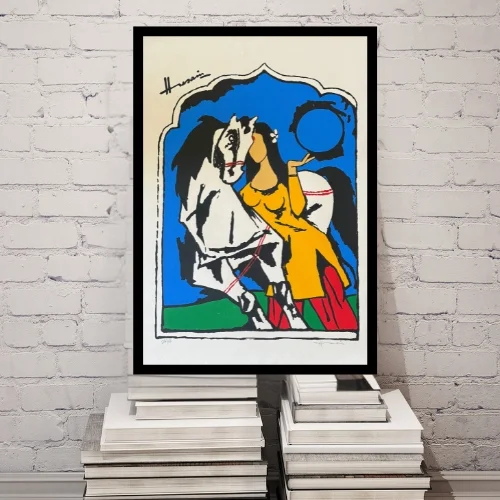
Portraits of emperors and nobles became an important Mughal tradition, particularly from Jahangir’s reign onward.
The artists carefully represented clothing, jewellery, turbans and individual facial characteristics.
Animals and Birds
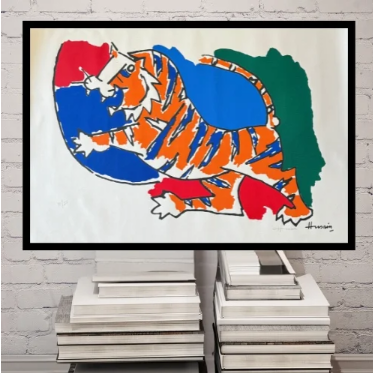
Mughal artists showed extraordinary interest in the natural world.
Birds and animals were sometimes included within larger scenes and were also depicted as individual studies.
Gardens and Landscapes
Gardens played an important role in Mughal culture.
Paintings frequently included flowering plants, fountains, trees, terraces and carefully designed landscapes.
Historical and Literary Scenes
Many early Mughal paintings were connected to illustrated manuscripts.
Historical events, battles, journeys, legends and literary stories were transformed into detailed visual narratives.
Famous Mughal Painters
The Mughal royal workshops brought together many talented artists.
Basawan
Basawan was one of the most important painters associated with Akbar’s court.
He became known for expressive figures, sophisticated compositions and his ability to create a sense of depth and volume.
Daswanth
Daswanth was another important artist working during Akbar’s reign and contributed to major imperial painting projects.
Ustad Mansur
Ustad Mansur became famous during Jahangir’s reign for his highly detailed representations of birds, animals and plants.
His work remains strongly associated with Mughal natural-history painting.
Bishandas
Bishandas was particularly respected for portraiture and produced carefully observed likenesses of important individuals.
These artists demonstrate that Mughal painting was not a single fixed style. It evolved as individual painters and imperial patrons introduced new approaches. If you enjoy discovering how individual artists shaped Indian art, our guide to famous Indian paintings and artists continues the story into the modern era.
Mughal Miniature Painting Techniques
Creating a traditional Mughal miniature required patience and exceptional control.
Artists generally worked on carefully prepared surfaces and built compositions through precise drawing followed by layers of colour.
Fine brushes made it possible to create delicate facial features, textile patterns, jewellery and decorative elements.
Gold was sometimes incorporated into clothing, borders or architectural details to add richness.
Many imperial works were also collaborative.
Different artists could contribute to the drawing, colouring, portraits or final detailing of a single composition.
The combination of specialist skills allowed Mughal workshops to produce extremely sophisticated illustrated manuscripts.
Mughal Painting vs Rajput Painting
Mughal and Rajput paintings are both important traditions within Indian art, but they developed under different forms of patronage and often explored different subjects.
Mughal paintings were closely associated with the imperial court and frequently depicted emperors, historical events, portraits, hunting, court ceremonies and natural studies.
Rajput painting developed across different regional kingdoms and became particularly well known for devotional, romantic and literary themes, including stories connected with Krishna.
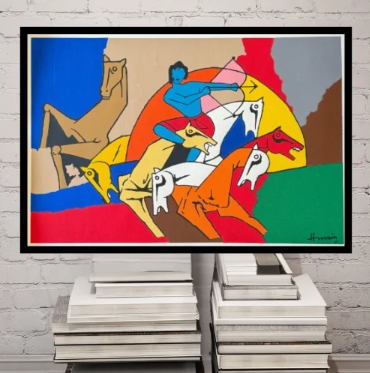
Mughal painting often emphasised careful observation and individual portraiture, while many Rajput traditions used stronger symbolic expression and vibrant colour. Devotional traditions such as Pichwai painting show how Krishna-centred art continued to flourish across Rajasthan.
There was also artistic exchange between these traditions, so the boundaries were not always completely separate.
Why Mughal Art Is Important in Indian Art History
Mughal art painting represents an important period of cultural exchange in India.
Persian artistic traditions interacted with Indian techniques, subjects and artists, while later contact with European imagery introduced additional visual ideas.
The imperial workshops also helped artists develop highly specialised skills in portraiture, manuscript illustration, landscape and natural observation.
As Mughal patronage changed over time, artists moved to regional courts and contributed to the development of other painting traditions across India, including the Pahari schools.
The influence of Mughal painting therefore extended far beyond the imperial court itself.
Mughal Paintings in Modern Interiors
Mughal-inspired artwork can also work beautifully in contemporary homes.
Because these artworks often contain intricate patterns and rich colours, they can become a strong focal point without requiring several decorative pieces around them.
A Mughal-inspired painting can work particularly well in a living room, study, dining room, entrance or reading space.
Neutral walls such as ivory, beige, cream or soft grey can help intricate artwork stand out.
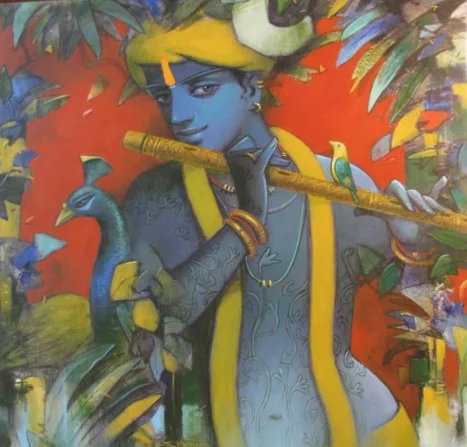
Warm wood, brass accessories and subtle traditional textiles can complement the heritage character of the artwork without making the room feel overly traditional. A handcrafted piece from our sculpture collection placed on a console below the painting can complete the look.
For contemporary interiors, a single prominent artwork is often more effective than placing several highly detailed works close together.
Choosing Mughal-Inspired Art for Your Home
When selecting artwork inspired by the Mughal tradition, begin with the subject that interests you most.
A royal portrait can create a formal and striking appearance, while garden scenes can feel softer and more decorative. Nature studies can suit quieter interiors, while elaborate court scenes work particularly well as statement pieces.
It is also important to understand what you are purchasing.
An original historical Mughal miniature, a contemporary hand-painted original inspired by Mughal art, an art print and a reproduction are very different types of artwork. Limited-edition serigraphs sit between these categories and are worth understanding before you buy.
Always check the artist, medium, dimensions and artwork description before making a purchase. If you need help, you can contact our team for artwork details.
For modern wall décor, canvas art or contemporary reproductions can offer the visual character of Mughal-inspired art in formats better suited to larger interior spaces.
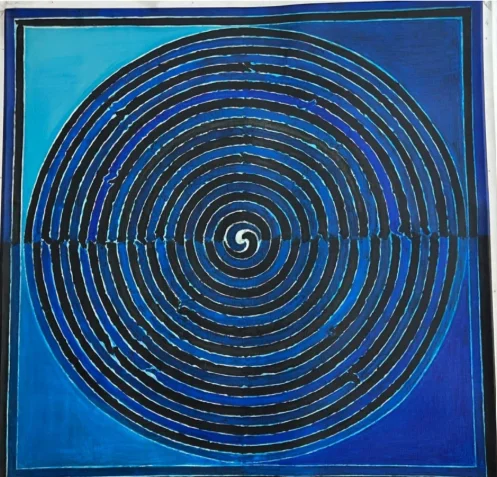
This image supports the discussion of modern art formats and should not be described as a Mughal painting.
Caring for Mughal and Mughal-Inspired Paintings
Artworks should generally be protected from prolonged direct sunlight because excessive light can cause colours to fade over time.
Paper-based works should also be protected from moisture and high humidity.
Appropriate framing can help protect delicate works from dust and environmental exposure.
If you own an antique or historically important Mughal miniature, avoid attempting to clean or restore it yourself. Conservation should be handled by a qualified professional, and the American Institute for Conservation offers guidance on finding one.
Modern paintings and reproductions should be cared for according to their specific medium and materials.
Bring the Beauty of Indian Art Into Your Home
Mughal art painting remains fascinating because it combines history, craftsmanship, storytelling and extraordinary visual detail.
From Akbar’s ambitious illustrated manuscripts to Jahangir’s refined portraits and studies of nature, Mughal painters developed one of India’s most recognisable artistic traditions.
Understanding its history also makes it easier to appreciate the details within each painting, the clothing, architecture, expressions, landscapes, animals and decorative borders that together tell the story of an extraordinary artistic period.
If you enjoy traditional and contemporary Indian artwork, explore The Brushstrokes Co. collection to discover original paintings and artworks suited to modern homes, gifting and art collections.
Frequently Asked Questions About Mughal Art Painting
What is Mughal art painting?
Mughal art painting is a style of Indian painting that developed under Mughal imperial patronage from the 16th century onward. It combined Persian artistic traditions with Indian influences and became particularly famous for miniature paintings, portraits, court scenes and nature studies.
Who introduced Mughal painting in India?
The foundations were established during Humayun’s reign with the involvement of Persian artists such as Mir Sayyid Ali and Abd al-Samad. The tradition expanded significantly under Emperor Akbar.
What are the main features of Mughal painting?
Fine detailing, refined portraiture, rich colours, decorative borders, court scenes, nature studies and carefully observed figures are among its best-known characteristics.
Which Mughal emperor encouraged painting the most?
Several Mughal emperors influenced the tradition in different ways. Akbar greatly expanded the imperial painting workshops, while Jahangir encouraged refined portraiture and detailed observations of nature.
What subjects appear in Mughal paintings?
Common subjects include royal portraits, durbar scenes, hunting expeditions, battles, animals, birds, gardens, historical events and literary narratives.
Who were famous Mughal painters?
Basawan, Daswanth, Ustad Mansur and Bishandas are among the well-known artists associated with Mughal imperial painting workshops.
What is the difference between Mughal and Rajput painting?
Mughal painting was strongly connected with imperial court culture and often focused on portraiture, history and court life. Rajput traditions frequently explored devotional, romantic and literary subjects, although interaction between different Indian painting traditions also occurred.
Why are Mughal miniature paintings famous?
They are admired for their fine detail, elegant compositions, elaborate costumes, careful portraits and sophisticated representation of royal life and nature.
Are Mughal paintings only miniature paintings?
Miniature and manuscript painting formed an important part of the tradition, but Mughal artists also produced individual portraits, album pages and other works outside complete illustrated manuscripts.
Can Mughal-inspired paintings be used in modern interiors?
Yes. Mughal-inspired artwork can complement both traditional and contemporary interiors, particularly when used as a focal artwork in living rooms, dining areas, studies or entryways.