What Is The Real Vastu Shastra

Vastu Shastra is one of those terms almost every Indian household has heard, yet very few people can describe it properly. What most people actually know, though, is a shortened, secondhand version, a handful of rules about doors and directions passed along without much of the reasoning behind them.

This guide goes back to that older reasoning. You will learn where it came from, what its core ideas actually are, how the eight directions and five elements fit together, and how people apply the guidance to real rooms, from the kitchen to the pooja corner to the wall where a painting hangs.

Vastu Shastra is the traditional Indian system of architecture and space planning that connects a building’s design to cardinal directions, five natural elements, and a cosmic grid called the Vastu Purusha Mandala. Rooted in ancient texts such as the Mayamata and Manasara, it offers guidance on how a home’s entrance, rooms, colors, and even wall art should be positioned to support comfort, order, and daily life.

 Vastu ShastraMorning light entering from the east is exactly the kind of natural detail this tradition was built around long before anyone called it a design trend. Photo by Halyna Khomyk, Pexels.

What Does Vastu Shastra Represent

Vastu Shastra comes from two Sanskrit words. Vastu refers to a dwelling or a built structure, and shastra refers to a system of knowledge or a doctrine. Put together, the term translates loosely to the science of a dwelling, or more broadly, the science of architecture.

At its core, this system treats a home as something sensitive to direction, light, airflow, and five natural elements, rather than just a collection of rooms. A house under this framework is meant to sit in balance with the sun’s path, the wind, and the land beneath it. That balance is what almost every rule inside the tradition tries to protect.

Some scholars connect it to Sthapatya Veda, an applied branch of knowledge tied to the Vedic tradition, though the exact scriptural lineage is debated among historians. What is not debated is that Vastu Shastra has shaped Indian building practice for well over a thousand years, from village homes to temple complexes to entire planned cities.

Where Did This Practice Originate

Nobody can point to a single date and call it the start of the tradition. The ideas layered in over centuries. Kautilya’s Arthashastra, written somewhere around the second or third century BCE, already discusses town planning and domestic layout, showing that directional and structural thinking existed in Indian governance long before it had a fixed name.

By the sixth century CE, the astronomer Varahamihira had devoted entire chapters of his text Brihat Samhita to building principles, one of the earliest surviving Indian texts to treat architecture as its own subject. Around the same broad window, roughly the fifth through seventh centuries CE, two major South Indian treatises, the Mayamata and the Manasara, laid out detailed rules for site selection, proportion, and temple design that practitioners still reference today.

The tradition was never confined to homes either. Temple architecture across South India leaned heavily on these same texts, and later, entire cities were planned this way. Jaipur, laid out in 1727 under the direction of the astronomer and architect Vidyadhar Bhattacharya for Maharaja Sawai Jai Singh II, remains one of the clearest large-scale examples of this system applied at city level rather than to a single building.

Which Ancient Texts Shaped It

A handful of classical texts still anchor almost everything modern practitioners teach. Getting familiar with a few of them helps separate genuine tradition from the diluted, oversimplified version that circulates online today.

  • The Mayamata and the Manasara, both dated to roughly the fifth through seventh centuries CE and associated with South India, remain the most cited sources for proportion, site grids, and temple design.
  • The Brihat Samhita, written by the astronomer Varahamihira in the sixth century CE, dedicates several chapters to building science alongside its astronomical content.
  • The Samarangana Sutradhara, attributed to the eleventh century ruler King Bhoja of Dhar, expands on architecture, town planning, and even mechanical devices.
  • The Vishwakarma Prakasha and the Aparajitapriccha round out the core group, both offering region specific guidance that later regional traditions built upon.

None of these texts describe the tradition as fixed or identical everywhere. Each region adapted the core principles to its own climate, materials, and building customs, which is part of why the advice can vary slightly between a consultant trained in North India and one trained in the South. IGNCA’s academic unit runs a dedicated certification course built around these same classical texts, a useful sign that this literature is treated as serious cultural scholarship rather than internet folklore.

What Are The Five Elements

Vastu Shastra rests on five natural elements working together, commonly called the Panchabhuta. Every room, wall, and object placement traces back to keeping these five elements in reasonable balance.

Earth (Prithvi) represents stability and belongs to the southwest, making it ideal for the master bedroom and heavy furniture. Water (Jal) governs the northeast, suiting pooja rooms and water features. Fire (Agni) rules the southeast, making it the preferred location for the kitchen. Air (Vayu) is linked to the northwest, which works well for guest rooms, while Space (Akasha) occupies the home’s center, or Brahmasthana, and is traditionally kept open.

These five elements form the foundation of Vastu Shastra, with every direction, room placement, and color recommendation based on maintaining their balance.

How Does Vastu Purusha Mandala Work

The Vastu Purusha Mandala is the geometric diagram at the center of how this system maps a building site. It takes the shape of a square grid laid over the land, divided into smaller squares, each one assigned to a specific direction, element, and presiding deity.

Tradition describes Vastu Purusha as a cosmic being positioned face down within this grid, and the layout is designed so that no construction disturbs his head, joints, or vital points. The size of the grid changes depending on the scale of the project. A simple version might use just nine squares, called the Pitha, while a more detailed residential or temple layout can use sixty four squares, the Manduka, or eighty one squares, the Paramasayika grid.

The center of every version, no matter the grid size, stays reserved as the Brahmasthana, kept open and free of heavy structure. Bathrooms, staircases, and storage are traditionally kept away from this central zone, while the entrance, the living areas, and open courtyards are positioned to work with it rather than against it.

What Do The Eight Directions Represent

This system assigns a presiding deity and a practical function to each of the eight directions, and knowing these is the fastest way to understand why a consultant recommends one wall over another.

East, ruled by Indra, catches the first sunlight of the day and is tied to new beginnings, which is why entrances and study areas often favor this direction. Southeast, the Agneya corner, is governed by Agni and is reserved for the kitchen and anything involving heat or transformation. South, ruled by Yama, is generally treated as a resting direction, better suited to storage or a study than a main living space. Southwest, or Nairutya, is the heaviest and most stable zone, recommended for the master bedroom and main structural walls.

West, ruled by Varuna, is associated with gains and is often used for dining areas. Northwest, the Vayavya corner under Vayu, suits movement and short term use, making it a fit for guest rooms or a garage. North, ruled by Kubera, the deity linked with wealth, is favored for a home office, safe, or cash box. Northeast, the Ishanya corner and considered the most sacred under Ishana, is reserved for the pooja room and left as open and uncluttered as possible.

 Vastu ShastraDirection is the starting point for nearly every recommendation in this tradition, long before color or furniture ever enter the conversation. Photo by Sasha Alalykin, Pexels.

How This System Guides Room Design

Applying this system becomes genuinely useful once it moves from theory into an actual floor plan. The direction and element logic already covered translates into fairly specific, practical recommendations for each room in a home.

  • Best Direction For Main Entrance

A north, northeast, or east facing main door is considered the strongest entrance choice, since all three directions catch early light and align with directions tied to positive energy and opportunity. A south facing entrance is not automatically a problem, but consultants generally recommend small adjustments, such as a bright threshold light or a modest water feature, to balance it.

  • Room Placement Tips For Living Areas

Living rooms work best in the north, east, or northeast portion of the home, matching the same directions favored for the main entrance, since this is the space that welcomes guests first. Heavier furniture works best against the south or west walls, leaving the north and east more open for movement and natural light. This is also the room where most homeowners hang their most significant piece of art, and pairing that placement with the color and directional guidance covered further down tends to produce a genuinely well balanced result.

 Vastu ShastraA single well placed piece on the north or east wall of a living room, the kind of focal point this tradition treats as a strong first impression. Photo by Romka, Pexels.

  • Ideal Placement For The Kitchen

The southeast corner is the standard recommendation for a kitchen, since that zone belongs to Agni, the fire element. A northwest kitchen is considered an acceptable second option. Placing the stove directly opposite the main door or under a bathroom on the floor above is generally discouraged, since both are seen as disrupting the fire element’s stability.

  • Bedroom Placement Under This Tradition

The southwest zone is the traditional pick for a master bedroom, matching the stability of the earth element. Sleeping with the head pointed south or east is generally recommended, while sleeping with the head toward the north is usually discouraged, since restless sleep is associated with that position. Mirrors directly facing the bed are avoided for a similar reason many interior designers avoid them, since a reflection close to the sleeper is considered disruptive rather than restful.

  • Best Direction For Pooja Room

Northeast is considered the single most favorable direction for a pooja room, since that corner belongs to the water element and is treated as the most sacred zone of the home. Idols or devotional artwork should generally face west or east, so the person praying faces east or north, and the space is best kept away from a bathroom wall or a staircase running above it.

  • Bathroom And Staircase Placement Rules

Bathrooms belong in the northwest or west portion of a home, away from the northeast pooja corner and away from the kitchen wherever possible. Staircases generally work best in the south, west, or southwest, since a rising staircase in those heavier zones is thought to reinforce the home’s stability rather than work against it.

  • Vastu Tips For Home Office

A north, east, or northeast facing desk is the standard recommendation for a home office, positioned so the person working faces one of these directions while seated. Clutter under a staircase or directly behind the desk is generally discouraged, since a clear, organized workspace is treated as directly tied to focus and financial clarity.

Where Should You Hang Paintings according to Vastu Shastra

Wall art gets specific attention inside Vastu Shastra too, and this is where the guidance becomes genuinely useful for anyone decorating rather than constructing. North and east walls are generally considered the safest, most favorable spots for artwork meant to invite positive energy, prosperity themes especially.

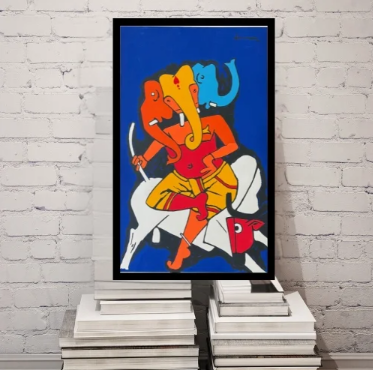
Northeast corners work well for paintings built around water, rivers, lotus ponds, or flowing imagery, since that zone already belongs to the water element. A Ganesha painting near the entrance is one of the most common applications of this principle in Indian homes, since Ganesha is regarded as the remover of obstacles and is traditionally welcomed at the start of a home’s daily life. A Radha Krishna piece for a north facing living room wall, or a Shiva composition for a quieter study, are both popular choices that lean into this same directional logic.

South facing walls are typically avoided for devotional or heavy religious pieces, and artwork directly above a bed or facing a bathroom door is generally discouraged too, regardless of the subject. Bedrooms call for a gentler approach than living rooms. Calm, soft imagery, a single tree, a quiet landscape, or muted colors tends to be preferred over intense figures or aggressive scenes, which read as unsettling in a space meant for rest.

 Vastu Shastra
A hand-painted Ganesha piece near the entrance, one of the most common ways Indian homes put this guidance into practice. Image from The Brushstrokes Co collection.

At The Brushstrokes Co, this is a question we hear from almost every customer decorating a new home, and it is genuinely worth thirty seconds of thought before a painting goes up on a wall, not after.

Which Colors Suit Each Direction according to Vastu Shastra

Color carries its own weight inside this tradition, tied to the same five elements already covered. Matching wall or accent colors to a room’s direction is one of the simplest ways to apply these principles without touching the structure of a home at all.

White, light yellow, and cream suit the north, linked to calm and clarity. Green and light blue work well in the east, tied to growth and new beginnings. The southeast favors orange, pink, and red tones, matching the fire element governing that zone, while the south itself does better with darker, grounding shades like maroon or deep brown. Southwest rooms respond well to earthy tones, beige, terracotta, and light brown, in keeping with the earth element there. Yellow and cream work for the west, and light blue or white suit the northeast, echoing the water element that governs it.

 Vastu Shastra
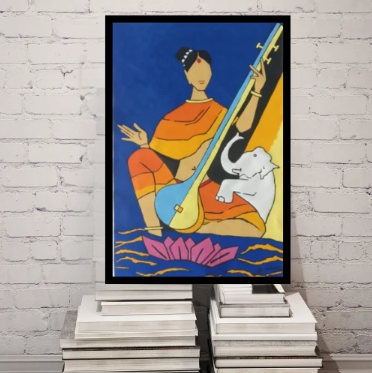
Earthy, grounded tones like this suit a southwest facing room particularly well under this color guidance. Image from The Brushstrokes Co collection.

None of this needs to be applied all at once. Even shifting one or two accent walls toward these tones, or choosing a painting with a palette that matches the room’s direction, is enough to put these principles into practice.

Common Myths About This Vastu Shastra

A lot of what circulates online about Vastu Shastra is exaggerated, invented, or lifted out of context, and separating the real tradition from internet folklore matters if you actually want to apply any of it well.

One common myth claims that a home which does not follow these principles cannot be fixed without demolition. In reality, most practitioners rely on remedies, mirrors, plants, color changes, or minor rearrangement, rather than structural rebuilding, to correct an imbalance. Another myth treats every rule as identical across India, when regional texts and traditions actually differ in real, documented ways depending on climate, material, and local custom.

A third myth conflates the practice entirely with astrology or superstition, when the original texts read closer to a design and site planning manual than a mystical prediction system. A widely repeated myth claims it guarantees financial success or health outcomes, a claim no credible practitioner or classical text actually makes. This system offers guidance on comfort, order, and traditional symbolism, not guaranteed results.

Mistakes People Make Applying Vastu Shastra

The biggest mistake people make is trying to force every single rule into a home that was never built with them in mind. Most apartments and older Indian homes were not designed around a Vastu Purusha Mandala, and chasing perfect compliance in a fixed floor plan usually causes more stress than the imagined imbalance ever would.

Ignoring practical comfort for the sake of a rule is another frequent misstep. Placing a bed in an awkward corner just to satisfy a southwest recommendation, when a different spot gets better airflow and light, rarely improves anything in practice. Buying random branded products, small pyramids, mirrors, or metal symbols, without understanding what each one is actually meant to correct is another common trap that wastes money without addressing the real issue.

Treating every consultant’s opinion as identical is a mistake too. Guidance genuinely varies between schools and regions, so getting a second opinion before making an expensive structural change is worth the extra time.

Is Vastu Shastra Scientifically Proven

Vastu Shastra is not recognized as an evidentiary science by mainstream physics or engineering bodies, and it is worth saying that plainly rather than dancing around it. Critics, including some Indian scientists, have publicly called specific claims pseudoscience, arguing that a direction or a room’s placement has no measurable link to wealth or health outcomes on its own.

At the same time, several individual principles inside this tradition overlap with genuine, well understood design logic. Favoring east facing windows for morning light, keeping kitchens ventilated, and avoiding clutter near a home’s central area are all sound practical advice regardless of whether you follow the symbolic layer behind them. The honest way to treat this subject is as a cultural and design tradition with some genuinely useful spatial logic mixed in, rather than as an exact, testable science or as pure superstition.

Whether or not you follow this tradition strictly is a personal choice, and plenty of well designed, comfortable homes exist without following a single one of its rules.

How Modern Architects Use Vastu Shastra

The tradition never fully disappeared from Indian architecture, even during periods when colonial and modernist design dominated professional training. Jaipur is the clearest large-scale proof, an entire city laid out in 1727 by Vidyadhar Bhattacharya using grid and directional principles drawn straight from classical texts, and the city’s core still follows that plan today.

Interest in this tradition saw a documented revival in the twentieth century, partly through an unexpected source. The Scottish town planner Patrick Geddes spent roughly a decade traveling through India starting in 1914, and his 1919 essay on what he called temple cities pushed Indian scholars to look more seriously at Sanskrit texts on building science. That renewed interest came with a real cost, though. Much of what reached the general public afterward was a simplified, popularized version of the original tradition, a gap that still shapes how the subject gets discussed today.

Contemporary architects have picked the tradition back up more deliberately in recent years. Firms across India now openly cite Vastu principles alongside climate responsive design when planning homes, offices, and even large developments, treating orientation and natural light as shared ground between the old tradition and current sustainable design practice.

Vastu Shastra Compared To Feng Shui

Vastu Shastra and Feng Shui get confused constantly, and while the two systems share a similar goal of arranging space for wellbeing, they come from entirely different traditions and use different tools to get there.

This Indian tradition is rooted in Vedic thought, built around cardinal directions, the five elements, and the Vastu Purusha Mandala grid. Feng Shui developed separately in China, built around the flow of qi, or life energy, mapped using a tool called the bagua and often centered on the entrance and the arrangement of objects rather than fixed cardinal directions alone.

Aspect Vastu Shastra Feng Shui
Origin India, Vedic tradition China, Taoist tradition
Core tool Vastu Purusha Mandala grid Bagua map
Main focus Cardinal directions and five elements Energy flow, called qi
Key texts Mayamata, Manasara, Brihat Samhita I Ching, Book of Burial
Typical application Site selection, room direction, structure Object placement, entrance flow, color

Neither system is a stricter or looser version of the other. They are parallel traditions that happen to agree on a few basics, like avoiding clutter near an entrance, while differing sharply on the underlying logic behind almost everything else.

Frequently Asked Questions

What does Vastu Shastra actually mean?

Vastu Shastra is a Sanskrit term that loosely translates to “the science of a dwelling.” It refers to the traditional Indian system of architecture that focuses on cardinal directions, the five natural elements, and structured site planning to create harmonious living spaces.

Which direction is best for the main door?

North, northeast, and east-facing main doors are generally considered the most favorable. These directions receive the early morning sunlight and are traditionally associated with positive energy, prosperity, and new opportunities.

Can a home be corrected if it is not Vastu compliant?

Yes. Most Vastu practitioners recommend simple remedies such as placing mirrors, adding plants, changing colors, or rearranging furniture instead of making major structural modifications. These adjustments are believed to help create better balance within the home.

Is Vastu Shastra the same as Feng Shui?

No. Vastu Shastra originated in India and is based on cardinal directions and the five natural elements. Feng Shui developed independently in China and focuses on the flow of energy known as qi. While both systems aim to create balanced living environments, their principles and methods differ.

What is the best direction for a pooja room according to Vastu Shastra?

The northeast corner, also known as the Ishanya zone, is widely regarded as the most auspicious location for a pooja room. This direction is associated with the water element and is traditionally considered the most sacred part of a home.

Is Vastu Shastra backed by scientific evidence?

Vastu Shastra is not recognized as an evidence-based science, and some of its specific claims have been criticized as pseudoscience. However, several of its broader design principles, such as maximizing natural light, ventilation, and efficient space planning, align with practical architectural practices.

Where is the best place to hang a painting at home?

North and east walls are generally considered favorable for displaying artwork that symbolizes positivity and prosperity. The northeast wall is often recommended for paintings featuring water, nature, or peaceful landscapes, while bedrooms are best suited to calm and soothing artwork rather than dramatic or aggressive imagery.

How old is the practice of Vastu Shastra?

The origins of Vastu Shastra can be traced back more than two thousand years. References to its principles appear in ancient Indian texts, including Kautilya’s Arthashastra, while dedicated architectural treatises such as the Mayamata and Manasara were composed between the fifth and seventh centuries CE.

Bring Vastu Shastra Into Your Home

Vastu Shastra is not a rulebook that demands perfect obedience, and it was never meant to be one. It is a layered tradition built over centuries by astronomers, architects, and craftsmen who were genuinely trying to make homes feel more settled, more functional, and more in step with the land they sat on. Understanding where it comes from, what its core ideas actually say, and where its limits are gives you something far more useful than blind rule following, real judgment about what to apply and what to leave aside.

If you are decorating a home with this guidance in mind, the wall art you choose matters more than most people expect. The Brushstrokes Co works with hand-painted originals across themes that fit naturally into a Vastu conscious home, from Ganesha pieces suited to an entrance wall to calmer, nature led compositions for a bedroom. Browse our original paintings collection or explore pieces built for gifting a new home to find something that fits both your space and the direction it faces.

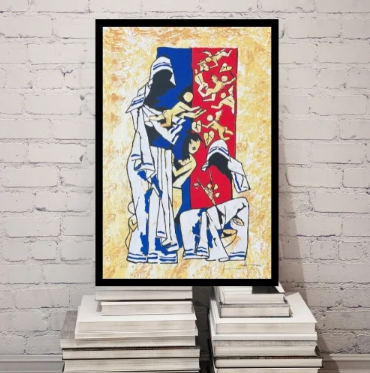
 Vastu Shastra A framed, ready to hang original piece, the kind of finish that makes applying this guidance to a new painting straightforward. Image from The Brushstrokes Co collection.

Scroll to Top