
Most people who grew up in an Indian home have seen a Raja Ravi Varma painting without ever learning his name. The gentle eyed goddess on an old calendar, the framed Lakshmi print above a shop counter, the Saraswati holding a veena in a school prayer hall, all of it traces back to one 19th century painter from a small palace in Kerala. This guide covers who he actually was, why his paintings still set record prices more than a century after his death, and why his work still matters, from museum walls to the family photo frames most of us grew up around.
Raja Ravi Varma, who lived from 1848 to 1906, was a Travancore born painter widely called the father of modern Indian art, credited with combining European oil painting technique with Hindu mythological subjects. He founded a lithographic press in 1894 that printed his goddess paintings by the millions, shaping how Hindus across India still picture Lakshmi, Saraswati and Krishna today. In April 2026, his painting Yashoda and Krishna sold at auction in Mumbai for 17.9 million dollars, the highest price ever paid for an Indian painting.
Who Exactly Was Raja Ravi Varma
Raja Ravi Varma was born on April 29, 1848, at Kilimanoor Palace inside the princely state of Travancore, in what is now Kerala. He came from an aristocratic family, the Koil Thampurans of Kilimanoor, that had supplied consorts to the Travancore royal family for more than two centuries. His father, Ezhumavil Neelakanthan Bhattatiripad, was a Sanskrit and Ayurveda scholar, and his mother, Uma Ambabayi Thampurratti, wrote poetry that Varma later had published after her death.
As a boy he sketched on the palace walls with charcoal, and an uncle who noticed the talent brought him into the royal court’s orbit rather than letting the habit go unnoticed. He married Bhageerthi Bayi of the royal house of Mavelikkara in 1866, and in 1900 two of his granddaughters were adopted into the Travancore royal family, which is why the present day Travancore royal line traces directly back to him. His younger brother, C Raja Raja Varma, trained alongside him and stayed his closest collaborator and manager for the rest of his career.
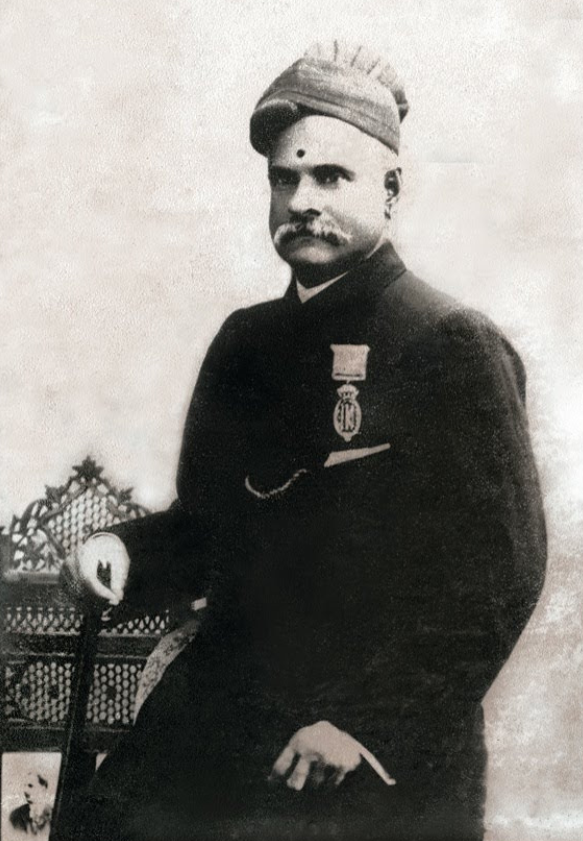
Ravi Varma, the Travancore born painter later called the father of modern Indian art. Public domain photograph via Wikimedia Commons.
How Did His Training Begin
The Maharaja of Travancore at the time, Ayilyam Thirunal, took an early interest in the young painter and gave him access to the royal court. Varma picked up the fundamentals during a stay in Madurai, then trained formally in watercolor under the court painter Rama Swamy Naidu. Oil painting came next, taught somewhat reluctantly by a visiting Dutch portraitist, Theodore Jensen, whose own approach Varma eventually absorbed and pushed well past what his teacher had shown him.
By the age of 22, he had already won the Governor’s Gold Medal at the Madras Fine Art Exhibition, an early sign of how fast his reputation was growing. British administrator Edgar Thurston later helped bring his work in front of wider audiences, and in 1873 a painting of his won an award at an exhibition in Vienna, an unusually early instance of an Indian artist earning recognition in Europe. Twenty years later, in 1893, his paintings traveled to the World’s Columbian Exposition in Chicago and came home with three gold medals.
What Makes Raja Ravi Varma Unique
He was the first Indian painter to consistently use oil paint and European style perspective to depict Hindu deities and mythological scenes, breaking sharply from the flatter, more stylized approach that had shaped temple murals and manuscript painting for centuries before him. His output fell into three broad groups, portraits of royalty and British officials, portrait style genre scenes of everyday life, and the large mythological narrative paintings pulled from the Ramayana, the Mahabharata and the Puranas.
It was that third category that made him famous, and eventually controversial. He modeled his goddesses on real women from Travancore and the wider south, including his own daughter Mahaprabha and his sister in law Bharani Thirunal Lakshmi Bayi, giving Lakshmi, Saraswati and Radha a face that looked reachable rather than distant. Art historian Geeta Kapur later called him the indisputable father figure of modern Indian art for exactly this reason, since he set a visual template that nearly every religious calendar and devotional print in India still leans on generations later. According to Britannica’s biography of Ravi Varma, his lasting significance rests on this exact fusion of Western realist technique with Hindu subject matter, a combination no Indian painter before him had attempted at this scale.
Which Raja Ravi Varma Paintings Matter
Raja Ravi Varma completed more than seven thousand works before his death, but a handful get named again and again by historians, museums and auction houses. Each one tells a different part of his story.
-
Shakuntala Looks Back At Dushyanta
Shakuntala, painted in several versions from around 1870 onward, shows the heroine of Kalidasa’s play pretending to remove a thorn from her foot while glancing back over her shoulder at her lover Dushyanta. It went on to become one of the most reproduced images in Indian visual culture, later printed by the thousand once his own press was up and running.
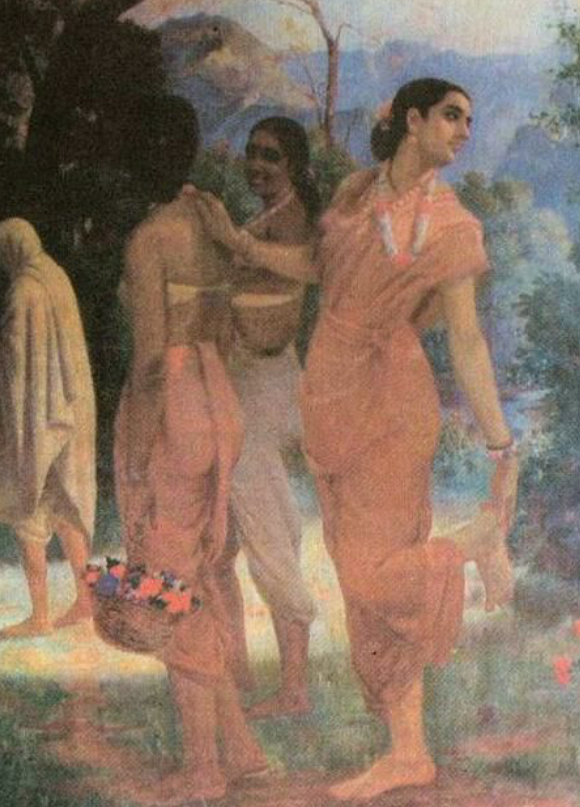
Shakuntala, one of the most reproduced compositions Ravi Varma ever painted. Public domain image via Wikimedia Commons.
-
Damayanti Confides In A Swan
Damayanti Talking to a Swan retells a scene from the Nala Damayanti story in the Mahabharata, where a golden swan carries messages of love between the princess and the king she has never met. The soft, conversational pose Varma gave Damayanti became a template later artists borrowed for decades.
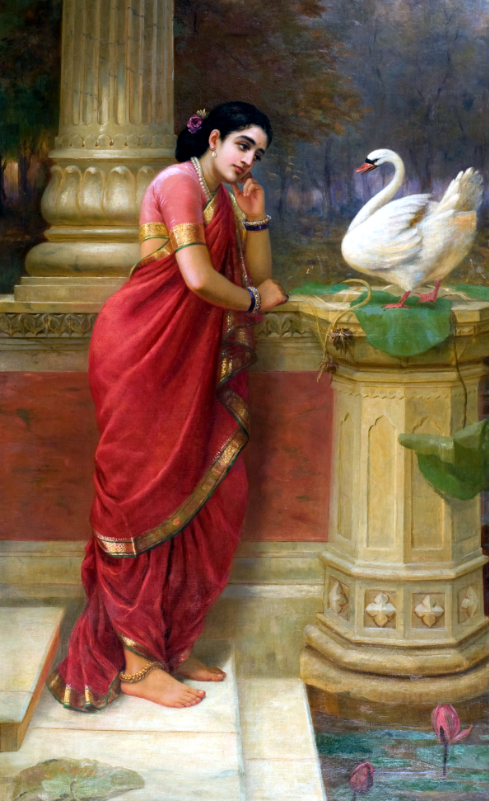
Damayanti Talking to a Swan, painted from the Nala Damayanti episode in the Mahabharata. Public domain image via Wikimedia Commons.
-
Yashoda And Krishna Break Records
Yashoda and Krishna, painted in the 1890s, shows the infant Krishna reaching for his foster mother as she milks a cow nearby. One version of this composition sold at Pundole’s in Mumbai in 2023 for 4.5 million dollars, setting Varma’s own personal auction record at the time. A different painting from the same series then sold at Saffronart in Mumbai on April 1, 2026, for 17.9 million dollars, bought by Cyrus Poonawalla, founder of the Serum Institute of India, making it the highest price ever paid for an Indian painting at auction and pushing past M F Husain’s Gram Yatra, which had briefly held that record at 13.7 million dollars less than a year earlier.
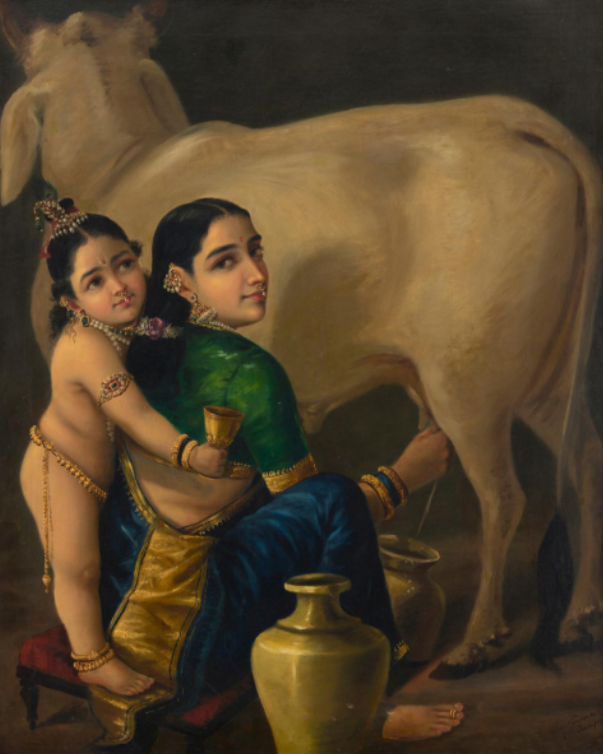
Yashoda and Krishna, the composition that sold for 17.9 million dollars in April 2026, becoming the most expensive Indian painting ever sold at auction. Image via The Hindu’s coverage of the record sale.
Inside The Raja Ravi Varma Press
In 1894, with financial backing from Sayajirao Gaekwad III of Baroda, he set up the Raja Ravi Varma Fine Art Lithographic Press in Girgaum, Bombay. He had already imported steam driven printing machinery from Germany two years earlier and brought in German litho transfer technicians, Fritz Schleicher and B Gerhardt, to install and run it, giving the press a capacity of roughly eight hundred impressions an hour, an extraordinary output for the period.
Early runs off the press included Shakuntala Janm, Lakshmi and Saraswati. His brother C Raja Raja Varma ran daily operations, but the business never turned a reliable profit, and in 1901 Varma sold the press outright to Fritz Schleicher, who relocated it to Malavli near Lonavala, where it kept producing prints for decades. Fire destroyed the Malavli factory in 1972, and although a smaller operation briefly reopened afterward, the press closed for good in 1975, with its remaining printing stones auctioned off in 2000.
How Oleographs Changed Hindu Worship
Before the press existed, most ordinary Hindus, including many who were barred from temple interiors under the caste restrictions of the period, had never owned a devotional image painted with this level of detail and warmth. A single oleograph cost a small fraction of a commissioned painting, which meant a Lakshmi or Saraswati print could hang in a shopkeeper’s shrine or a farmer’s home rather than only inside a temple or a palace.
That single shift in access is why art historians still treat the Raja Ravi Varma Press as one of the reasons Hindu iconography looks the way it does across the country today, from calendar art and festival posters to the small framed prints still sold outside temples every festival season.
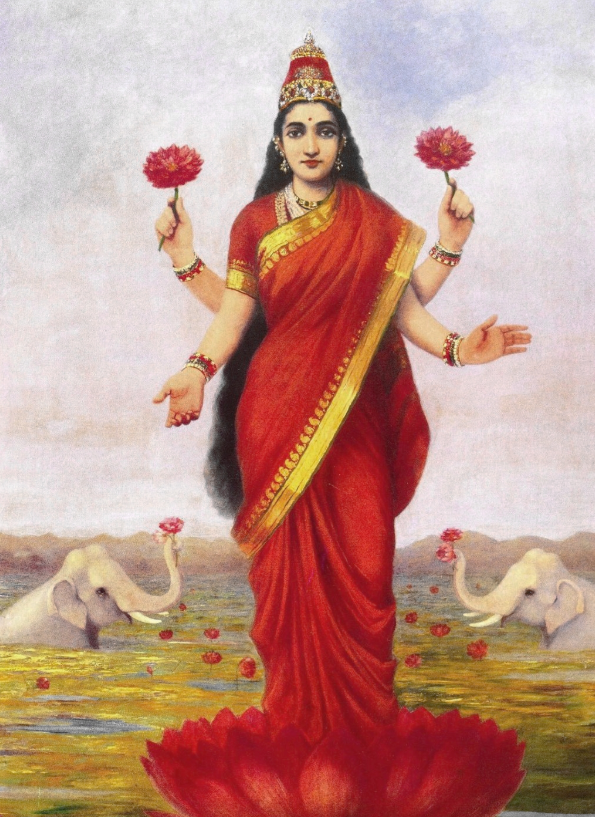
A 1896 Lakshmi oleograph, part of the same style of print the Ravi Varma Press produced by the thousand. Public domain image via Wikimedia Commons.
Why Some Critics Called It Kitsch
Not everyone welcomed this shift toward realism and mass reproduction. Art historian Ratan Parimoo argued that Varma’s academic style, especially his choice to paint goddesses with pale skin while reserving darker tones for lower status figures, opened the door to the garish calendar art that followed, and he compared Varma’s work unfavorably against the spiritual directness of folk and tribal painting.
A generation later, the Bengal School, led by Abanindranath Tagore, formed partly in reaction against exactly this kind of European academic technique, arguing that Indian art needed its own visual language rather than one borrowed from a colonial art school. That disagreement never really settled. Contemporary artists including Nalini Malani and Pushpamala N have since built entire projects around restaging his goddesses, reopening the question of whether his idealized, realistic women helped or harmed how Indian femininity gets pictured in art.
What Is His Current Auction Record
Raja Ravi Varma currently holds the record for the most expensive Indian painting ever sold at auction, and that record has moved fast over the past three years.
| Painting | Sale Price | Auction House | Year |
| Yashoda and Krishna (earlier version) | 4.5 million dollars | Pundole’s, Mumbai | 2023 |
| Gram Yatra by M F Husain | 13.7 million dollars | Christie’s, New York | 2025 |
| Yashoda and Krishna | 17.9 million dollars | Saffronart, Mumbai | 2026 |
Reported figures are converted from rupee sale totals and can shift slightly depending on the exchange rate used on the actual sale date, but the trend line still holds. Raja Ravi Varma broke his own earlier record rather than simply reclaiming one someone else briefly held, since his 2023 result had already outpaced most of his contemporaries before the 2026 sale nearly quadrupled it, according to The Art Newspaper’s coverage of the April 2026 sale.
Comparing Three Classic Indian Painting Styles
Raja Ravi Varma’s realism looks strikingly different from the two traditions that came directly before and after him, and setting them side by side makes the shift easier to see.
| Style | Time Period | Technique | Best Known For |
| Ravi Varma realism | 1870s to 1900s | Oil on canvas, European perspective and shading | Humanized Hindu goddesses |
| Rajput and Mughal miniature | 1500s to 1800s | Natural pigment on paper, flat composition | Court portraits and legends |
| Bengal School nationalism | 1900s to 1940s | Wash technique, soft outline | Symbolic nationalist imagery |
What separates the first row from the other two is material as much as style. Almost no Indian painter before him worked in oil at this scale, and that single choice of material is a large part of why his goddesses read as startlingly lifelike next to a miniature painted a century earlier.
Where Can You See His Paintings
The Sri Chitra Art Gallery in Thiruvananthapuram, run by the Kerala government as part of the Napier Museum complex, holds one of the largest public collections of his original oil paintings anywhere, including several of his most reproduced mythological works, according to the official Raja Ravi Varma Art Gallery site.
Kilimanoor Palace, his birthplace, remains a private royal residence, though it opens on select days, and two of his long unfinished works, The Parsi Lady and a portrait, were finally unveiled there on his 175th birth anniversary in 2023. The National Gallery of Modern Art in New Delhi and the Lakshmi Vilas Palace in Baroda also hold important pieces, since Baroda’s royal family was among his most consistent patrons throughout his career. India’s 1972 Antiquities and Art Treasures Act formally classified his major works as national treasures, which blocks their export and is a large part of why the bulk of his surviving originals still remain inside the country.
Common Mistakes Buying Reproduction Art Prints
Assuming any old goddess print stamped with his name is an antique oleograph from his original press run is the most common and the most expensive mistake a new buyer makes. Genuine period prints pulled at Bombay or Malavli before 1972 are scarce, and most goddess prints on the market today are far more recent reproductions.
Treating a digitally reprinted image as equal to a period lithograph is a close second mistake, since paper stock, ink saturation and even the printing process itself all differ once you look closely. Believing an original oil painting can be legally taken out of India is another frequent error, given that the 1972 national treasure law blocks that outright regardless of what a seller might claim. Skipping questions about provenance paperwork whenever a seller uses the word vintage, and assuming every painting sold today in a similar mythological style is somehow connected to his original press, round out the mistakes worth watching for.
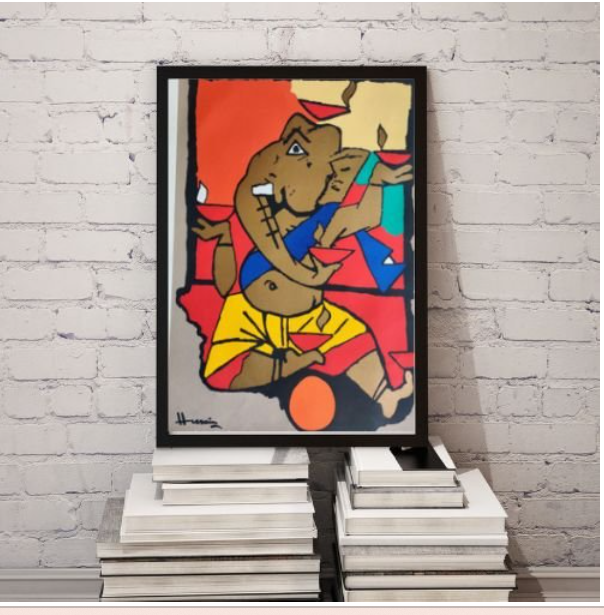 Genuine hand painted work shows texture and brush variation a printed reproduction never quite matches, the kind of detail worth checking before any purchase. From The Brushstrokes Co collection.
Bringing Raja Ravi Varma Home Today
An original oil painting from his own hand is realistically out of reach for almost any collector, since most surviving works sit inside museums, royal collections, or under the 1972 export restriction, and the handful still in private hands trade for millions of dollars. Genuine oleographs pulled before the 1972 fire do occasionally surface through specialist dealers and auction houses, but buyers should expect real prices and demand paperwork tracing the print back to the original Bombay or Malavli runs.
For most collectors, a more realistic way to bring this kind of warmth into a home is through the wider devotional and mythological tradition he helped shape, painted today by living artists rather than reproduced from a 19th century press. The Brushstrokes Co works directly with artists across India who still paint Krishna, Radha and other devotional subjects by hand, and our Radha Krishna painting collection carries some of that same warmth his goddesses were originally painted for. Readers curious about the wider mythological art landscape can also read our guide to Krishna painting styles or browse the full original paintings collection for hand painted work sourced directly from artists rather than reproduced from a press.
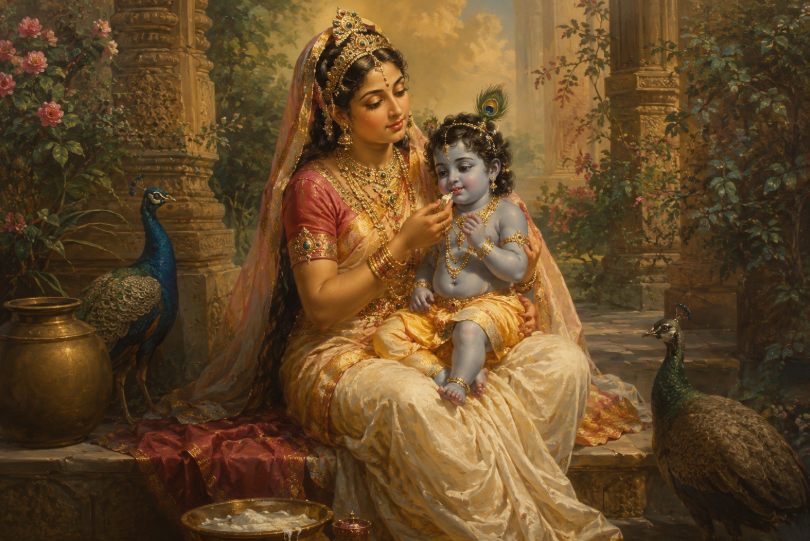
Devotional and mythological realism, painted by hand today rather than pulled from a printing press, from The Brushstrokes Co collection.
Frequently Asked Questions
Who was Raja Ravi Varma?
Raja Ravi Varma was a painter from Kilimanoor in the princely state of Travancore who lived from 1848 to 1906. He is widely credited as the father of modern Indian art for blending European oil painting techniques with Hindu mythological subjects.
Why is Raja Ravi Varma called the father of modern Indian art?
Historians use that title because he was the first Indian artist to consistently paint Hindu deities and mythological scenes in oil using European perspective and shading. He also reproduced these works at scale through his own lithographic press, shaping how millions of people still picture gods like Lakshmi, Saraswati, and Krishna.
Raja Ravi Varma’s most famous painting?
Shakuntala, showing the heroine of Kalidasa’s play glancing back at her lover while pretending to remove a thorn, is usually regarded as his most reproduced work. However, Yashoda and Krishna became his most valuable painting following its 2026 auction result.
How much did a Raja Ravi Varma painting sell for in 2026?
His painting Yashoda and Krishna sold at a Saffronart auction in Mumbai on April 1, 2026, for $17.9 million. It was purchased by Serum Institute founder Cyrus Poonawalla, making it the highest price ever paid for an Indian painting at auction.
What did the Raja Ravi Varma Press actually do?
Founded in 1894 in Bombay and later moved to Malavli near Lonavala, the Ravi Varma Press used imported German printing machinery to mass produce oleographs of his mythological paintings. This made devotional images affordable for Indian households that had never owned artwork of such quality before.
Why did critics call his work kitsch?
Art historian Ratan Parimoo and other critics argued that Ravi Varma’s academic realism, particularly his use of pale-skinned models for goddesses, influenced the rise of garish calendar art and reduced sacred imagery to sentimental decoration.
Can you buy an original Raja Ravi Varma painting today?
Very rarely. Most surviving originals are housed in museums or royal collections, and India’s 1972 national treasure law prevents many of his major works from being exported. Collectors interested in his mythological themes often seek authentic early oleographs or works by contemporary artists inspired by his devotional realist style.
Where can I see Raja Ravi Varma’s paintings in person?
One of the largest public collections of his original oil paintings is displayed at the Sri Chitra Art Gallery in Thiruvananthapuram. Additional works can be viewed at the National Gallery of Modern Art in New Delhi and the Lakshmi Vilas Palace in Baroda.
His Brush Still Shapes India
Walk into almost any Indian home with a pooja corner and there is a decent chance a version of his Lakshmi or Saraswati hangs somewhere close by, whether or not anyone in the house actually knows his name. That is an unusual kind of fame, quieter than a museum wall but far more lasting, since it survives inside millions of ordinary rooms rather than a handful of gallery spaces. His paintings keep setting new prices at auction because collectors are only now paying for what households already understood a century ago, that his work carries real weight on a wall.
If his mythological realism speaks to you, our guide to famous Indian paintings covers more names from this same era, and our history of Indian painting through the centuries places his work against the wider timeline it grew out of. Browse The Brushstrokes Co’s Indian Artists directory to find a living artist whose work might earn the same kind of place on your own wall.
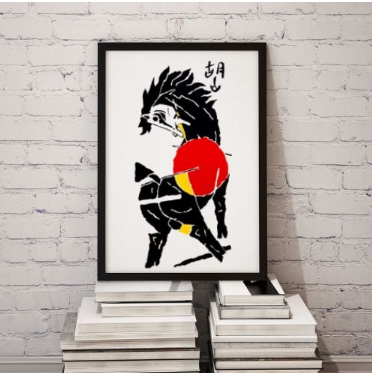
A framed original piece from The Brushstrokes Co collection, styled the way a piece typically arrives, ready to hang.