
A Lord Shiva Painting brings together spirituality, symbolism and artistic expression. From peaceful depictions of Shiva in meditation to graceful Shiva-Parvati compositions, these artworks can create a strong visual and emotional presence in a home.
Choosing the right Shiva painting is not only about finding an attractive artwork. The form of Shiva, colour palette, size, artistic style and placement can all influence how the painting works within your interior.
This guide explores popular Lord Shiva painting styles, their meaning, suitable placements, Vastu considerations and important factors to check before buying Shiva artwork online.
What Does a Lord Shiva Painting Represent?
Lord Shiva is portrayed in Indian art in many forms. He may appear as a meditating yogi, Nataraja, Adiyogi or alongside Goddess Parvati.
Meditating Shiva artworks are commonly associated with stillness and spiritual reflection, while more dynamic compositions can create a stronger visual presence. Shiva and Parvati paintings are often associated with companionship, harmony and balance.
This variety allows buyers to choose a Shiva artwork based on both personal preference and the atmosphere they want to create.
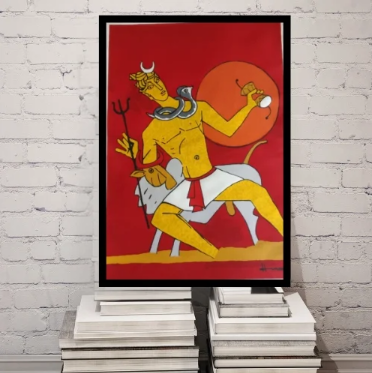 Lord Shiva Painting for Home
Popular Types of Lord Shiva Paintings
There is no single style that defines a Lord Shiva Painting. Artists interpret Shiva through traditional, contemporary and modern visual approaches.
Meditating Lord Shiva Painting
Meditating Shiva is one of the most recognisable artistic representations.
These paintings usually present Shiva in a calm seated posture, sometimes against mountains, abstract backgrounds or minimal surroundings.
Such artwork works particularly well in meditation spaces, reading areas, quiet corners and contemporary living rooms.
Grey, blue, white, black and earthy tones are frequently seen in these compositions.
Lord Shiva and Parvati Painting
A Lord Shiva and Parvati Painting creates a softer and more balanced visual compared with artwork focused solely on Shiva.
These compositions are often preferred for living rooms and family areas because they bring both figures together within one artwork.
The colours may also be warmer and the compositions more detailed.
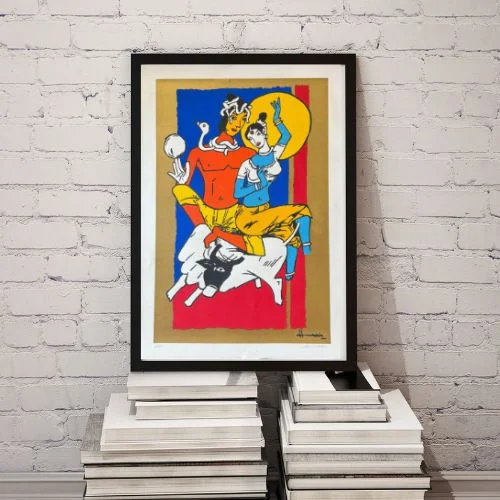
When selecting this type of artwork, consider how the figures, colours and background work together with your existing interior.
Contemporary Shiva and Parvati Artwork
Modern homes do not always require highly traditional devotional artwork.
Contemporary Shiva-Parvati paintings can retain the recognisable subject while using simplified backgrounds, modern colours and stronger artistic interpretation.
This allows devotional artwork to blend naturally with modern apartments and contemporary interiors.
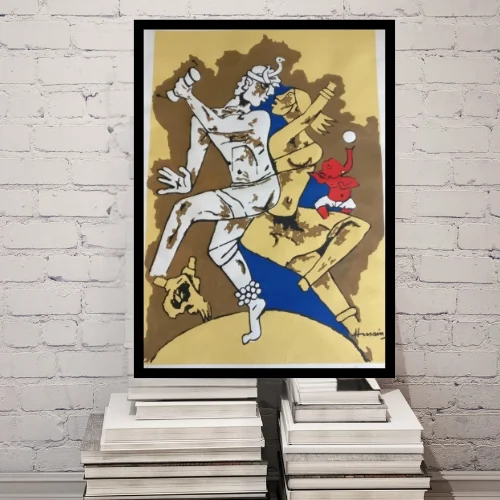
Modern Interpretations of Indian Spiritual Art
Modern Indian art often presents spiritual subjects using abstract forms, expressive brushwork, minimal backgrounds and experimental colour palettes.
This approach allows traditional themes to work within contemporary spaces without appearing overly decorative.
When selecting modern spiritual artwork, consider whether the colours and composition complement the surrounding interior.
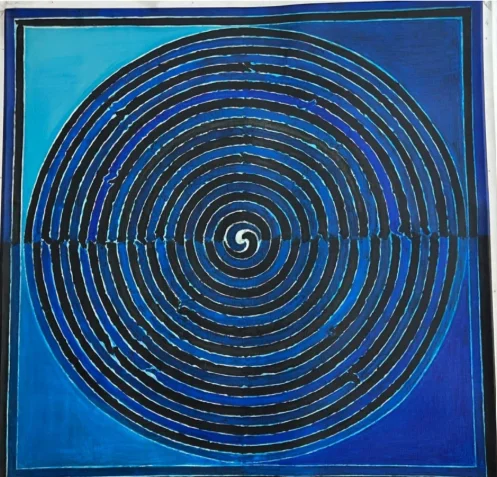
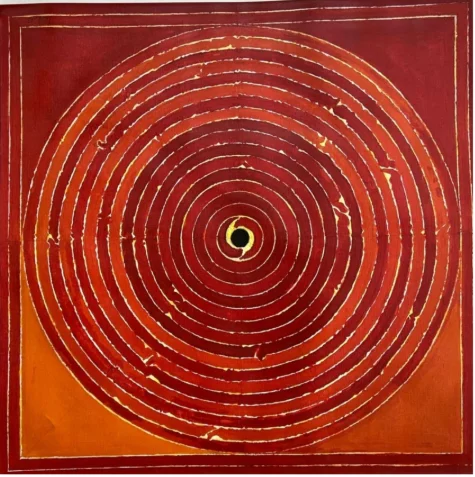
This image should be used only to support the discussion around modern art styles and digital mediums, rather than being described as a Shiva painting.
Symbols Commonly Seen in Lord Shiva Paintings
Lord Shiva paintings often feature recognisable visual symbols.
The Trishul is one of the most familiar. Other elements may include the crescent moon, damaru, serpent, third eye and flowing Ganga.
Traditional artworks may show these symbols in detail, while contemporary paintings may simplify them considerably.
These elements help artists create a recognisable visual identity around Shiva while still allowing room for individual interpretation.
How to Choose a Lord Shiva Painting for Your Home
A painting should complement the room in which it is displayed.
Before buying, look at the available wall space and surrounding furniture.
A large empty wall can support a bold Shiva artwork, while smaller spaces may benefit from a more minimal composition.
Consider the colours already present in your room as well.
A monochrome Shiva painting can work beautifully with neutral interiors, while colourful Shiva-Parvati artwork can become a stronger focal point.
Lord Shiva Painting for Living Room
The living room provides plenty of flexibility when choosing Shiva artwork.
A large Lord Shiva Painting for a living room can work above a sofa, console table or dedicated feature wall.
Modern Shiva artworks are particularly effective in minimalist spaces.
Shiva-Parvati paintings can suit interiors that feel warmer and more traditional.
The artwork should also be proportionate to the wall. A painting that is too small may appear disconnected from the surrounding furniture.
Lord Shiva Painting for Meditation or Prayer Space
A peaceful representation of Shiva is particularly suitable for meditation areas and spiritual spaces.
These rooms usually benefit from artwork that feels calm rather than visually overwhelming.
A smaller or medium-sized painting can often work better than an oversized piece.
Soft lighting around the artwork can also improve the overall presentation.
Lord Shiva Painting According to Vastu
Some homeowners also consider Vastu traditions while placing devotional artwork.
According to commonly followed Vastu beliefs, peaceful Shiva imagery is often chosen for spiritually focused spaces.
North- and east-facing areas are frequently recommended in traditional Vastu guidance, although recommendations can differ between practitioners.
If Vastu is important to you, consider these beliefs along with practical factors such as room size, light and visibility.
The painting should ultimately be placed respectfully in an area where it can be appreciated comfortably.
Lord Shiva Painting for Different Interior Styles
Shiva artwork can work across many different types of interiors.
For minimalist homes, monochrome or restrained Shiva compositions can work particularly well.
Contemporary interiors can accommodate abstract or expressive Shiva artwork using bold colours and modern brushwork.
Traditional Indian interiors may benefit from richer Shiva-Parvati compositions with warmer colours and more detailed backgrounds.
For large statement walls, one substantial painting is often more effective than several small artworks.
How Modern Art Mediums Influence Home Décor
Modern art buyers are increasingly exposed to paintings, limited editions and digital fine-art formats.
Digital art can offer a cleaner, more contemporary visual language and may work particularly well in apartments, offices and modern interiors.
 .
.
How to Choose the Right Size
The size of a Lord Shiva Painting can significantly affect how it looks in your space.
Smaller works are suitable for compact rooms and meditation corners.
Medium and large artworks work well above living-room furniture or on spacious feature walls.
Always check the exact dimensions before purchasing online rather than judging the size only from product photographs.
Original, Print or Digital Artwork?
Before buying Shiva artwork online, understand what type of piece you are purchasing.
An original painting is individually created by an artist and is unique.
Limited-edition artworks are produced in controlled numbers and may include edition information.
Fine-art and digital formats provide additional options for collectors and interior buyers.
When purchasing collectible artwork, check information about the artist, medium, dimensions and edition where applicable.
Lord Shiva Painting Price in India
The price of a Lord Shiva Painting can vary considerably.
Factors that influence pricing include the artist, artwork size, medium, technique, whether the piece is an original or reproduction and whether it belongs to a limited edition.
Larger originals by established artists may naturally cost more than decorative prints or digitally produced pieces.
Rather than focusing only on price, consider the quality, medium, artist information and documentation available with the artwork.
How to Buy a Lord Shiva Painting Online
Buying art online allows you to explore many more styles and artists, but every artwork should be evaluated carefully.
Start by checking its dimensions.
Next, review the medium and surface mentioned in the product information.
Look at clear artwork photographs so you can understand the colours and composition.
If you are buying an original or limited-edition piece, also check the artist and edition details where available.
Explore Lord Shiva Paintings at The Brushstrokes Co.
If you prefer a Shiva-focused artwork, explore: https://thebrushstrokesco.com/shiva/
For Shiva and Parvati compositions, explore: https://thebrushstrokesco.com/shiv-parvati-2/ https://thebrushstrokesco.com/shiv-parvati/
These are the Shiva-specific artworks included in the image links you provided.
Frequently Asked Questions About Lord Shiva Painting
What does a Lord Shiva Painting represent?
The meaning depends on the form shown. Meditating Shiva is commonly associated with stillness and reflection, while Shiva-Parvati artwork is often connected with companionship and balance.
Which Lord Shiva Painting is suitable for a living room?
Modern Shiva paintings, Shiva-Parvati compositions and larger artistic representations of Shiva can work well in a living room.
Where should a Lord Shiva Painting be placed at home?
A Shiva painting can be placed in a living room, prayer area, meditation room or another respectful part of the home.
Can Lord Shiva paintings work in modern interiors?
Yes. Minimal, contemporary and abstract interpretations of Shiva can complement modern interiors particularly well.
Is a Shiva and Parvati Painting suitable for home?
Yes. Shiva and Parvati compositions are commonly selected for living rooms and family spaces.
What should I check before buying a Lord Shiva Painting online?
Check the size, medium, artist information, artwork photographs, edition details where applicable and whether framing is included.
What colours are commonly found in Shiva paintings?
Blue, grey, black, white and earthy tones are common, although contemporary artists may use much broader colour palettes.
Are Lord Shiva paintings available as original artworks and prints?
Yes. Shiva artwork may be available as original paintings, prints, limited editions and other fine-art formats.
Find a Lord Shiva Painting That Fits Your Space
Choosing a Lord Shiva Painting is about finding an artwork that connects with you while fitting naturally into your home.
A meditating Shiva composition can bring a calmer visual presence to a quiet space. A Shiva-Parvati artwork can create warmth and balance, while a modern interpretation of Shiva can become a strong focal point in a contemporary interior.
Consider the artwork’s expression, size, colours, medium and placement before making your final choice.
When these elements work together, a Lord Shiva painting becomes a meaningful part of the space rather than simply another decorative object.