
Warli painting is one of India’s most distinctive tribal art traditions, instantly recognised by its simple geometric figures, earthy backgrounds and scenes inspired by everyday life. Originating among the Warli communities of western India, particularly Maharashtra, this traditional art form uses circles, triangles, squares and lines to transform ordinary activities into expressive visual stories.
What makes Warli art special is its simplicity. Instead of detailed portraits, realistic landscapes or elaborate colours, artists use basic shapes to represent people, animals, trees, homes, farming, celebrations and community life. Traditional Warli paintings were created on the walls of homes using natural materials, while contemporary artists now also work on canvas, paper, fabric and other surfaces.
In this guide, we explore the history of Warli painting, its meaning, symbols, techniques, themes and its place in modern Indian art.
Warli Painting Quick Facts
| Detail | Information |
|---|---|
| Art form | Tribal wall painting |
| Community | Warli community |
| Region | Maharashtra, especially Palghar, Dahanu and surrounding areas |
| Traditional surface | Earth-coated walls of village homes |
| Traditional pigment | White rice paste on an earthy base |
| Traditional tool | Bamboo stick shaped into a fine brush |
| Core shapes | Circle, triangle, square and line |
| Signature scene | Tarpa dance |
| Common themes | Farming, festivals, marriage, nature, village life |
| GI recognition | Registered as a Geographical Indication in 2014 |
| Modern surfaces | Canvas, paper, fabric and home décor |
What Is Warli Painting?
Warli painting is a traditional tribal art form associated with the Warli community. At first glance, the paintings may appear simple because they are made with basic geometric forms. However, these shapes come together to tell detailed stories about nature, farming, family, festivals, rituals and village life.
A typical Warli painting uses white figures against a brown, reddish-brown or earthy background. Traditionally, the background came from prepared village walls, while the white pigment was made using rice paste. Today, artists commonly reproduce the same visual style using acrylic or poster colours on canvas and paper.
Rather than focusing on individual figures, Warli art frequently presents the community as a whole. People may be shown dancing together, farming, gathering food, celebrating marriages or interacting with animals and nature.
This strong connection between people, community and the natural world gives Warli paintings their distinctive identity.
History of Warli Painting
Warli painting developed as part of the cultural traditions of the Warli community, whose settlements are strongly associated with areas of Maharashtra such as Palghar, Dahanu and surrounding regions.
Historically, these paintings were not created simply as decorative artwork. They were closely connected with celebrations, ceremonies, marriages, harvesting and other important occasions in community life.
The walls of houses served as the original canvas. Artists prepared earthy surfaces and then painted figures and scenes using natural white pigment traditionally made from rice paste. Bamboo sticks could be adapted into simple painting tools for producing the characteristic fine lines. Incredible India’s feature on Warli paintings describes this traditional wall-preparation process in more detail.
Over time, Warli painting moved beyond village walls and became recognised as an important Indian folk and tribal art tradition. Artists such as Jivya Soma Mashe, who received the Padma Shri in 2011, played a major role in bringing Warli art to wider audiences. Today, Warli-inspired artworks can be found on canvas, paper, textiles, decorative products and contemporary home décor.
Warli Painting also received Geographical Indication recognition, with its GI certificate dated March 31, 2014. It appears in India’s list of registered Geographical Indications under Maharashtra and Gujarat. This formal recognition reflects the geographical and cultural connection of the tradition with the communities associated with it.
If you enjoy learning about India’s tribal art traditions, our Gond art painting guide explores another celebrated style from central India.
Meaning Behind Warli Painting
The meaning of Warli painting lies strongly in its representation of life, nature and community.
Unlike many traditional Indian painting styles that frequently portray kings, elaborate religious narratives or highly detailed mythological scenes, Warli paintings often focus on everyday experiences.
A farmer working in a field, villagers dancing together, people collecting crops, animals moving through a landscape or families taking part in ceremonies can all become subjects of Warli art.
This means that Warli paintings can be understood as a visual record of community life. As Vikaspedia’s overview of Warli painting notes, the art form served as a way of passing folklore to a community that did not rely on the written word.
Nature is especially important. Trees, animals, the sun, moon, agricultural activity and seasonal cycles frequently appear within compositions. Human beings are presented as part of this larger environment rather than completely separate from it.
The result is an art form that can communicate complex relationships using remarkably simple visual elements.
Symbols Used in Warli Painting
One of the most fascinating features of Warli painting is the way artists build entire scenes from basic shapes.
The circle is often associated with natural forms such as the sun and moon.
The triangle is frequently used in human and animal figures. A human body can be formed using two triangles joined together, with simple lines added for arms and legs.
The square may appear in important ritual compositions or areas of significance within a painting.
Straight, curved and dotted lines help artists create roads, fields, trees, houses, movement and decorative patterns.
Although the individual shapes are simple, repetition allows the artist to produce busy and energetic compositions filled with movement.
The Famous Tarpa Dance
One of the most recognisable scenes in Warli art is the Tarpa dance.
In these compositions, groups of people are shown dancing together, often forming a circular or spiral arrangement around a musician playing the tarpa, a trumpet-like wind instrument. The repeated geometric figures create rhythm and movement across the painting.
This type of composition captures one of the central qualities of Warli art: individuals becoming part of a larger community.
A single figure may be simple, but dozens of interconnected figures can create an elaborate visual story.
The circular arrangement also makes Tarpa dance paintings particularly attractive as wall art because the viewer’s attention naturally moves throughout the composition.
Traditional Warli Painting Colours
Traditional Warli painting is known for a limited colour palette.
Earthy brown or reddish surfaces form the background, while the main figures and patterns are created in white. Historically, artists prepared walls using locally available materials and used rice-based pigment for the white designs.
This strong contrast is one reason Warli painting remains immediately recognisable. It also sets Warli apart from the dense, colour-rich compositions of Madhubani painting from Bihar.
Modern artists may use canvas, acrylic colours and other contemporary materials, but many retain the familiar combination of earthy backgrounds and white geometric figures to preserve the visual character of traditional Warli art.
Some contemporary paintings introduce black, beige, gold or additional colours, particularly when the artwork is intended for modern interiors.
Common Themes in Warli Art
Warli paintings often depict activities connected with everyday community life.
Agriculture is an important subject because farming has historically played a central role in Warli communities. Artists may depict sowing crops, harvesting, carrying produce or working in fields.
Village celebrations and dancing are also popular themes. These scenes may include musicians, groups of dancers and communal gatherings.
Marriage ceremonies are another significant subject because Warli painting has historically been connected with important ritual occasions.
Animals, birds, trees and forests frequently appear alongside human figures, reinforcing the connection between community life and nature.
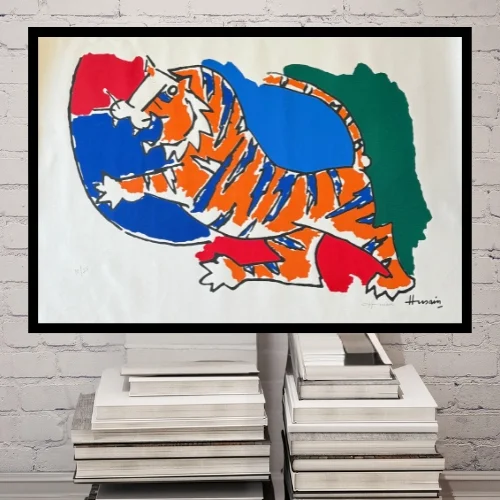
Modern Warli artists have also adapted the traditional visual language to depict contemporary themes while maintaining the recognisable geometric style.
Warli Painting on Canvas
Although Warli painting originally developed as a form of mural art, canvas has become an increasingly popular surface.
Warli painting on canvas preserves the distinctive geometric visual language while making the artwork easier to display in homes, offices and commercial spaces. Our guide to canvas art explains why canvas has become such a popular format for modern wall décor.
Canvas also gives artists the freedom to create artwork in different sizes. A small Warli painting may work well in an entryway or study, while a large composition can become a statement piece in a living room or office reception area.
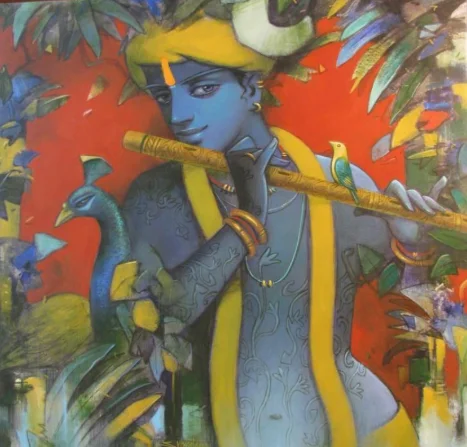
When selecting a Warli painting on canvas, look closely at the craftsmanship. Handmade paintings normally show subtle variations in lines, brushwork and texture that distinguish them from machine-printed reproductions.
Warli Painting for Modern Interiors
The simplicity of Warli art makes it surprisingly compatible with contemporary interiors.
Its combination of geometric design, neutral colours and rhythmic patterns works especially well with minimalist, rustic, bohemian and Indian-inspired décor.
A large Warli painting can become the focal point above a sofa, console or dining area. Smaller artworks can be combined with other Indian folk paintings, such as Pichwai art, to create a culturally inspired gallery wall.
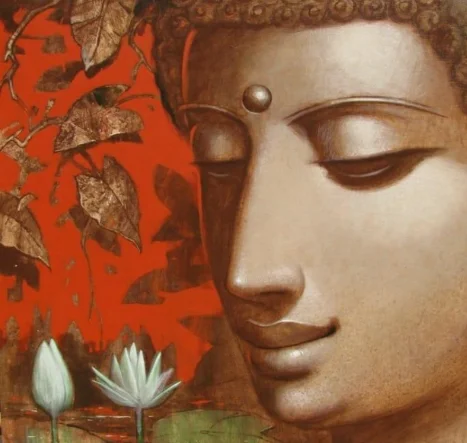
Warli paintings also pair naturally with wooden furniture, earthy fabrics, jute, terracotta and neutral walls.
For a modern interior, a traditional brown-and-white Warli artwork can introduce visual interest without overwhelming the room with too many colours.
Warli Painting for Beginners
Warli painting can also be an accessible traditional art style for beginners to explore.
Someone starting with Warli art can first practise the basic human figure. Draw two triangles meeting at their tips to create the torso, then add a small circle for the head and simple lines for the arms and legs.
Once comfortable with individual figures, try creating small groups of people dancing, farming or walking.
Trees, animals and houses can then be introduced gradually.
Beginning with a simple scene rather than attempting a highly detailed village composition makes it easier to understand the balance and rhythm of the style.
While the shapes may appear easy to create, well-composed Warli artwork requires careful spacing, repetition and storytelling.
How to Identify Handmade Warli Art
When buying Warli artwork, understanding whether a piece is handmade or printed is important.
Look closely at the lines and figures. Hand-painted artwork usually contains small variations in line thickness and shape because every mark has been created individually.
Paint texture may also be visible when viewing the canvas closely.
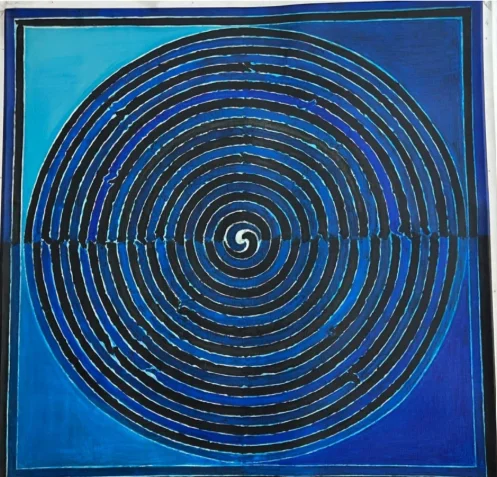
This image supports the comparison between prints and hand-painted work and should not be described as a Warli painting.
Information about the artist, workshop, medium and artwork can provide additional context about the piece you are purchasing. Browsing our Indian artists directory is a good way to learn more about the people behind the work.
Buyers looking specifically for culturally rooted Warli work should also consider the provenance of the artwork rather than choosing solely by price or appearance.
Warli Painting as Home Décor
Warli paintings can work beautifully across different areas of a home.
A large horizontal composition showing dancing or village life can work above a sofa or dining table. Vertical artwork can suit narrow walls, hallways and entry areas.
For spaces with neutral walls, traditional reddish-brown Warli paintings provide strong contrast.
In offices, Warli artwork can introduce Indian cultural character while still appearing sophisticated because of its restrained geometric design.
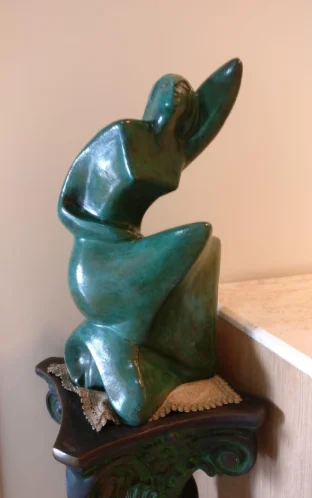
A handcrafted piece from our sculpture collection placed on a console below the painting can complete an earthy, artisanal look.
The right size is important. Instead of choosing a painting simply because you like the design, consider the available wall space, viewing distance and surrounding furniture.
Warli Painting as a Gift
Traditional art can also make a meaningful alternative to conventional gifts.
A handmade Warli painting may suit housewarmings, weddings, anniversaries, festive occasions or corporate gifting because it combines artistic value with Indian cultural heritage.
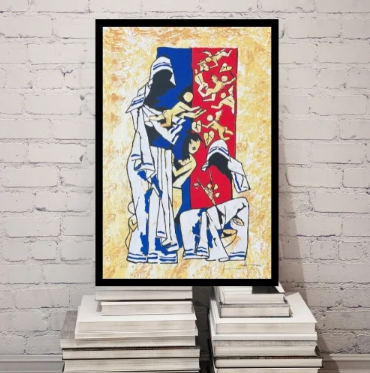
For business gifting, smaller artworks can work particularly well when the recipient would appreciate Indian art or handmade décor.
Personalised artwork inspired by Warli storytelling can also be created around themes such as families, celebrations or milestones. You can contact our team to discuss custom or bulk gifting orders.
This makes the style versatile enough to work as both traditional artwork and a thoughtful contemporary gift.
Caring for Warli Paintings
Proper care can help preserve a Warli painting for many years.
Keep the artwork away from prolonged direct sunlight because strong light exposure can gradually fade pigments and affect the canvas.
Avoid placing paintings in areas with excessive moisture or humidity whenever possible.
For routine cleaning, remove surface dust gently using a soft, dry cloth or brush. Avoid applying household cleaning liquids directly to the painting.
If an artwork is particularly old, valuable or delicate, professional conservation advice is safer than attempting repairs or intensive cleaning at home. The American Institute for Conservation offers guidance on finding a qualified conservator.
Why Warli Painting Still Matters
Warli painting demonstrates how powerful visual storytelling can be created from very simple forms.
With circles, triangles, squares and lines, artists are able to represent celebrations, work, relationships, nature and an entire community.
Its visual simplicity also explains why the style continues to feel relevant in contemporary spaces. The same geometric language that once appeared primarily on village walls can now be appreciated on canvas in modern homes, galleries and offices.
However, understanding the cultural roots behind the artwork is just as important as appreciating its appearance.
Warli painting is not merely a decorative pattern. It is connected with a living artistic tradition and the cultural expressions of the communities that developed it.
Explore Warli and Indian Art
Warli painting offers a fascinating combination of simplicity, storytelling and cultural depth. Whether you are exploring Indian folk art for the first time, decorating your home or searching for meaningful handmade artwork, understanding the history behind Warli art can make the experience far more rewarding.
At The Brushstrokes Co., you can explore original paintings and Indian artwork created for homes, collectors and gifting. Browse the artwork collection to discover pieces that complement your space and personal style.
FAQ
What is Warli painting?
Warli painting is a traditional tribal art form associated with the Warli community. It is recognised for its simple geometric figures, earthy backgrounds and scenes representing village life, nature, farming, celebrations and rituals.
Where did Warli painting originate?
Warli painting is strongly associated with Warli communities in western India, particularly Maharashtra, including areas around Palghar and Dahanu.
What colours are used in Warli painting?
Traditional Warli paintings generally use white designs against reddish-brown or earthy backgrounds. Rice-based white pigment and naturally prepared wall surfaces were traditionally used.
What do Warli painting symbols mean?
Warli art uses shapes such as circles, triangles, squares and lines to represent people, animals, nature and different elements of community life.
Why are triangles used in Warli painting?
Two triangles joined together are commonly used to construct the body of a human figure. Lines then form the arms and legs, while a circle may represent the head.
What is the Tarpa dance in Warli art?
The Tarpa dance is a common subject in Warli painting in which groups of people are portrayed dancing around a musician, often creating a circular or spiral visual composition.
Can Warli painting be done on canvas?
Yes. Although Warli paintings traditionally appeared on walls, contemporary artists frequently create them on canvas, paper, fabric and other materials.
Is Warli painting suitable for home décor?
Yes. Its geometric design and earthy colour palette can complement minimalist, rustic, contemporary and Indian-inspired interiors.
How can I identify handmade Warli painting?
Hand-painted artwork often shows subtle irregularities in brushwork, line thickness and paint texture. Buyers can also ask for information about the artist, medium and origin of the artwork.
Is Warli painting a good gifting option?
Yes. Warli paintings can work well for housewarmings, weddings, anniversaries, festive occasions and corporate gifting, particularly for people who appreciate traditional Indian art.