
The phad tradition of Rajasthan is unlike almost any other folk art form in India, because it was never created to simply hang on a wall. It is a long cloth scroll covered in dozens of connected scenes, built to be unrolled at night and sung to life by a travelling priest called a Bhopa. Every figure on the cloth exists to carry a story forward, which is why this scroll art feels so different from framed decorative art the moment you understand its purpose.
The phad painting designs found on these scrolls follow rules that have barely changed in generations. Bold outlines, flat colour blocks, and a packed, comic strip style layout tell the epic stories of two Rajasthani folk deities, Pabuji and Devnarayan, from birth to death across a single continuous cloth. This structure is what makes phad painting rajasthan work instantly recognisable, even to someone who has never seen this style before.
This guide explains where this folk art comes from, what phad painting designs actually mean, how the Joshi family shaped the craft, and what a first-time buyer should check before purchasing an original piece. By the end, you will understand phad well enough to explain it confidently to anyone who asks about the piece on your wall.
What Phad Painting Actually Means
This folk art is a scroll painting tradition from Rajasthan, centred in Bhilwara district and the town of Shahpura, used to illustrate the epic stories of Pabuji and Devnarayan. A Bhopa, a priest singer from a specific pastoral community, performs the story at night in front of the unrolled cloth, singing to the accompaniment of a bowed instrument called the ravanhatha. The painting itself works as a portable shrine rather than a static picture.
The word “phad” refers to the folded cloth the painting is made on, traditionally handwoven khadi cotton, sometimes joined in sections to reach fifteen to thirty feet in length. That scale is not decorative. This tradition was designed to be read scene by scene over an entire night, not viewed all at once the way a framed canvas is.
Where This Rajasthan Craft Began
This craft traces back several centuries in Rajasthan, though precise dating is difficult since the craft was passed down through practice rather than written record. What is well documented is its home region. Bhilwara district, and specifically Shahpura, has served as the centre of this folk art production for generations and remains so today.
The two dominant subjects in traditional phad painting rajasthan work are Pabuji, a fourteenth century folk hero linked to camel herding communities, and Devnarayan, a later folk deity worshipped particularly among Gujar communities. Each phad devoted to one of these figures follows a fixed structure, opening with the hero’s birth and closing with his death or deification, with dozens of episodes filled in between.
Sahapedia’s documentation of the Pabuji epic is a useful reference for readers who want to understand this narrative tradition in more depth, and Wikipedia’s overview of this craft confirms the central role of the Joshi community in the craft, along with the Pabuji and Devnarayan subject matter that defines most traditional work.
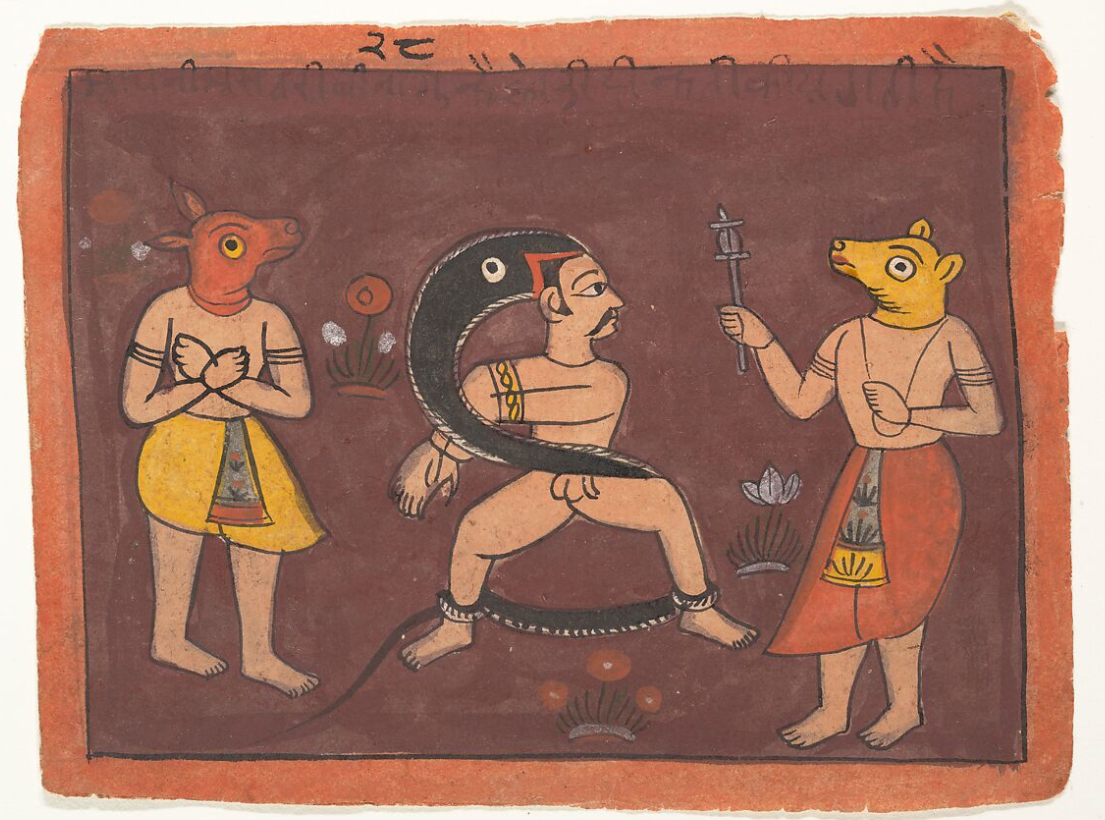 A folk painting from Rajasthan, Marwar, dated 1725, held in the collection of The Metropolitan Museum of Art. Public domain image, shown here to illustrate the regional visual tradition this craft grew out of, not as a confirmed phad piece itself.
The Joshi Family And Its Legacy
No single family shaped modern phad more than the Joshis of Bhilwara, who belong to the traditional Chitrakar, or painter, caste responsible for phad production for generations. Within living memory, Shri Lal Joshi is widely credited with reviving and formalising the scroll in the mid twentieth century, training students beyond his own family and establishing an institution in Bhilwara dedicated to teaching the craft.
His descendants and students continue that work today, which means much of the phad art sold as decorative work rather than a ritual object traces back to this documented lineage. This traceability is unusual among Indian folk art forms and gives buyers a clear line of provenance to ask sellers about.
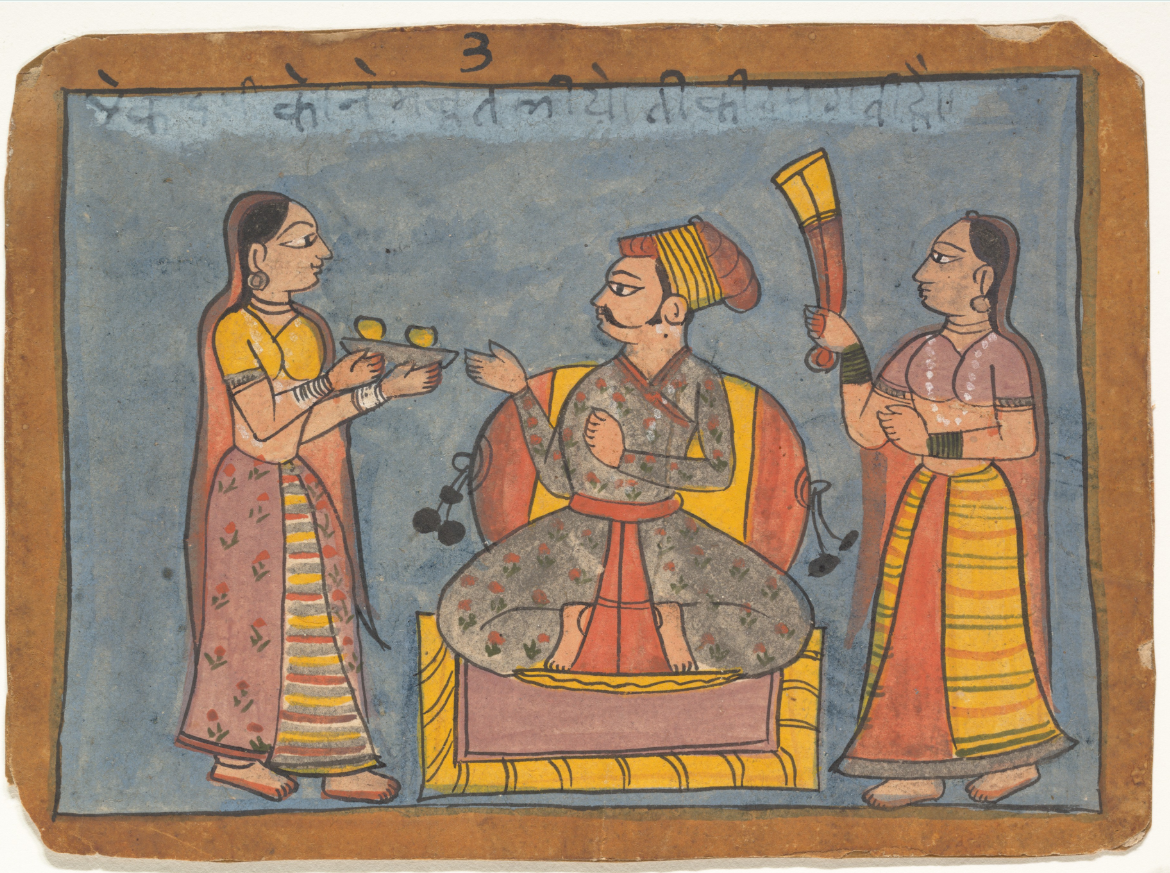
A companion piece from the same Marwar, Rajasthan folk painting group, dated 1725, held in the collection of The Metropolitan Museum of Art. Public domain image, shown for regional context rather than as a confirmed original piece.
How A Phad Painting Is Read
A traditional phad painting is never simply looked at. It is read aloud in a ritual called phad vachana, performed by a Bhopa and often his wife, the Bhopi, who holds the lamp and responds during the narration. The performance typically runs through an entire night, moving scene by scene across the scroll while the Bhopa sings in a regional dialect.
Villagers would commission a Bhopa to perform when they needed protection, wanted to mark an occasion, or sought resolution for an illness believed to require the folk deity’s intervention. Once a phad becomes too worn to use in performance, tradition holds that it should be ceremonially retired, often immersed in a sacred body of water rather than simply discarded.
Knowing this ritual context explains why phad painting designs are built the way they are, continuous and dense with narrative detail, rather than composed around one single focal image the way most other paintings are.
Common Phad Painting Design Rules
Phad painting designs follow visual conventions that have stayed remarkably consistent for generations, which is part of what makes the style so recognisable at a glance.
- Figures are painted in profile or three quarter view, never fully frontal
- The central deity or hero is painted noticeably larger than surrounding figures, a device meant to guide the eye during a night time reading
- Colour is applied in bold, flat blocks without shading or gradient
- A strong continuous black outline separates every colour field
- Battles, courts, forests and processions are compressed into one continuous cloth
Traditional palettes lean on a yellow or ochre background with red, green, orange, blue and black used for figures, architecture, animals and landscape elements. Outlines are typically added after the colour fields are laid down, the reverse of how most Western painting techniques work, which is part of what gives authentic phad art its crisp, distinctive look.
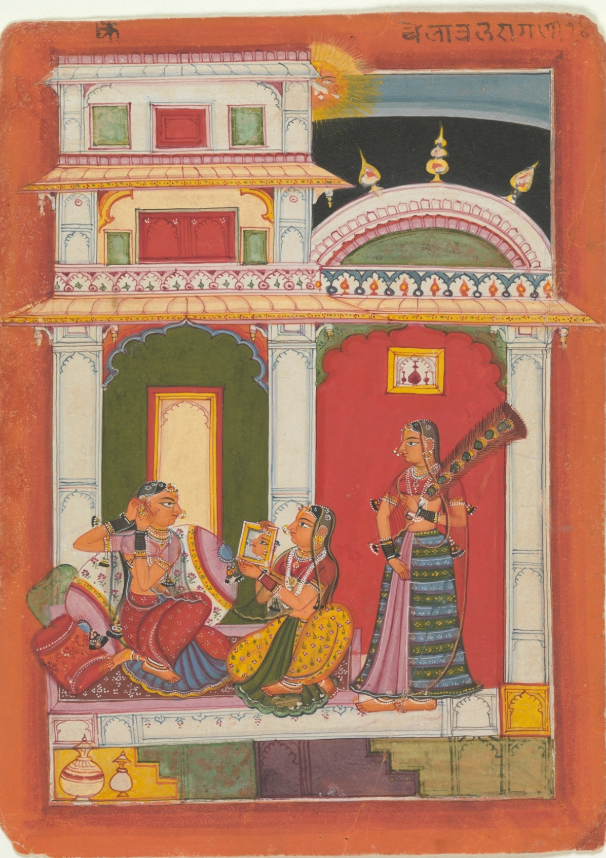
Vilaval Ragini, a folio from a ragamala series made in Sirohi, Rajasthan, circa 1680, held in the collection of The Metropolitan Museum of Art. Shown here for its bold Rajasthani colour palette, not as an example of this style, which is flatter and less finely detailed than this courtly miniature tradition.
Modern artists working within the Joshi lineage have expanded subject matter beyond Pabuji and Devnarayan to include Ramayana episodes and other regional themes, while keeping this core visual grammar intact.
Materials Behind Every Phad Scroll
This traditional scroll uses handwoven cotton cloth, starched and burnished with a stone to create a smooth painting surface. Pigments were historically prepared from natural mineral and vegetable sources, ground and mixed by hand before application.
Many practising artists today combine natural pigments with poster or fabric colours for durability, particularly on pieces intended for sale rather than ritual use. Either approach can produce genuine, hand painted phad art, but the choice affects how the piece should be cared for later, so it is worth asking a seller directly which materials were used.
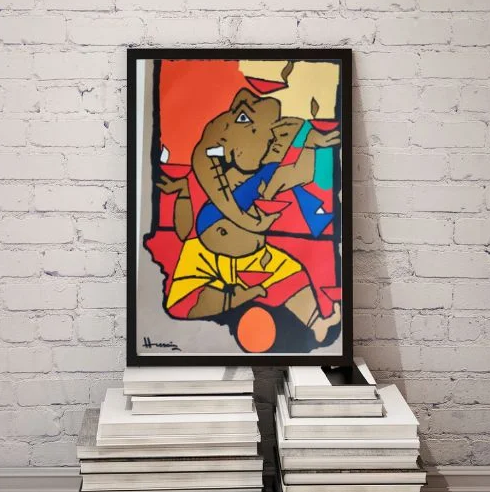
A GI protected folk art tradition rendered by hand, the kind of natural pigment and texture worth checking for before buying any regional Indian folk painting. From The Brush Strokes Co. collection.
Phad Painting Compared To Pichwai Art
Buyers new to Rajasthan’s folk art landscape often confuse this tradition with the state’s other regional styles, so a direct comparison helps.
| Feature | Phad Painting | Pichwai Painting | Miniature Painting |
|---|---|---|---|
| Region | Bhilwara, Shahpura | Nathdwara | Various Rajput courts |
| Purpose | Narrative scroll for ritual performance | Backdrop for Shrinathji worship | Courtly and devotional illustration |
| Format | Long continuous cloth scroll | Fixed cloth panel | Small scale on paper |
| Subject | Pabuji, Devnarayan epics | Krishna as Shrinathji | Court life, deities, portraits |
| Style | Bold flat colour, thick outline | Detailed, layered, ornate | Fine detail, delicate line work |
The Brush Strokes Co. covers Nathdwara’s devotional tradition in more depth in its Pichwai painting guide, which is worth reading alongside this one if you are comparing Rajasthan’s painting styles before buying. Readers exploring the state’s wider folk art landscape can also browse the site’s art collections online for other regional traditions alongside phad art.
Spotting An Authentic Phad Painting
A few practical checks help separate genuine hand painted phad art from mass produced reproductions.
- Look closely at the outline work. Hand drawn black lines show slight variation in thickness and pressure, while printed reproductions look perfectly uniform.
- Check the reverse side of the cloth. Hand applied pigment usually shows some bleed or texture through the fabric, which a printed piece will not.
- Ask about the artist or workshop lineage. Reputable sellers can name the artist or the family tradition behind the work, particularly given how well documented the Joshi lineage is.
- Compare pricing to the labour involved. A large, densely painted phad scroll represents weeks of skilled work, so pricing that seems too low for the size and detail is worth questioning.
- Ask whether natural or synthetic pigments were used, since this affects both appearance and long term care.
Caring For Your Phad Painting
This artwork is done on cloth rather than canvas, which changes how it should be handled. Keep it away from direct sunlight, which fades both natural and synthetic pigments over time, and away from high humidity, which can weaken cloth or encourage mildew, a particular risk during India’s monsoon months.
If framing a piece for display, use UV protective glass and a mount that does not press directly against the painted surface. For a scroll with genuine age or documented history, consult a qualified textile or art conservator before attempting any cleaning or repair, since improper handling can cause damage that cannot be reversed.
A handmade folk-style piece from The Brush Strokes Co., the kind of framed treatment that also suits a well cared for original once it comes off display for storage.
Buying Phad Painting Online Safely
When buying phad online, prioritise sellers who disclose the artist’s background, the materials used, and whether the piece follows traditional Pabuji or Devnarayan iconography or a more contemporary subject. A seller who explains these details clearly is generally more trustworthy than one offering only a generic product description.
Consider where the piece will hang before buying it. Because phad painting designs are dense and narrative heavy, they read best at a size and viewing distance that lets the eye follow the story, rather than being reduced to a small decorative accent. A living room or study wall with reasonable natural light generally suits phad art better than a dim hallway.

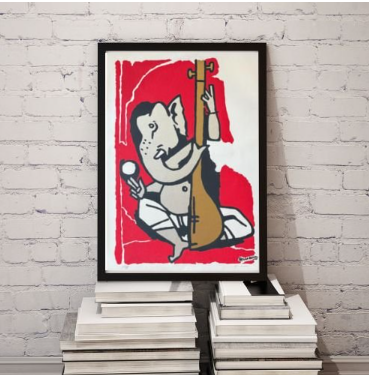
A piece from The Brush Strokes Co.’s original paintings collection. Readers interested in phad art can browse the collection to see what original folk and traditional Indian work is currently available.
The Brush Strokes Co. features original folk and traditional Indian artwork across its collections, and readers building a broader interest in regional painting traditions can explore the site’s original paintings collection and artist profiles for related pieces.
Mistakes First Time Buyers Make
New buyers often assume every long, narrow Rajasthani scroll painting is a phad painting, when several related but distinct styles exist across the state. Another common mistake is judging a phad purely as wall decor without understanding its narrative structure, which can lead to buying a piece cut down from a larger original work.
Buyers also sometimes skip asking about pigment type, then are surprised later when a piece fades faster or slower than expected based on whether natural or synthetic colour was used. Asking these questions upfront, before buying the scroll online or in person, avoids most of these problems entirely.
Frequently Asked Questions
What is this tradition used for?
Traditionally, phad painting served as a portable shrine, read aloud by a Bhopa priest singer during an all night performance dedicated to a folk deity such as Pabuji or Devnarayan. Today it is also collected and displayed as decorative folk art.
Where does phad painting come from?
Phad painting comes from Rajasthan, with Bhilwara district, and specifically the town of Shahpura, serving as its historic centre of production.
Who paints phad paintings?
Phad painting is traditionally created by the Chitrakar community, most notably the Joshi family of Bhilwara, whose members have practised, taught and revived the craft across generations.
What is the difference between phad painting and Pichwai painting?
Phad painting is a narrative scroll telling a folk hero’s story through continuous scenes, while Pichwai painting is a fixed devotional backdrop centred on Krishna as Shrinathji, created for temple and shrine display in Nathdwara.
What materials are used in phad painting?
Phad painting is traditionally done on handwoven cotton cloth using natural mineral and vegetable pigments, though many contemporary artists also use poster or fabric colours for durability.
Is phad painting a Geographical Indication craft?
Phad painting from Bhilwara has been associated with Geographical Indication recognition, which legally ties the craft to its region of origin. Buyers should confirm current status directly with official records, since registrations can be updated over time.
How do I know if a phad painting is handmade?
Check for slight variation in outline thickness, pigment texture visible on the reverse of the cloth, and a seller who can speak specifically to the artist or workshop lineage behind the piece.
Can phad painting suit modern home decor?
Yes, phad painting works well in living rooms, studies and reading spaces with reasonable natural light, particularly at a size that keeps its dense narrative detail visible from normal viewing distance.
Learning about a tradition like phad painting is a good first step before buying, and a piece with this much history behind it deserves a wall where it can actually be seen properly. If you are exploring original Indian folk art for your home, browse The Brush Strokes Co.’s original paintings collection or get in touch with the art team for guidance on choosing a piece that suits your space.