
Sanjhi art is a traditional Indian paper-cutting and stencil craft closely associated with Mathura, Vrindavan, and the wider Braj region of Uttar Pradesh. Known for its delicate patterns, devotional themes, and remarkable precision, the craft has historically been connected with the worship of Radha and Krishna.
Unlike ordinary decorative paper cutting, traditional Sanjhi art was created primarily as a stencil. Artisans carefully cut intricate designs into paper and used the resulting stencil to form devotional compositions with coloured powders, flowers, and other natural materials.
Over time, these finely cut paper stencils also began to be appreciated as artworks in their own right. Today, Sanjhi can be found in temples, museums, private collections, framed artworks, and contemporary decorative pieces.
Its beauty lies not only in the finished design but also in the skill required to create elaborate forms from a single sheet of paper.
Sanjhi Art Quick Facts
| Detail | Information |
| Art form | Hand-cut paper stencil craft |
| Region | Mathura, Vrindavan and the Braj region, Uttar Pradesh |
| Tradition | Vaishnava temple practice, Krishna devotion |
| Approximate age | Around 500 years |
| Traditional tools | Fine or curved scissors, pins, paper |
| Traditional use | Stencils for devotional floor and water compositions |
| Key motifs | Radha Krishna, flute, cows, peacocks, lotus, trees, borders |
| Special form | Jal Sanjhi, created on the surface of still water |
| GI recognition | Mathura Sanjhi Craft, registered Geographical Indication (Uttar Pradesh) |
| Modern formats | Framed paper cuts, wall art, gifts, contemporary décor |
History and Origin of Sanjhi Art
The history of Sanjhi art is closely connected with the religious and cultural traditions of Mathura and Vrindavan, two places deeply associated with the life and legends of Lord Krishna.
The craft is believed to have developed several centuries ago within the Vaishnava temple tradition of the Braj region. According to the Office of the Development Commissioner (Handicrafts), the tradition is rooted in the temples of Mathura and Vrindavan and dates back roughly 500 years. Traditional Sanjhi compositions often depicted scenes inspired by Krishna’s life, including his childhood, flute playing, Raas Leela, interactions with Radha, cows, peacocks, trees, lotus flowers, and landscapes associated with Vrindavan.
Historically, Sanjhi stencils were used to create temporary devotional images on temple floors and platforms. Fine powders or natural materials were carefully sifted through the stencil to reveal the final image.
Because the finished floor composition was often temporary, the process itself became an important part of the ritual. The artwork was not created simply for permanent display but as an act of devotion.
This religious connection is one of the main reasons Sanjhi art should not be understood merely as decorative paper cutting. Its history is deeply rooted in the spiritual culture of Braj, much like the other Indian folk art traditions that grew out of ritual and community life.
Why Sanjhi Art Is Connected to Radha and Krishna
Krishna is one of the most important subjects in traditional Sanjhi art.
Many traditional Sanjhi designs portray scenes associated with Krishna’s life in Vrindavan. These may include Krishna playing the flute, Radha and Krishna together, cows in pastoral landscapes, gopis, peacocks, lotus flowers, temple architecture, trees, and scenes inspired by Raas Leela.
The connection between the craft and Krishna devotion became especially important in the temples of Mathura and Vrindavan.
The designs were often created not merely as decoration but as part of worship and seasonal religious observances. In this way, Sanjhi shares its devotional spirit with Pichwai painting, another tradition created in service of Krishna worship.
This devotional background gives traditional Sanjhi artwork a symbolic character that distinguishes it from modern laser-cut designs or generic paper stencils.
How Traditional Sanjhi Art Is Made
Creating traditional Sanjhi art requires exceptional patience and control.
The process usually begins with a drawing or planned composition on a sheet of paper. The artisan then carefully removes selected areas to create a stencil.
Traditional craftsmen may use fine or curved scissors to cut the design. Instead of making large, simple cuts, they gradually rotate and manipulate the paper to produce tiny details, symmetrical patterns, figures, foliage, animals, and ornamental borders.
One small mistake can damage an entire section of the composition, which is why experienced artisans develop extremely precise hand control.
Once the stencil is complete, it may be used to create a temporary composition using coloured powders or other materials.
In contemporary practice, the cut-paper stencil itself is often framed and displayed as an artwork.
This transformation has helped Sanjhi move from a largely ritual craft into galleries, homes, exhibitions, museums, and contemporary interior spaces.
Materials Traditionally Used in Sanjhi Art
Paper is the main material used to produce a Sanjhi stencil.
The artisan needs paper that is suitable for controlled cutting and strong enough to hold intricate details without tearing too easily.
Fine cutting tools are equally important because many traditional compositions contain tiny openings and extremely narrow lines.
For traditional stencil-based compositions, coloured powders, natural pigments, flowers, leaves, or other decorative materials may be used to produce the image through the cut stencil.
Modern artists may also experiment with different papers, coloured backgrounds, framing techniques, or contemporary materials while maintaining the essential paper-cutting character of the craft.
Traditional Sanjhi Art Motifs and Their Meaning
Traditional Sanjhi designs contain a wide variety of motifs, many of which are closely connected with Krishna, nature, and the cultural landscape of Braj.
Radha and Krishna
Radha and Krishna are among the most recognisable subjects in devotional Sanjhi compositions.
Their presence reflects the craft’s strong association with Vaishnava devotion and the religious traditions of Vrindavan.
Scenes depicting the divine couple may be surrounded by trees, flowers, animals, temple elements, or decorative borders. The same pairing has inspired artists across many mediums, as seen in this Radha Krishna artwork.
Krishna Playing the Flute
Krishna with his flute is another recurring subject.
The flute is strongly associated with Krishna’s presence in Vrindavan and his connection with Radha and the gopis.
In Sanjhi art, this subject allows artists to combine human figures with detailed natural surroundings.
Peacocks
Peacocks frequently appear in Indian devotional and decorative art.
Their graceful forms work particularly well with the delicate cutting techniques used in Sanjhi.
The feathers can be converted into elaborate patterns, giving artisans opportunities to create visually complex compositions.
Cows
Cows are closely associated with Krishna’s childhood and his identity as a cowherd.
As a result, pastoral scenes featuring cows are common in art traditions connected with Krishna and Braj.
Lotus Flowers
The lotus is an important symbol in Indian art and spirituality.
In Sanjhi designs, lotus motifs may appear as individual decorative elements or form part of larger symmetrical patterns.
Trees, Creepers and Flowers
Nature plays an important role in depictions of Vrindavan.
Artisans often incorporate trees, leaves, flowering plants, creepers, and other natural forms into their designs.
These elements help create detailed compositions while reflecting the natural landscape associated with Krishna’s stories.
Geometric and Decorative Borders
Many Sanjhi designs include intricate borders surrounding the central composition.
These may contain repeating floral, geometric, or ornamental patterns.
The borders contribute to the visual balance of the artwork and also demonstrate the artisan’s technical precision.
What Is Jal Sanjhi Art?
Jal Sanjhi is a particularly fascinating expression of the Sanjhi tradition.
The word “jal” means water, and this form of Sanjhi involves creating delicate images or designs on the surface of water using carefully prepared stencils and coloured materials. Outlook Traveller’s guide to Sanjhi describes how powdered colours are sprinkled onto still water to create floating designs.
The still surface of the water becomes part of the composition.
Because the final image is temporary and highly delicate, Jal Sanjhi highlights one of the most distinctive qualities of traditional Indian devotional art: beauty does not always have to be permanent.
The temporary nature of the image can also be understood as part of the spiritual and ritual experience.
For visitors unfamiliar with Sanjhi, Jal Sanjhi is especially striking because of the extraordinary control required to create a detailed image on such an unstable surface.
Sanjhi Art and Sanjhi Mata: Are They the Same?
Sanjhi art from Mathura and Vrindavan should not be confused with every tradition that uses the name “Sanjhi.”
The paper-cutting tradition discussed in this article is particularly associated with Krishna devotion, temple practice, and the Braj region.
Sanjhi Mata or Sanjha Mata traditions found in other parts of North India, such as Haryana, Punjab and Delhi, can refer to different folk practices connected with seasonal festivals and goddess worship.
These traditions may use different materials and follow different cultural customs.
Although the names may appear similar, it is more accurate to treat them as distinct regional traditions rather than assuming that Sanjhi Mata artwork is simply another version of Mathura’s paper-cutting craft.
This distinction is important when studying the cultural history of Sanjhi.
Mathura Sanjhi Craft and GI Recognition
An important development in the preservation of the tradition is the official recognition of Mathura Sanjhi Craft as a Geographical Indication in India.
A Geographical Indication, commonly known as a GI, helps identify products and traditional crafts associated with a particular geographical region.
Mathura Sanjhi Craft is officially registered in India under the Geographical Indications system. Its entry can be viewed on the Geographical Indications Registry maintained by IP India, where it is listed under Uttar Pradesh in the handicrafts class.
This recognition is significant because it highlights the historical and cultural connection between the craft and Uttar Pradesh, particularly the Mathura region.
GI recognition can also help create greater awareness around traditional craftsmanship and distinguish heritage practices from generic mass-produced designs.
For Sanjhi artisans, such recognition can contribute to the long-term preservation and visibility of the tradition.
Sanjhi Art vs Ordinary Paper Cutting
At first glance, Sanjhi art may look similar to other forms of paper cutting, but its cultural context makes it different.
Generic paper cutting can include decorative silhouettes, floral designs, portraits, greeting cards, or modern laser-cut compositions.
Traditional Sanjhi, however, developed in a specific cultural environment.
Its connection with Mathura, Vrindavan, Krishna devotion, ritual practice, traditional motifs, and stencil-based floor compositions gives it a distinct identity.
This background is important because the value of Sanjhi art is not based only on technical complexity.
The stories, religious practices, geography, and artisan traditions behind the design are equally significant.
Easy Sanjhi Art Designs for Beginners
Traditional Sanjhi designs can be extremely complex, but beginners do not need to start with elaborate compositions.
Simple designs can help someone understand the basic principles of symmetry, negative space, and controlled cutting.
A beginner may start with a lotus flower, leaf pattern, simple peacock, circular floral motif, diya, geometric border, or small Krishna-inspired silhouette.
It is better to begin with larger shapes before attempting extremely narrow lines or intricate figures.
The paper should also be rotated while cutting so that the hand can maintain better control.
Simple Sanjhi art exercises are especially useful for developing patience and understanding how positive and negative space work together.
Once the basic technique becomes comfortable, more detailed designs can be attempted.
Why Sanjhi Art Is Becoming Rare
Like many traditional Indian crafts, Sanjhi art faces challenges in the modern world.
The highly detailed work requires time, training, and patience.
As faster manufacturing techniques and machine-cut decorative products become more common, handcrafted techniques can struggle to compete on price and production speed.
Traditional patronage patterns have also changed.
Crafts that were once closely connected with temple rituals or local cultural practices may no longer have the same everyday role they had generations ago.
Another challenge is the transfer of knowledge.
Traditional crafts survive when younger generations have opportunities to learn directly from experienced practitioners.
If fewer artisans continue the practice professionally, highly specialised techniques can gradually disappear.
Preserving Sanjhi therefore involves more than simply displaying old examples in museums.
Supporting practising artisans, documenting techniques, teaching younger craftspeople, and creating responsible contemporary markets are all important for the craft’s survival.
Sanjhi Art in Contemporary Interiors
Although Sanjhi has deep devotional roots, contemporary artists and designers have found new ways to present the craft.
Framed paper-cut pieces can work beautifully in modern interiors because the fine lines and negative spaces create a light, sophisticated appearance.
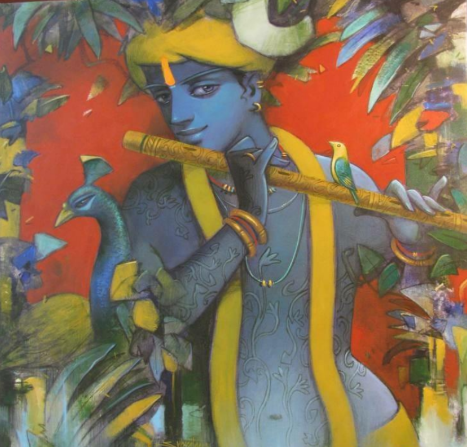
Traditional Krishna compositions may suit prayer rooms, meditation areas, living rooms, hallways, or spaces inspired by Indian heritage. They can also sit alongside other regional styles, such as Madhubani painting or Gond art, to build a culturally rich gallery wall.
More abstract or botanical Sanjhi designs can also work well in contemporary interiors.
The contrast between an intricately cut paper design and a simple background can make the artwork visually striking without making the room feel overcrowded. Our guide to wall paintings for interior design offers more ideas on placing artwork so it suits the room around it.
How to Display Sanjhi Artwork
Because Sanjhi paper cutting can contain delicate sections, framing is usually the safest way to display it.
A suitable backing can create contrast and help the details remain visible.
For example, a pale paper cut may stand out beautifully against a darker background, while a dark stencil can work well against cream or neutral tones. Understanding colour theory for art and interiors can help you choose a backing and wall colour that make the design stand out.
The frame should protect the paper from direct handling, dust, excessive moisture, and environmental damage.
It is also advisable to avoid prolonged exposure to strong direct sunlight, particularly if the artwork uses delicate paper or natural pigments. The Canadian Conservation Institute’s guidance on light damage explains why paper and pigments are especially sensitive to fading. For older or valuable pieces, the American Institute for Conservation can help you find a qualified paper conservator.
Careful framing allows the details of the design to remain visible while protecting the artwork over time.
How to Choose Authentic Sanjhi Artwork
Authenticity should not be judged only by whether the edges look irregular.
A better approach is to understand where the artwork comes from, who created it, and how it was produced.
When purchasing traditional Sanjhi art, buyers can ask about the artisan, the place of origin, the cutting method, the subject represented, and whether the piece was handmade.
Transparent information about the craftsperson and production process is generally more useful than relying on appearance alone. Browsing an Indian artists directory is a good habit for learning about the people behind the work you buy.
Machine-cut designs can be visually impressive, but they should not automatically be represented as traditional hand-cut Sanjhi. The same principle applies to all artwork, as explained in our guide on art prints or paintings.
For collectors interested specifically in heritage craftsmanship, provenance and artisan information are important. Our tips on buying original paintings cover the questions worth asking before any art purchase.
Sanjhi Art as a Meaningful Gift
Sanjhi artwork can also make a distinctive gift, especially for someone who appreciates Indian heritage, devotional art, handmade craftsmanship, or traditional design.
Krishna-inspired Sanjhi pieces may be suitable for weddings, housewarmings, anniversaries, festivals, or spiritual occasions.
Because the craft requires such fine manual skill, a genuine handcrafted piece can carry more cultural and artistic meaning than a mass-produced decorative object.
The key is to choose a design that suits both the recipient and the significance of the occasion. For more handmade options, explore the gifting collection at The Brush Strokes Co., or browse corporate art gifts for business occasions.
The Importance of Preserving Sanjhi Art
Sanjhi art represents much more than decorative paper cutting.
It preserves stories, ritual practices, regional identity, and skills developed over generations.
Its connection with Mathura, Vrindavan, Radha, Krishna, and the cultural landscape of Braj gives the craft an identity that cannot be separated from its place of origin.
At the same time, contemporary interest in handmade artwork gives Sanjhi new opportunities.
Artists can preserve traditional themes while experimenting with new formats, display methods, and audiences.
The future of the craft depends on maintaining this balance.
Innovation can help Sanjhi reach new people, but the history, techniques, and cultural identity behind the craft should remain respected and clearly understood.
Where Sanjhi Art Goes From Here
Sanjhi art is one of India’s most delicate and culturally rich paper traditions.
What begins as a simple sheet of paper can become an extraordinarily detailed composition featuring Radha and Krishna, peacocks, cows, trees, flowers, temple scenes, and devotional symbolism.
Its historic connection with Mathura and Vrindavan makes Sanjhi far more than a decorative technique.
It is a living expression of Braj’s artistic and religious heritage.
From traditional floor stencils and Jal Sanjhi to contemporary framed artworks, the craft has continued to evolve while maintaining its distinctive identity.
For anyone interested in Indian folk art, devotional traditions, handmade craftsmanship, or paper-cutting techniques, Sanjhi offers a remarkable example of how patience, storytelling, and spirituality can come together in a single artwork.
At The Brush Strokes Co., you can explore original paintings and Indian art collections inspired by the same heritage, or contact our team for help choosing a piece for your home or a gift.
FAQ
What is Sanjhi art?
Sanjhi art is a traditional paper-cutting and stencil craft associated mainly with Mathura, Vrindavan, and the Braj region of Uttar Pradesh. It is historically connected with Krishna devotion and was traditionally used to create temporary decorative and devotional compositions.
Where did Sanjhi art originate?
Sanjhi art is closely associated with Mathura and Vrindavan in Uttar Pradesh. These places form part of the Braj region and are strongly connected with stories and traditions surrounding Lord Krishna.
How old is Sanjhi art?
The Sanjhi paper-stencilling tradition is believed to be several centuries old and is often described as having a history of around 500 years within the temple culture of Mathura and Vrindavan.
Why is Sanjhi art associated with Krishna?
Sanjhi developed within the devotional culture of Braj. As a result, its traditional designs frequently depict Krishna, Radha, Raas Leela, cows, peacocks, lotus flowers, and landscapes associated with Vrindavan.
How is Sanjhi art made?
A design is drawn or planned on paper and carefully cut by hand to create an intricate stencil. The stencil can then be used with coloured powders or other materials to create a temporary image. Modern Sanjhi paper cuts are also frequently framed as standalone artworks.
What is Jal Sanjhi?
Jal Sanjhi is a form of Sanjhi in which a delicate decorative image is created on the surface of still water using stencil techniques and coloured materials.
Is Sanjhi art the same as Sanjhi Mata art?
Not necessarily. Mathura Sanjhi is a Krishna-associated paper-stencil tradition from the Braj region, while Sanjhi Mata or Sanjha Mata can refer to different folk traditions practised in other parts of North India.
What are common motifs in Sanjhi art?
Common motifs include Radha and Krishna, Krishna playing the flute, cows, peacocks, lotus flowers, trees, creepers, geometric borders, gopis, and scenes associated with Vrindavan and Raas Leela.
Is Sanjhi art handmade?
Traditional Sanjhi art is hand-cut by skilled artisans. Contemporary decorative designs may also be machine or laser cut, so buyers interested in traditional craftsmanship should check the artisan, origin, and production method.
Is Sanjhi art a GI-recognised craft?
Yes. Mathura Sanjhi Craft has received Geographical Indication recognition in India, strengthening its association with its traditional region of origin.
Is Sanjhi art difficult to make?
Highly detailed traditional Sanjhi can be extremely difficult because one incorrect cut may damage the composition. Beginners can start with simple floral, geometric, lotus, or peacock designs before attempting complex figurative scenes.
Can Sanjhi art be framed?
Yes. Modern Sanjhi paper cuts are often framed to protect the delicate paper and highlight the intricate negative-space design.