
Wall paintings are more than decorative pieces. They shape the mood of a room, reflect your personality, and help transform a house into a home. From timeless Indian art forms like Madhubani and Warli to contemporary canvas designs and abstract masterpieces, there is a style for every taste. In Dubai, where interiors often feature elegant marble finishes, glass accents, and neutral colour palettes, the right wall painting introduces warmth, character, and a sense of individuality that makes a space feel complete.
Choosing the right wall painting in Dubai can feel overwhelming at first. With countless styles, colours, sizes, and themes available, it is easy to wonder which one truly belongs in your home. The answer depends on your space, your décor, and the atmosphere you want to create. This guide will help you discover which wall paintings in Dubai suit you by exploring different art styles, room-specific recommendations, and practical tips so you can choose a piece that you will enjoy for years to come.
What Are Wall Hanging Paintings
A wall hanging painting is any artwork created or framed to be displayed on a wall rather than stored flat or kept in a book. That includes hand painted canvases, works on paper mounted behind glass, digital prints on canvas or metal, and folk art made with natural pigments on cloth or handmade paper. The term covers a huge range of price points and techniques, from a small student watercolour to a large commissioned mural-style canvas for a majlis wall.
What separates a good wall painting from a forgettable one usually comes down to three things. The colours should suit the room’s light and palette, the size should match the wall it fills, and the subject should mean something to the person living with it every day. A painting bought purely because it matched a sofa rarely holds up over years the way one chosen with a little more thought does.
Why Dubai Homes Suit Wall Paintings
Dubai’s interiors lean heavily on marble floors, glass facades and pale, neutral walls, which is exactly why paintings do so much visual work here. A single strong canvas can soften an all-white living room or bring warmth into a space that gets long hours of bright daylight. Interior designers working across the city have noted a shift toward warm terracotta, sand and rust tones paired with one bold statement piece rather than several small prints scattered across a wall, a change from the brighter, more metallic looks that were popular a few years earlier.
There is also a cultural dimension. More than 4.3 million Indians live in the UAE, and over half of them are based in Dubai, according to figures shared by India’s Consul General at a 2025 Indo-UAE Conclave reported by Gulf News. That makes traditional Indian art, from Madhubani to Pichwai, something many Dubai residents already recognise and connect with, whether they grew up around it or married into a family that did. At the same time, Dubai’s design scene draws from more than 200 nationalities, so wall art here rarely follows one single trend. A Filipino landscape, an Emirati calligraphy piece and a Bengal folk painting can sit comfortably in three different apartments in the same building, and that variety is part of what makes shopping for wall paintings in this city interesting rather than restrictive.
A Short History Of Wall Painting
People have been painting walls for longer than they have been writing. The Rock Shelters of Bhimbetka in Madhya Pradesh contain roughly 400 individual shelters with paintings that span from the Mesolithic period through to recorded history, and UNESCO inscribed the site as a World Heritage property in 2003 partly because nearby villages still carry artistic traditions that echo those ancient images. Long before canvas existed, communities were already using rock and mud walls to record hunts, rituals and daily life.
Formal mural painting developed its own set of techniques over the centuries. Classical painters worked in encaustic, mixing colour into hot beeswax, and in tempera, using egg as a binder, before fresco and later oil on canvas became the dominant methods across Europe, according to Britannica’s overview of mural history. Each technique solved a different problem, whether that was durability against damp plaster or the flexibility to complete a work away from the wall itself. Indian wall painting followed its own separate path, with regional communities developing styles using rice paste, natural clay pigments, and bamboo brushes long before any of these techniques had names attached to them in art history books.
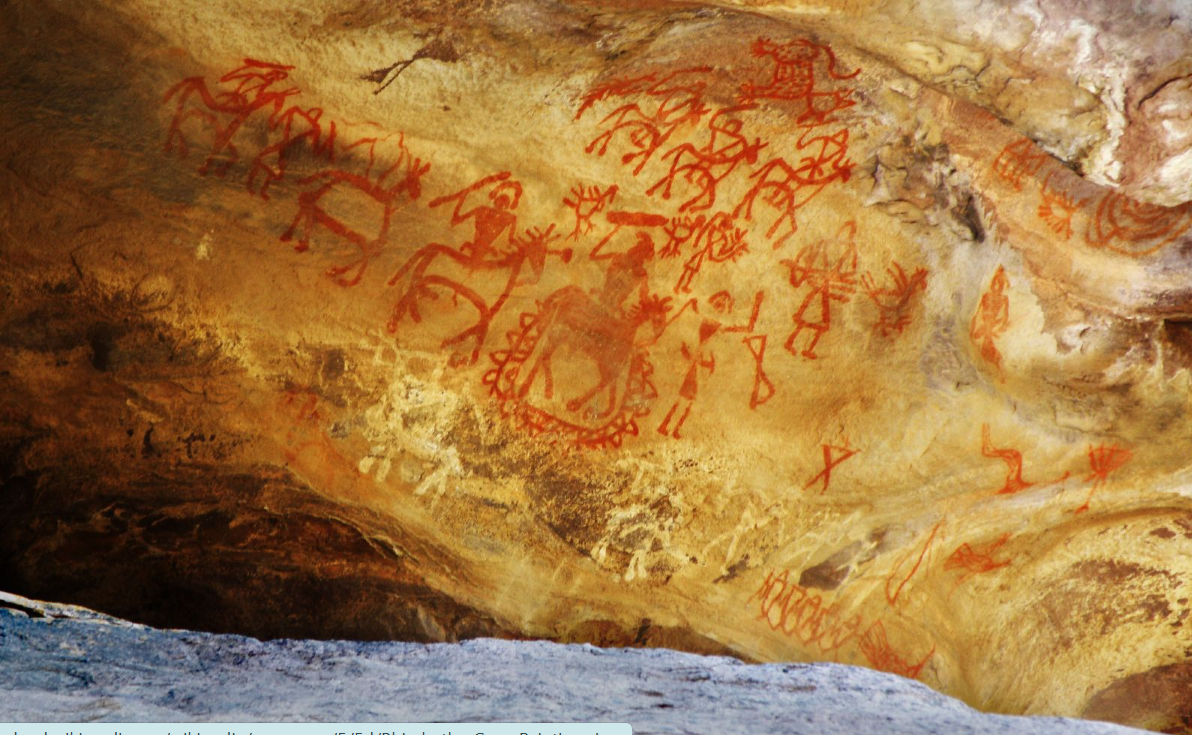 Image sourced from Wikimedia Commons, photograph titled “Bhimbetka Cave Paintings,” shared under a Creative Commons license.
Traditional Indian Styles Worth Knowing
Four regional styles come up again and again when Dubai buyers ask for something with real cultural weight behind it. Each one has its own materials, motifs and backstory, and knowing the difference helps you choose something that actually fits your space rather than a generic “ethnic print.”
-
Madhubani Paintings From Bihar Region
Madhubani painting comes from the Mithila region of Bihar and is traditionally done with natural dyes and pigments on freshly plastered mud walls or handmade paper, using twigs, brushes and even matchsticks as tools. The style is instantly recognisable through its double-line borders, bold florals and figures filled with intricate patterning rather than shading. It carries a Geographical Indication tag recognising Bihar as its home region, which matters if authenticity is important to you.
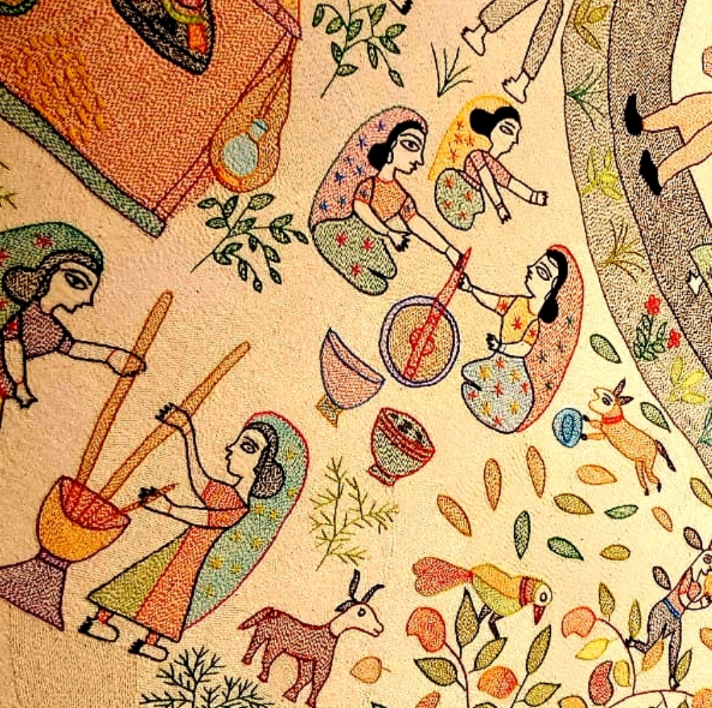 Image sourced from Wikimedia Commons, photograph titled “Colorful Madhubani painting,” shared under a Creative Commons license.
-
Warli Art From Maharashtra Tribes
Warli painting belongs to the Warli tribe of Maharashtra and neighbouring regions, and its roots may stretch back to the tenth century, or even earlier, according to India’s Office of the Development Commissioner for Handicrafts. Traditional Warli art uses a white rice paste pigment applied with a chewed bamboo stick onto a base of mud and cow dung, resulting in simple triangles, circles and stick figures that represent mountains, the sun and daily village life such as the tarpa dance. It reads as almost minimalist next to Madhubani, which makes it a favourite for buyers who want cultural depth without visual clutter.
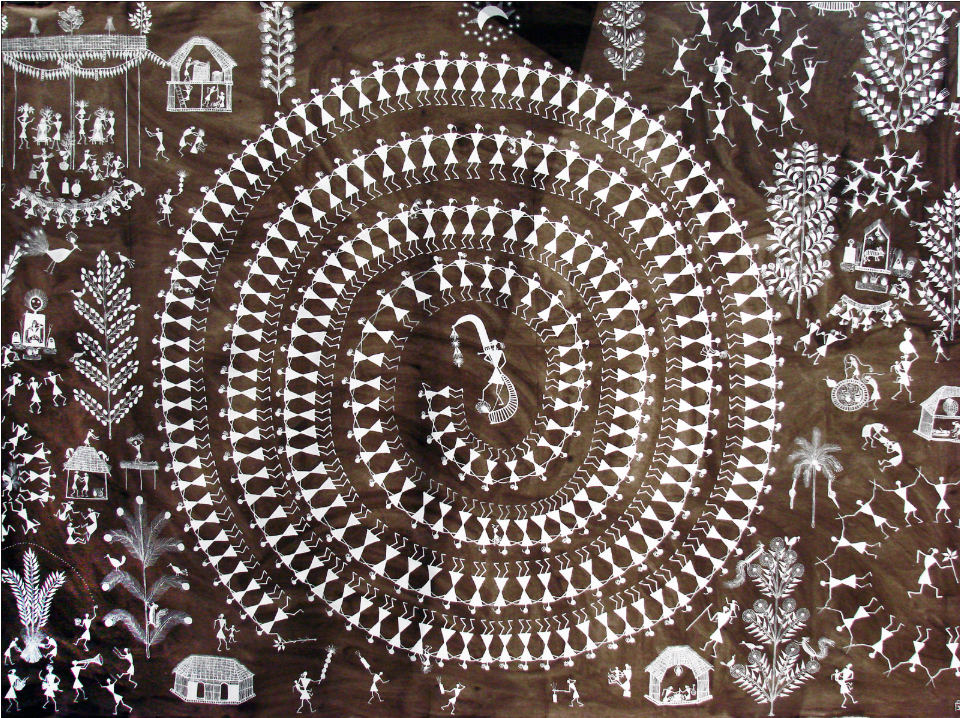 Image sourced from Wikimedia Commons, photograph titled “A Warli painting by Jivya Soma Mashe, Thane district,” shared under a Creative Commons license.
-
Gond Paintings From Madhya Pradesh
Gond art is created by the Pardhan Gond community of Madhya Pradesh, and it turns forest life, folklore and animals into dense fields of dots and fine lines rather than solid colour blocks. A single leaf or the body of a deer might be filled entirely with tiny dots in contrasting shades, a technique that gives the finished piece a vibrating, almost textile-like quality. Our own team has written more about its origins and symbolism in this piece on Gond art paintings, which is worth a look if this style catches your eye.
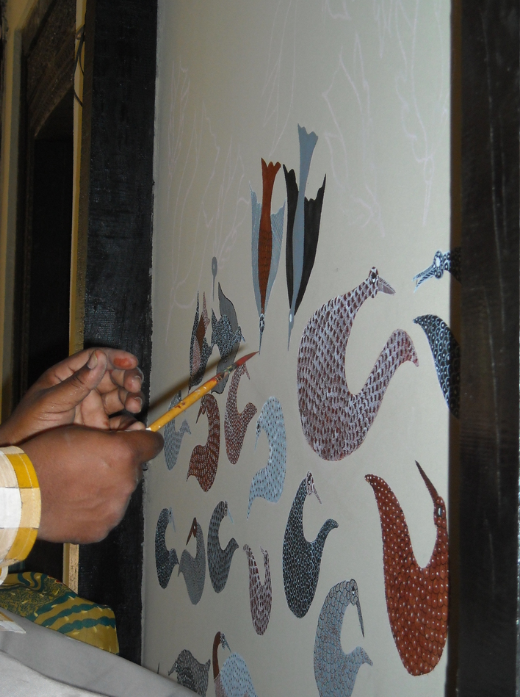 Image sourced from Wikimedia Commons, photograph titled “Gond Painting,” shared under a Creative Commons license.
-
Pichwai Paintings From Rajasthan Temples
Pichwai paintings originated in Nathdwara, Rajasthan, as devotional backdrops hung behind the idol of Shrinathji in temple settings, painted on cloth using natural pigments and often gold leaf. Common subjects include cows, lotus ponds, peacocks and scenes from Krishna’s life, rendered with dense detail meant to be viewed from a distance across a temple hall. That same quality makes large Pichwai pieces work beautifully above a console table or a majlis seating area. We cover the style’s themes and symbolism in more depth in this guide to Pichwai painting.
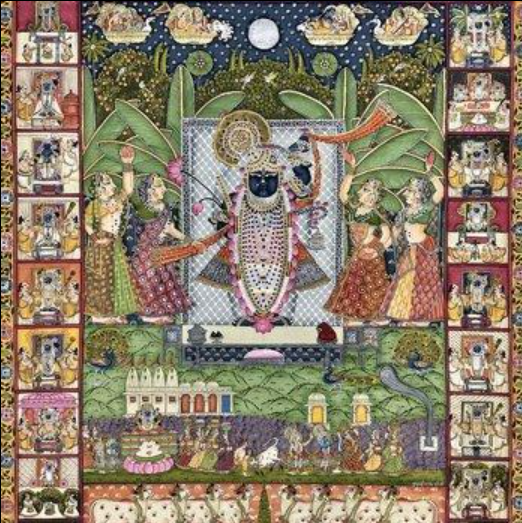 If folk art as a category interests you beyond these four styles, our broader piece on Indian folk artwork and this roundup of traditional Indian painting styles both go into more regional variations worth exploring.
Comparing Popular Indian Painting Styles
A side by side view makes the differences easier to remember, especially if you are choosing between two styles for the same wall.
| Style | Home Region | Traditional Materials | Typical Motifs | Best Suited To |
|---|---|---|---|---|
| Madhubani | Bihar (Mithila) | Natural dyes, mud walls, handmade paper | Florals, fish, double-line borders | Bedrooms, reading corners |
| Warli | Maharashtra | Rice paste, cow dung and mud base | Circles, triangles, village scenes | Minimalist living rooms, hallways |
| Gond | Madhya Pradesh | Natural pigments, dots and fine lines | Forest animals, trees, folklore | Study rooms, accent walls |
| Pichwai | Rajasthan (Nathdwara) | Cloth, natural pigment, gold leaf | Cows, lotus ponds, Krishna scenes | Majlis areas, dining rooms, large walls |
How To Choose The Right Painting
Choosing a painting gets easier once you break it into three practical questions rather than trying to fall in love with everything at once.
-
Match Colours To Your Room
Pull one or two colours already present in your room, whether that is a rug, a cushion or a piece of furniture, and look for a painting that echoes them without matching exactly. A painting that repeats your wall colour too closely tends to disappear into the background, while one with a slightly contrasting accent tone tends to hold attention. Our piece on colour theory for art and interiors breaks this down further if you want a deeper read.
-
Pick Sizes For Your Wall
A general rule that designers use is that art should cover roughly sixty to seventy five percent of the width of the furniture it hangs above, such as a sofa or console table. A painting that is too small for its wall reads as an afterthought, while an oversized piece in a small room can overwhelm the space. When unsure, measure the wall first and work backward from that number rather than falling for a painting online without checking dimensions.
-
Choose Styles That Feel Personal
Skip the piece that only looks good in a showroom photo and pick the one that means something to you, whether that is a scene from your hometown, a colour palette that reminds you of a place you love, or a style your grandmother once had on her wall. Paintings bought this way tend to stay relevant even as home trends shift around them.
Where To Hang Wall Paintings
Placement changes how a painting feels almost as much as the painting itself does. In a Dubai living room, the wall directly behind or facing the main seating area usually gives a painting the most visibility, since that is where guests and family naturally look while seated. Bedrooms suit smaller, calmer pieces positioned above the headboard, ideally at a height where the centre of the artwork sits roughly at eye level for someone standing nearby.
Entryways and majlis areas are where larger, more dramatic pieces earn their place, particularly in villas with double height walls that can otherwise feel empty. Home offices, increasingly common in Dubai apartments since remote and hybrid work became routine, benefit from art with texture or fine detail, such as Gond dot work, since it holds up to being looked at closely during long working hours. Dining areas work well with either a single large statement piece or a tighter grid of two or three smaller works of the same style.
Caring For Paintings In Dubai Homes
Dubai’s climate asks more of artwork than cooler, drier cities do. Indoor humidity in local homes is generally recommended to stay between forty and sixty percent, and swings outside that range, especially the sharp dryness that air conditioning can create, can affect paper, canvas and wooden frames over time. Keeping paintings away from direct AC vents and out of rooms prone to condensation helps protect both the pigment and the frame.
Sunlight is the other factor to plan around, particularly on west-facing walls that catch strong afternoon light for much of the year. UV-filtering glass or acrylic glazing is worth the extra cost for any piece you expect to keep for years, since prolonged direct sun fades natural pigments faster than most people expect. A soft, dry cloth or a gentle brush is usually enough for regular dusting. Avoid glass cleaners or water directly on unglazed or hand painted works, since moisture can lift natural pigments that were never sealed for that kind of contact.
Real Buying And Gifting Examples
A common scenario in Dubai involves a family moving into a new villa in areas like Arabian Ranches or Jumeirah Village, where the majlis wall is often the largest blank space in the home and the first one they want to fill. A large Pichwai piece, with its dense detail and rich colour, tends to suit that scale far better than a small framed print would, simply because the wall demands something that reads clearly from across the room.
Housewarming gifting is another frequent case. When friends or colleagues move into a new Business Bay or Downtown apartment, a mid-sized Warli or Madhubani painting works as a gift that is personal without being overly formal, and it travels well since it can be rolled or packed flat for transport. On the corporate side, offices in DIFC and other business districts have increasingly chosen folk-inspired abstract pieces for reception areas, partly because they signal a connection to Indian craft heritage in a way that feels considered rather than decorative for its own sake. The Brushstrokes Co, which has been curating original Indian art and prints across three generations of the same family, works with exactly these kinds of scenarios through its gifting collections and its main original paintings range.
Common Mistakes People Often Make
Buying too small is the most common mistake, usually because a painting looked larger on a screen than it turns out to be on an actual wall. Always check the listed dimensions against your wall measurements before ordering. A second frequent error is ignoring the room’s light entirely, choosing a painting under warm indoor lighting in a store and then finding the colours look completely different once it is home under daylight or LED downlights.
Buyers also sometimes skip checking provenance or authenticity when a piece is described as handmade or traditional, which matters more with folk art since machine-printed reproductions are common at lower price points. Hanging hardware is another overlooked detail. Villa walls with plaster or gypsum board need different fixings than solid concrete apartment walls, and using the wrong one risks damage to both the wall and the painting. Finally, many people hang art far too high out of habit, when eye level for a standing adult, roughly one hundred and forty five to one hundred and fifty five centimetres to the centre of the piece, almost always looks more natural.
Common Questions About Wall Paintings
What size wall painting works best?
There is no single right size, but as a starting point, art should span roughly sixty to seventy five percent of the width of the furniture below it, such as a sofa, console or headboard, so it neither disappears nor overwhelms the space.
Do wall paintings fade in sunlight?
Yes, especially natural pigments used in folk art styles, if they receive direct sunlight for extended periods. UV-filtering glazing and keeping pieces away from west-facing direct sun for most of the day both help slow this considerably.
How much do wall paintings cost?
Prices vary enormously, from budget prints under a few hundred dirhams to hand painted originals running into thousands, depending on the artist, size, medium and whether the piece is an original or a limited edition print.
Can I hang paintings without nails?
Yes, adhesive strips and hooks rated for the painting’s weight work well on plaster and drywall, though heavier canvases on concrete villa walls generally still need a proper wall anchor for long-term security.
Are Madhubani paintings hand painted always?
Not always. Genuine hand painted Madhubani works exist alongside printed reproductions sold at lower prices, so it is worth asking the seller directly whether a piece is an original, a print, or a limited edition before buying.
What is the best painting style?
The best style is the one that fits your room’s colours, your wall size and your own taste, since Madhubani, Warli, Gond and Pichwai each suit different moods, from intricate and floral to minimal and graphic.
How do I clean wall paintings?
A soft dry cloth or soft brush for dusting is usually sufficient. Avoid liquid cleaners on unglazed or hand painted surfaces, and have glazed pieces cleaned professionally if they need more than a light dusting.
Do you ship paintings to Dubai?
Many Indian art platforms, including The Brushstrokes Co, ship original paintings and prints internationally, so it is worth checking current shipping options and timelines directly with the seller before you order.
Bring The Right Painting Home
A wall painting is one of the few things you buy for a home that gets better with time rather than worse, especially when it carries a story you actually care about. Whether that means a Warli piece that reminds you of a trip through Maharashtra, a Pichwai painting that fills a majlis wall the way it deserves to be filled, or a modern canvas that just feels right in your living room, the choice matters more than the trend of the month.
Take your wall measurements, think about the light in the room, and choose something you would still want to look at in ten years. If Indian folk art or original paintings are on your shortlist, browse The Brushstrokes Co’s collection for a curated starting point, and measure your wall today before you fall for the first painting you see.