
A Krishna painting brings beauty, devotion, and a peaceful atmosphere into your home. Many families choose one not only to decorate their walls but also to create a space that reflects faith, love, and positive energy. Whether displayed in the living room, pooja room, bedroom, or entrance, a Krishna painting adds a timeless charm that blends beautifully with both traditional and modern interiors.
This guide will help you understand why a Krishna painting remains a popular choice for homes across India and beyond. You will discover the different painting styles, the symbolism behind popular Krishna artworks, tips for choosing the right piece for your space, ideal placement ideas, and practical buying advice. You will also find answers to the most common questions buyers ask before investing in a Krishna painting.
What Is a Krishna Painting
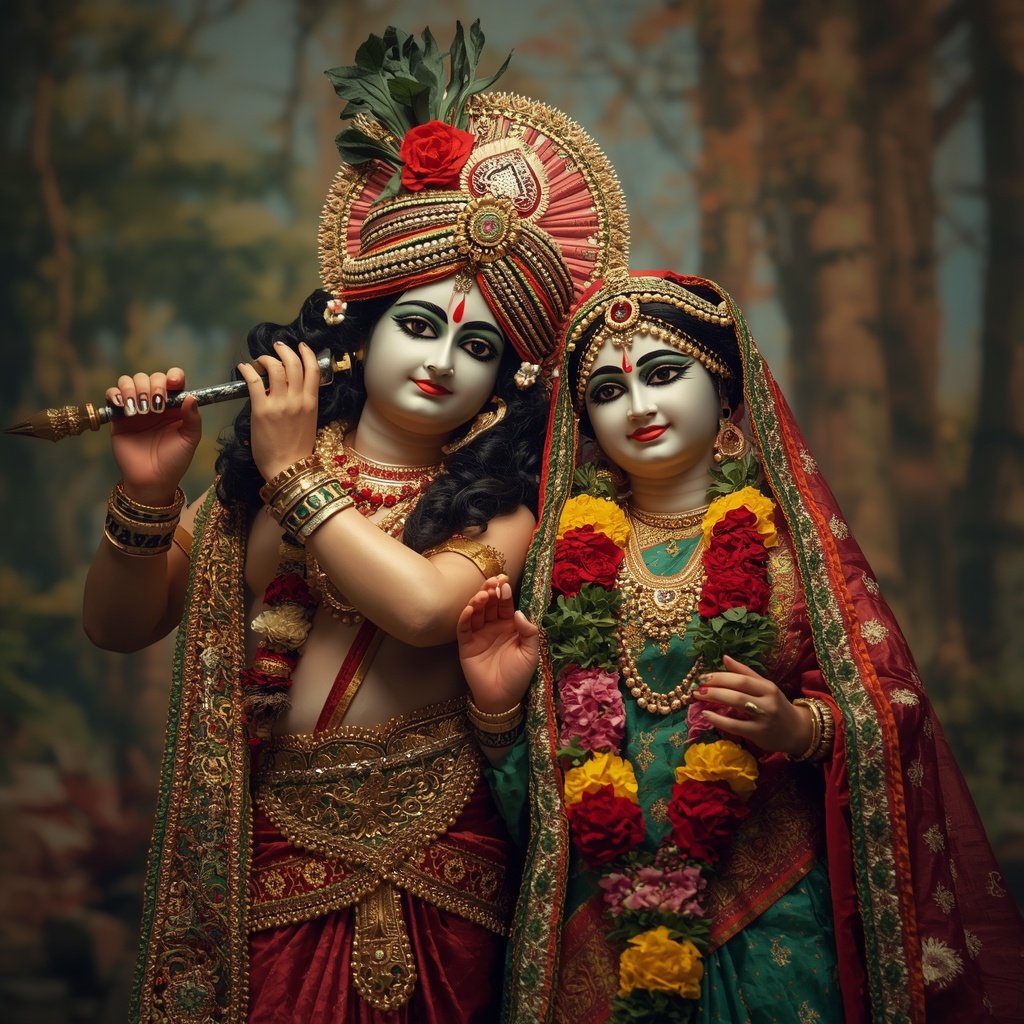
A Krishna painting depicts Lord Krishna, one of the most widely worshipped forms of Vishnu in Hindu tradition, usually shown with his flute, a peacock feather in his hair, and skin painted in shades of blue or deep grey. Many compositions include Radha beside him, cows grazing nearby, or gopis dancing around him during the Raas Leela.
The style changes a great deal depending on where and when the piece was made. A Rajasthani Pichwai treats Krishna very differently from a Kangra miniature or a Tanjore piece finished in gold foil. What stays constant across almost every regional tradition is the intent behind the work, since these paintings were rarely made purely for decoration. They were made as an act of devotion first.
That devotional root is exactly why a Krishna painting still feels different from a generic piece of wall art, even centuries after the earliest examples were painted.
Where Krishna Painting Traditions First Began
Krishna has been a central figure in Indian painting for well over a thousand years, drawing directly from stories in the Bhagavata Purana and the life events described there, his childhood in Vrindavan, his mischief with butter, and his bond with Radha and the gopis. Temple murals and manuscript illustrations depicting these scenes exist from well before the Mughal period.
The genre took a major creative leap in the 12th century, when the poet Jayadeva wrote the Gita Govinda, a Sanskrit lyrical poem centered on the love between Radha and Krishna. Painters across Rajasthan and the Himalayan foothills used this text as source material for centuries afterward, and it remains one of the most illustrated works in Indian art history, as the Cleveland Museum of Art’s collection of Gita Govinda folios shows in detail.
By the 18th century, regional courts across Rajasthan, the Pahari hills, and the Deccan had each developed their own visual language for Krishna, some minimal and linear, others dense with color and gold. That regional variety is the reason a Krishna painting today can look completely different depending on which tradition it draws from.
Six Popular Krishna Painting Art Styles
Most Krishna paintings sold today trace back to one of six major traditions. Knowing the difference helps you understand what you are actually buying, and why two pieces with the same subject can look nothing alike.
Pichwai Painting from Nathdwara Temple Town
Pichwai painting comes from Nathdwara in Rajasthan, where large cloth paintings were traditionally hung behind the idol of Shrinathji, a child form of Krishna, inside the temple. These works are dense, symmetrical, and rich with cows, lotus ponds, and seasonal festival scenes, often finished in deep blues, reds, and gold detailing. Our Pichwai painting guide covers this tradition in far more depth, including how to spot a genuine hand-painted piece.
Kangra Miniature Style with Radha Krishna
Kangra painting developed in the Himalayan foothills of Himachal Pradesh, reaching its peak under the patronage of Raja Sansar Chand in the late 18th century. These miniatures are known for soft color gradients, delicate linework, and romantic scenes of Radha and Krishna set against lush landscapes. The Metropolitan Museum’s overview of Pahari painting and its Krishna imagery is a useful reference if you want to see original court paintings from this school.
Tanjore Painting with Gold Foil Details
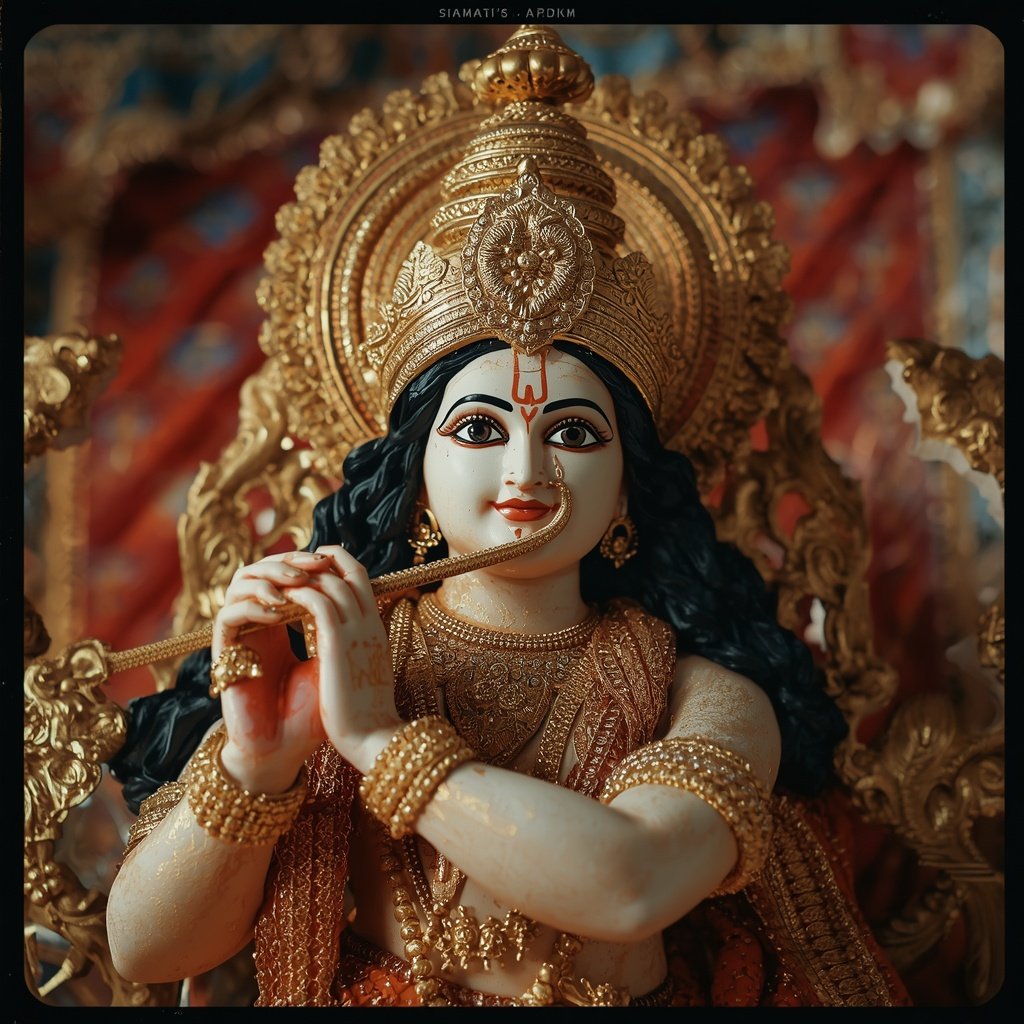
Tanjore painting comes from Thanjavur in Tamil Nadu and stands apart immediately because of its raised gesso work and real gold foil detailing. Krishna is usually shown seated or standing in a rounded, almost sculptural form, framed by an ornate arch and finished with semi-precious stones set into the gesso. This style tends to suit traditional and South Indian style interiors particularly well.
Madhubani Folk Style Krishna Art
Madhubani art from Bihar depicts Krishna through the same bold, flat colors and dense linework used across the wider Mithila painting tradition, often showing him with a serpent, a cow, or Radha, framed by fish and floral borders. It reads as far more graphic than the miniature styles, and works well in homes with a modern, minimal decor style.
Raja Ravi Varma Oil Paintings
Raja Ravi Varma, working in the late 19th century, painted Krishna using a realistic, academic oil painting technique borrowed from European portraiture, a sharp departure from the flat, stylized approach of earlier Indian traditions. His 1894 lithographic press in Mumbai reproduced these images at scale, and that single decision shaped how millions of Indian households pictured Krishna for generations afterward, as Google Arts and Culture documents in its overview of Ravi Varma’s Yashoda and Krishna.
Modern Contemporary Krishna Canvas Art
Contemporary artists now paint Krishna using acrylic on canvas, mixed media, and even abstract or minimalist interpretations, often stripping the imagery down to a silhouette, a flute, or a single peacock feather. These pieces suit apartments and modern homes that want a devotional touch without a fully traditional look.
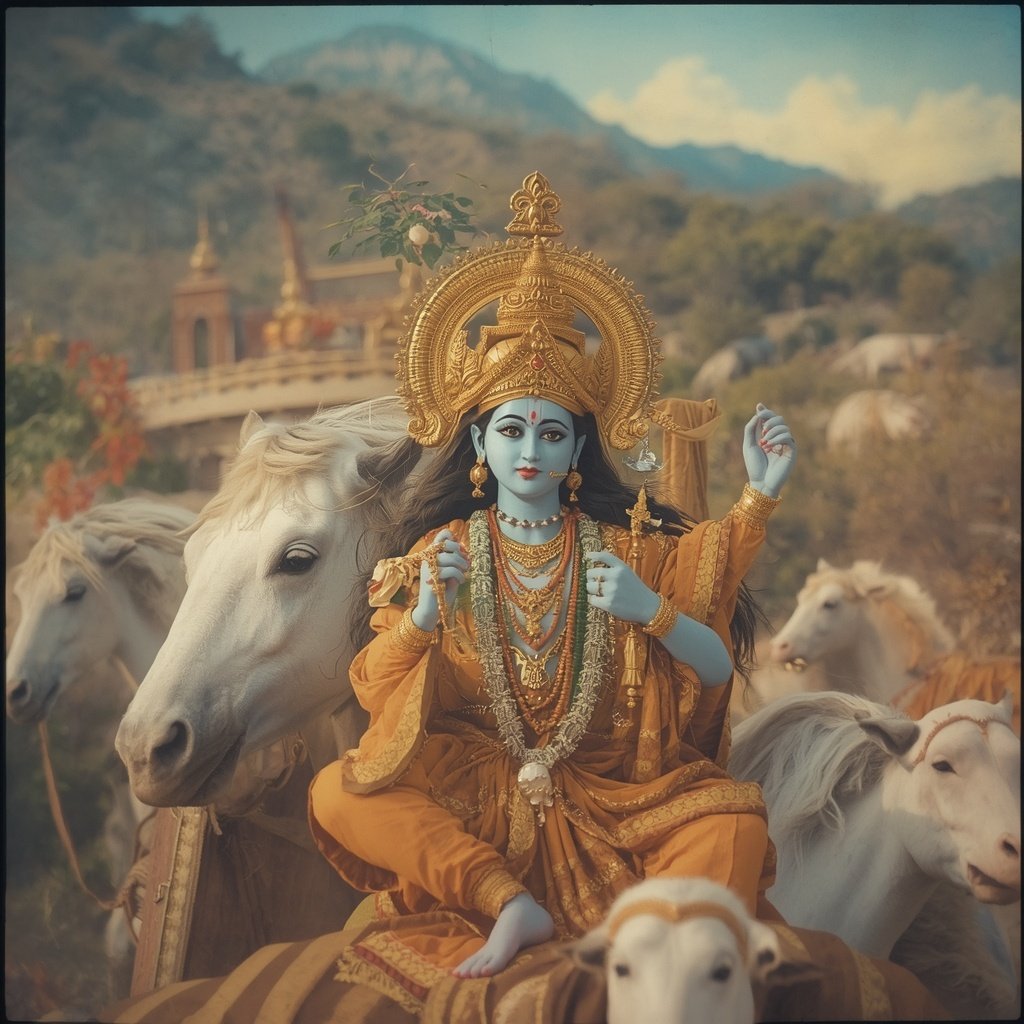
Show Image A Pahari miniature style Krishna composition, showing the softer color palette and detailed linework typical of the Kangra school.
Comparing These Six Krishna Painting Styles
Here is how the six major styles stack up against each other, so you can match one to your space and budget before you start browsing.
| Style | Region | Signature Look | Best Suited For |
| Pichwai | Nathdwara, Rajasthan | Dense, symmetrical, deep colors with gold accents | Pooja rooms, traditional living rooms |
| Kangra | Himachal Pradesh hills | Soft gradients, romantic landscapes | Bedrooms, reading corners |
| Tanjore | Thanjavur, Tamil Nadu | Raised gesso, real gold foil, gemstones | Formal entryways, temple rooms |
| Madhubani | Mithila region, Bihar | Bold flat colors, dense line borders | Modern minimal interiors |
| Raja Ravi Varma style | Pan India, oil on canvas | Realistic, soft shading, portrait style | Classic and colonial style homes |
| Contemporary | Pan India, mixed media | Minimal, abstract, silhouette based | Apartments, modern homes, offices |
What Krishna Painting Symbols Really Mean
Every recurring element in a Krishna painting is there on purpose, not as decoration. Once you know what a few of them stand for, the whole composition reads differently.
Common Motifs Found in Compositions
The flute represents Krishna calling to the soul, drawing devotees toward him the way it draws the gopis in the old stories. The peacock feather in his crown stands for beauty, grace, and protection, and cows nearby symbolize abundance and the pastoral life he grew up in at Vrindavan. Radha beside him represents devotion and the union between the individual soul and the divine, a theme central to the Gita Govinda itself.
Colors Traditionally Used and Their Meaning
Blue skin, the color most associated with Krishna, is generally read as a reference to the vastness of the sky and the ocean, boundless and beyond ordinary limits. Yellow, seen in his traditional dhoti, is tied to auspiciousness and joy. Deep reds and golds, common in Pichwai and Tanjore work, signal devotion, prosperity, and festivity, while the soft greens and pastels of Kangra painting were used to suggest the natural landscape of Vrindavan itself.
Best Vastu Direction for This Painting
Many buyers ask about Vastu placement before choosing where to hang a Krishna painting, and the guidance is fairly consistent across traditional sources. North and north east walls are generally considered the most favorable, since that direction is associated with peace and positive energy in the home. East facing walls are the next best choice, tied to new beginnings and daily energy as the morning sun rises there.
South facing walls are typically avoided for devotional art, along with spots near a bathroom door or directly above a bed. A pooja room, living room, or hallway wall that gets clean morning light tends to work best in practice, giving the piece both good visibility and a respectful setting.
Which Room Suits This Painting Best
The right room really depends on the style and size of the piece rather than one fixed rule. A large Pichwai or Tanjore piece works best as a focal point in a living room or formal entryway, where its detail and gold work can actually be appreciated from a distance. A smaller Kangra miniature or a contemporary silhouette style piece suits a bedroom, study, or reading nook far better.
Pooja rooms are the obvious home for more traditional devotional pieces, particularly Pichwai and Tanjore work, since both styles were originally created for temple settings. Offices and workspaces tend to do better with a minimal, contemporary interpretation rather than a dense, highly ornate one, which can feel out of place in a professional setting.
How to Spot an Authentic Piece
The market for Krishna paintings is large, and so is the number of mass produced prints sold as originals. A genuine hand-painted piece shows small irregularities up close, slight variation in line thickness, visible brush texture, and color that is never perfectly flat across the whole surface. A printed reproduction looks mechanically uniform under close inspection, with even color and no texture at all.
Ask the seller directly where the piece comes from and who painted it. A seller who can name the artist, the region, and the technique used is almost always working with real handmade art rather than a print. Our collection of original paintings is a good reference point for what genuine, hand-painted Indian art actually looks and feels like, including the kind of provenance detail worth asking about wherever you shop.
What Does a Krishna Painting Cost
Price depends heavily on size, style, and whether the piece is an original or a print. A small Madhubani or contemporary canvas piece on paper or lower cost canvas tends to sit at the more accessible end of the market. A large, hand-painted Tanjore piece with real gold foil and gemstone work, or a detailed Pichwai on cloth, generally costs significantly more because of the materials and the hours of skilled work involved.
Miniature style Kangra reproductions and mid-sized canvas pieces from contemporary artists usually fall somewhere in between. As a general rule, the more intricate the detailing and the more expensive the materials, the higher the price, so it helps to ask what specifically drives the cost of any piece before comparing options.
Mistakes Buyers Make Choosing Art
Buying on size alone is one of the most common mistakes, since a painting that looks right in a photo can feel wrong once it is actually hanging on a specific wall. Measure the wall first, and account for furniture or shelving nearby before finalizing a size.
Ignoring the room’s existing color palette is another frequent misstep, particularly with brightly colored Pichwai or Tanjore pieces that can clash with a heavily patterned or brightly painted wall. Buying a print without realizing it is not an original is the third common trap, so always confirm the medium and ask for details about the artist before paying original piece pricing for what turns out to be a reproduction.
Krishna Painting as a Thoughtful Gift
Devotional art carries a certain weight that most generic gifts simply do not have, which makes a Krishna painting a strong choice for weddings, housewarmings, and festive occasions like Janmashtami or Diwali. A Radha Krishna piece in particular is a popular wedding gift, since it symbolizes love, devotion, and partnership.
For a housewarming, a Pichwai or Tanjore piece works well as a way of inviting positive energy into a new home, while a smaller contemporary piece suits a colleague or a first apartment gift. Our gifting collection is built specifically for occasion led buying like this, sized and framed so a piece arrives ready to give rather than needing extra work after purchase.
Show Image A Tanjore style Krishna piece finished with raised gesso work and gold foil, a style closely associated with formal gifting and temple rooms.
Caring for Your Painting Long Term
Direct sunlight fades natural pigments and gold work faster than most people expect, so hanging a Krishna painting away from a window that gets harsh afternoon sun protects the color for far longer. Humidity is the next biggest risk, especially for paper based or cloth based pieces, so kitchens and bathrooms are best avoided.
For cleaning, a soft dry brush or a gentle puff of air is safer than any liquid cleaner, which can smear pigment or damage gold foil almost instantly. If a piece genuinely matters to you, proper framing with acid free mats and UV protective glass is worth the cost, since it protects real craftsmanship rather than just the image sitting behind it.
Bring Home Your Own Krishna Painting
A Krishna painting is never just a picture on a wall. It carries centuries of storytelling, regional craft, and personal devotion, whether it is a Pichwai piece from Nathdwara, a Kangra miniature, or a modern canvas interpretation. Knowing the styles, the symbolism, and what genuine handmade work looks like changes how you shop for one and how it feels once it is finally hanging in your home.
At The Brushstrokes Co, we treat that background as seriously as the finished piece itself. If you are ready to bring a genuine, hand-painted Krishna or Radha Krishna piece into your home, browse our Radha Krishna painting collection or explore our full original paintings collection to see verified, artist-sourced work up close.
Krishna Painting Questions People Often Ask
What does a Krishna painting symbolize?
A Krishna painting typically symbolizes devotion, love, and divine protection, with recurring elements like the flute representing his call to devotees, the peacock feather representing grace, and cows representing abundance and his pastoral upbringing in Vrindavan.
Which Krishna painting style is best for a pooja room?
Pichwai and Tanjore styles are generally best suited for a pooja room, since both traditions originated in temple settings and carry a dense, formal, devotional visual style that fits a sacred space well.
What direction should a Krishna painting face as per Vastu?
North and north east walls are considered the most favorable for a Krishna painting, followed by east facing walls, while south facing walls and spots near a bathroom or bed are typically avoided.
How can I tell if a Krishna painting is handmade?
An authentic handmade piece shows slight irregularities in line thickness and color along with visible brush or gesso texture, while a printed reproduction looks mechanically uniform with flat, even color and no texture.
Is a Radha Krishna painting a good wedding gift?
Yes, a Radha Krishna painting is one of the most popular wedding gifts in India, since the pairing symbolizes love, devotion, and lifelong partnership, all fitting themes for a marriage celebration.
How much does an original Krishna painting cost?
Prices vary widely based on size, style, and materials, with Madhubani or contemporary canvas pieces generally more affordable and detailed Tanjore or Pichwai work costing more due to gold foil, gemstones, and the hours of skilled labor involved.
Can a Krishna painting suit a modern home?
Yes, contemporary and Madhubani style Krishna paintings in particular read as bold and graphic rather than dated, making them a strong fit for modern, minimal interiors that still want a devotional touch.
What is the difference between Pichwai and Kangra Krishna paintings?
Pichwai painting comes from Nathdwara in Rajasthan and uses dense, symmetrical, richly colored compositions built around the deity Shrinathji, while Kangra painting comes from the Himalayan foothills of Himachal Pradesh and favors softer colors, delicate linework, and romantic landscape settings.