
Some paintings are beautiful at first glance. Others make you stop, look again and wonder what happened before the moment you are seeing.
That is the power of art that tells a story.
Artists have always used paintings to communicate ideas that cannot easily be expressed through words. A facial expression, an empty landscape, a dramatic use of colour or even an abstract arrangement of shapes can suggest emotion, memory, culture and experience.
This approach is often described as narrative art or storytelling through art. Instead of simply showing something visually attractive, the artwork gives viewers clues and allows them to interpret the story for themselves.
At The Brush Strokes and Co, we believe some of the most memorable paintings are those that continue revealing something new every time you look at them.
What Is Narrative Art?
Narrative art is artwork that communicates or suggests a story.
The story does not necessarily have to be obvious. In some paintings, the subject may clearly represent a particular event, person or moment. In others, the narrative appears through colour, symbolism, composition or emotion.
A narrative painting can feel almost like a single frame taken from a much larger story.
You see one moment, but your imagination begins asking questions.
What happened before this?
What might happen next?
What is the person in the painting thinking?
Why did the artist choose these colours or symbols?
This interaction between the artist and viewer is what makes storytelling through art so powerful.
How Can Art Tell a Story?
A painting does not need words to communicate.
Artists have several visual tools that allow them to build narratives.
Subject and Composition
The objects, people and surroundings included in a painting immediately begin shaping its meaning.
Where an artist places those elements is equally important.
A solitary figure surrounded by empty space may create a completely different story from the same figure placed inside a busy celebration.
Composition guides the viewer’s eye and often determines which part of the story gets noticed first.
Colour
Colour can establish the emotional atmosphere of a painting before viewers even understand its subject.
Warm shades can create feelings of energy, celebration, comfort or intensity, while cooler and softer palettes may suggest calmness, distance or reflection. Our guide to colour theory in art and interiors explores this in more detail.
Artists can also use unexpected colours to create tension or make familiar subjects feel completely different.
Facial Expressions and Body Language
In figurative artwork, expressions and gestures can communicate an entire emotional situation without dialogue.
A turned head, lowered eyes or an outstretched hand can suggest relationships, conflict, anticipation or affection.
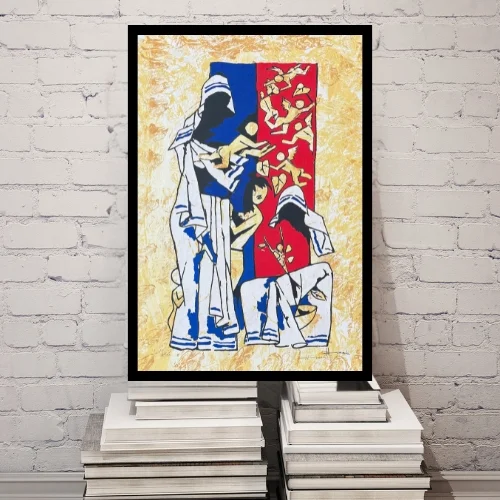
These small visual details often encourage viewers to imagine a much larger story.
Symbols
Symbols have played an important role in visual storytelling for centuries.
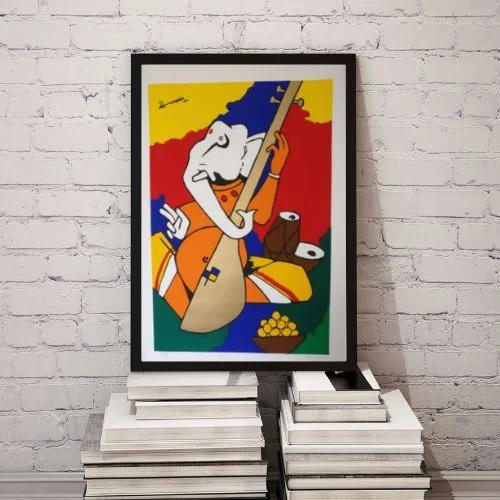
Flowers, animals, religious imagery, objects, clothing and even specific colours can contain cultural or personal meanings. Art historians call this visual language iconography.
Understanding these symbols can sometimes reveal an entirely different layer within a painting. In a Ganesha painting, for example, details such as the broken tusk, the modak and the mouse each carry their own meaning.
Light and Shadow
Lighting can dramatically change the way a scene feels.
Strong contrasts between light and shadow, known as chiaroscuro, may create mystery or drama, while gentle natural light can make a scene feel peaceful or intimate.
Through these choices, artists control not only what viewers see but also how they feel while seeing it.
Why Paintings That Tell Stories Feel Different
A decorative painting can complete a room.
A meaningful painting can become part of someone’s life.
That difference often comes from emotional connection.
When viewers recognise something familiar in an artwork—an emotion, memory, place, cultural reference or personal experience—they begin relating the painting to their own lives.
That relationship can change over time.
A painting purchased because of its colours may eventually become associated with a particular home, stage of life or family memory. The artist begins the story, but the collector often continues it.
This is one reason original paintings can remain meaningful long after interior trends have changed.
Emotional Storytelling Through Art
Emotion is one of the strongest forms of visual storytelling.
A painting does not always have to depict an event to create a narrative. Sometimes the feeling itself becomes the story.
Artists use texture, rhythm, colour, movement and form to express emotions such as hope, nostalgia, solitude, joy, conflict or tranquillity.
Viewers then interpret those emotions through their own experiences.
This explains why two people can look at exactly the same artwork and understand it differently.
Neither interpretation necessarily has to be wrong.
One of the most interesting qualities of art is that meaning can exist somewhere between what the artist intended and what the viewer experiences.
Can Abstract Art Tell a Story?
Absolutely.
Abstract art may not contain recognisable people, landscapes or objects, but it can still communicate powerful narratives.
Instead of telling a story literally, abstract paintings often communicate through colour, movement, texture and shape.
A composition containing energetic lines and contrasting colours might suggest movement or tension. Soft overlapping forms could create a feeling of calm or introspection.
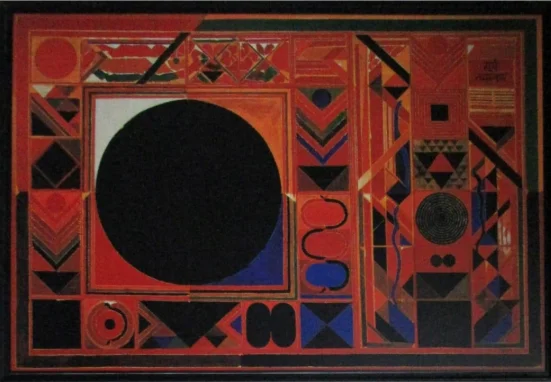
Because there is no fixed storyline, abstract art gives viewers greater freedom to create their own interpretation. The geometric works of S.H. Raza are a good example, where simple forms carry deep personal and spiritual meaning.
This can make abstract paintings particularly personal.
The same artwork may remind one person of a landscape, another of an emotion and someone else of a memory.
The visual language remains the same, while the story changes with the viewer.
How Culture Shapes Stories in Art
Art is deeply connected with culture.
Artists frequently draw inspiration from mythology, religion, festivals, traditions, architecture, landscapes and everyday life.
Indian art provides countless examples of this connection. Pichwai paintings, for instance, have told stories of Krishna for centuries, while Madhubani and other folk art traditions record village life, rituals and myths.
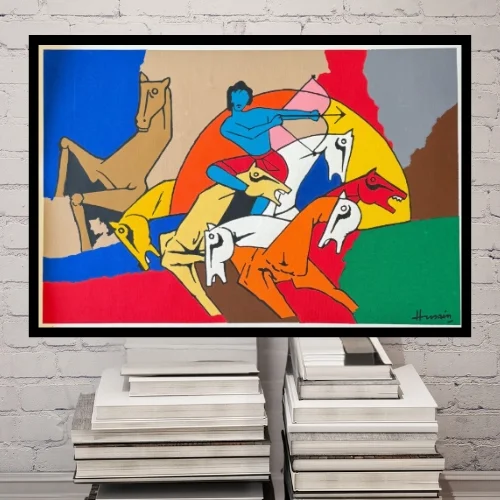
Traditional symbols, spiritual figures and cultural stories continue appearing in contemporary paintings, often interpreted through modern techniques and artistic styles.
This combination of heritage and personal expression allows artworks to preserve cultural stories while introducing them to new generations.
Understanding the cultural background behind a painting can also change the way you experience it.
Something that initially appears to be a decorative symbol may carry historical, spiritual or emotional significance.
That additional knowledge adds another chapter to the artwork’s story.
Nature as a Form of Visual Storytelling
Nature has inspired artists for centuries because landscapes naturally carry emotion and atmosphere.
Mountains can represent strength.
Open skies may suggest freedom.
Rivers can evoke movement or change.
Forests may create feelings of mystery, peace or solitude.
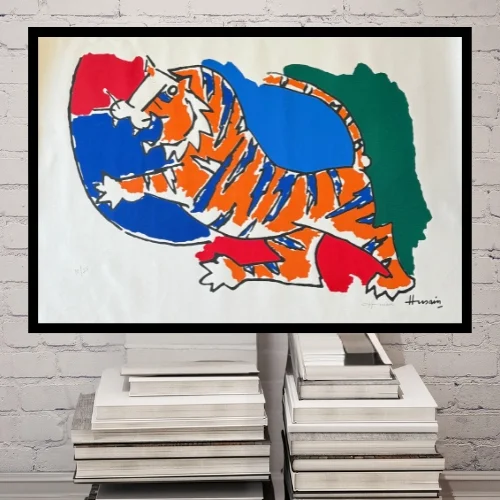
But artists do not simply reproduce nature exactly as they see it.
They interpret it.
One painter might transform a landscape into a detailed realistic scene, while another may use exaggerated colours and loose brushwork to communicate how the place felt rather than exactly how it looked. Our guide to landscape paintings shows how differently artists approach the same subject.
That interpretation is where the story begins.
Original Paintings Carry the Artist’s Story
Original artwork has a quality that reproductions cannot completely recreate.
Every brushstroke, texture and mark exists because of a decision made by the artist.
Sometimes those decisions are carefully planned. Other times they happen intuitively during the creative process.
Either way, the finished work becomes a record of that artistic journey.
This is part of what attracts collectors to original paintings. The difference between an original and a print is explained in our guide to art prints or paintings.
You are not simply buying an image. You are living with something shaped directly by another person’s ideas, technique and imagination.
Over time, your own experiences become connected with it as well.
The artist’s story and the collector’s story begin to overlap.
How to Read the Story Behind a Painting
Understanding art does not require formal art training.
You can begin by simply spending more time with the painting.
Instead of immediately asking whether you like it, look at what is happening within the composition.
Notice where your attention goes first.
Then look at the colours.
Are they energetic, peaceful, dark, warm or unexpected?
Consider the subjects and symbols.
Is there something unusual about the setting?
Does the painting remind you of a place, person or experience?
Finally, consider how the artwork makes you feel.
Sometimes the emotional reaction comes before intellectual understanding.
That reaction can be an important part of interpreting art.
Choosing Art With Meaning
When buying artwork for your home, it is easy to focus entirely on interior colours and furniture.
Those things matter, but they should not be the only consideration.
The paintings people tend to appreciate for years are often those that create some form of emotional connection.
Ask yourself whether the artwork makes you curious.
Does it remind you of something?
Does the subject have personal or cultural significance?
Would you still want to look at it if your furniture changed?
Meaningful art often survives changing décor trends because the reason you chose it goes beyond appearance. If you are ready to buy, our guide to buying original paintings covers what to check.
Art That Tells Your Story at Home
Artwork can also become part of the story of a home.
A peaceful landscape in a bedroom can help create a quiet atmosphere. A dramatic abstract painting can become the focal point of a living room. A culturally meaningful artwork may reflect family traditions or personal beliefs.
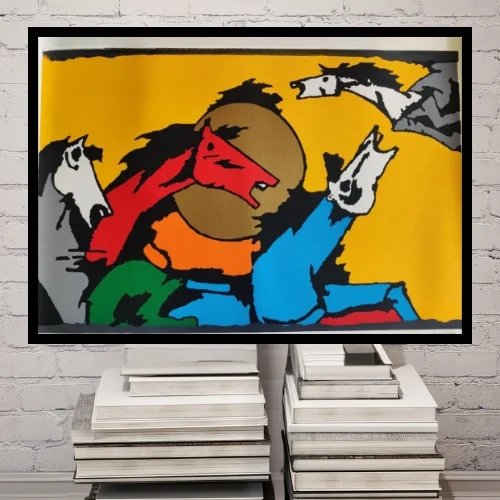
Over time, these pieces become connected with everyday experiences.
Guests notice them.
Conversations begin around them.
Children grow up seeing them.
Homes change while certain paintings remain.
That is why thoughtfully selected artwork often feels less like decoration and more like part of the identity of the space. Our guide to wall paintings for interior design offers practical ideas for placing them.
Building a Meaningful Art Collection
A meaningful art collection does not need to follow one particular style.
It does not need to be created around trends either.
Some collectors choose work from particular artists, such as M.F. Husain. Others collect subjects connected with nature, spirituality, abstraction or culture.
The strongest collections often have one thing in common: the owner feels a genuine connection with the pieces.
Instead of asking only whether a painting is fashionable, ask what it contributes to your collection.
Does it introduce a new emotion?
Does it represent something important to you?
Does it complement another artwork you already own?
When paintings are selected thoughtfully, the collection begins to tell its own larger story.
Why Storytelling Makes Art Memorable
We naturally remember stories.
That is one reason narrative art can leave such a lasting impression.
A visually attractive painting may catch someone’s attention, but an artwork that creates curiosity encourages them to stay longer.
It invites interpretation.
It creates questions.
It allows personal experiences to become part of the viewing process.
And because those interpretations can change over time, the artwork rarely feels completely finished.
You may notice one element today and discover another years later.
That ability to keep revealing new meaning is what makes great storytelling through art so compelling.
FAQ
What is art that tells a story called?
Art that communicates a story is commonly referred to as narrative art. Narrative artwork can tell stories through people, events, symbols, colour, composition, emotion or abstract visual elements.
What is storytelling through art?
Storytelling through art is the process of communicating experiences, emotions or ideas visually rather than through written or spoken words. Artists can use subjects, colours, symbols, texture and composition to create a narrative.
Can a painting tell a story without people?
Yes. Landscapes, abstract art, still lifes and symbolic paintings can all tell stories without showing human figures. Their narratives may come from mood, symbolism, colour or the relationship between different visual elements.
How does colour help tell a story in art?
Colour helps create mood and emotional context. Artists can use different palettes to suggest calmness, celebration, mystery, tension, nostalgia or many other emotions.
What makes a painting meaningful?
Meaning often comes from the relationship between the artist’s intention and the viewer’s personal interpretation. Subject matter, technique, cultural references and personal memories can all make a painting meaningful.
Why is original artwork special?
Original artwork contains the direct marks, textures and creative decisions of the artist. Because each original work is unique, collectors often develop a stronger personal relationship with it over time.
Can abstract paintings have stories?
Yes. Abstract paintings often tell emotional or conceptual stories through colour, shape, movement and texture rather than recognisable scenes.
How do I understand the meaning of a painting?
Start by observing the composition, colours, subjects, symbols and emotional response the artwork creates. Learning about the artist and cultural context can also reveal additional meaning.
Every Painting Has More Than One Story
A painting’s story does not necessarily end when the artist finishes it.
The artist creates the first chapter through colour, composition, emotion and imagination.
The viewer continues it through interpretation.
And when someone chooses to live with that artwork, another chapter begins.
That is what makes art that tells a story so powerful. It is not simply something to look at. It becomes something to think about, connect with and return to again and again.
Explore the original artwork and paintings at The Brush Strokes and Co and discover a piece whose story feels connected to your own, or contact our team for help choosing one.