
An art gallery wall can transform an ordinary space into a visually engaging part of your home. Instead of decorating a wall with a single artwork, a gallery wall brings together paintings, prints, photographs, or other pieces in a thoughtful arrangement that reflects your taste and complements your interiors.
Creating a beautiful art gallery wall is not simply about hanging several frames together. The size of the paintings, spacing, colours, frames, layout, lighting, and relationship with surrounding furniture all influence how the final wall looks.
Whether you are decorating your living room, bedroom, hallway, dining area, or staircase, this guide will help you understand how to create an art gallery wall that feels balanced, personal, and visually appealing.
What Is an Art Gallery Wall?
An art gallery wall is a curated arrangement of multiple artworks displayed together on one wall.
The collection may include original paintings, prints, photographs, illustrations, or a combination of different styles. Some gallery walls follow a neat grid, while others use an organic arrangement with paintings of different shapes and sizes.
The purpose is to create a unified visual composition rather than make each artwork feel completely separate.
A well-designed gallery wall can also become the focal point of a room and give an otherwise empty wall more personality.

How to Create an Art Gallery Wall
Before putting nails into the wall, spend some time planning your composition.
Start by identifying the wall you want to decorate and measuring the available space. Consider nearby furniture such as sofas, beds, sideboards, dining tables, or consoles because your artwork should visually relate to the elements around it.
Next, select the paintings you want to include.
Instead of focusing only on whether individual artworks look beautiful, think about how they work together.
Look at:
- colours
- artwork sizes
- painting styles
- orientation
- frame styles
- subject matter
- available wall space
You can place your paintings on the floor first and experiment with different arrangements before installing them.
Another useful technique is to create paper templates matching the dimensions of each frame and temporarily position them on the wall.
This allows you to test the composition before making permanent changes.
5 Elements of a Beautiful Gallery Wall
1. Balanced Spacing
Consistent spacing helps individual paintings feel like part of one composition.
For many residential gallery walls, leaving approximately 2 to 4 inches between artworks creates a clean and balanced appearance.
However, larger paintings may require slightly more space, while smaller works can sometimes be grouped more closely.
The important thing is consistency.
Random gaps between artworks can make the arrangement appear unplanned.
2. Correct Hanging Height
Artwork displayed too high can feel disconnected from the rest of the room.
A common starting point is to position the visual centre of the overall arrangement approximately 57 to 60 inches from the floor.
This is only a guideline.
If the gallery wall is positioned above a sofa, console, bed, or another piece of furniture, the relationship between the artwork and furniture becomes more important than following an exact measurement.
3. Visual Balance
A gallery wall does not need to be completely symmetrical, but it should feel visually balanced.
Avoid placing all large paintings on one side and smaller paintings on the other.
Instead, distribute visual weight throughout the composition.
A large artwork can often act as the anchor piece, while smaller paintings can be arranged around it.
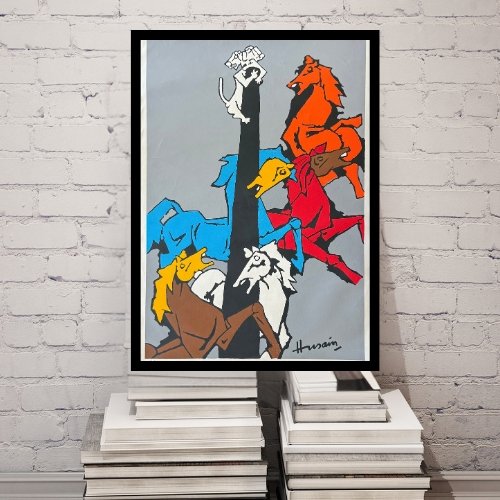
4. Colour Coordination
Your paintings do not need to contain exactly the same colours.
However, repeating a few tones throughout the arrangement can make different artworks feel connected.
For example, several paintings may contain touches of blue, earthy brown, green, gold, or warm neutral shades.
These subtle repetitions help create visual harmony.
5. Good Lighting
Lighting can significantly affect how paintings appear.
Natural daylight often reveals colour and texture beautifully, but direct sunlight can damage some artworks over time.
For evening viewing, warm directional lighting or picture lights can help highlight paintings and create a gallery-like atmosphere.
How to Arrange Paintings on a Gallery Wall
There are several ways to arrange paintings depending on your interior style.
Grid Layout
A grid works particularly well when your paintings have similar dimensions and frames.
It creates a structured, modern appearance and works beautifully in contemporary interiors.
Organic Gallery Layout
An organic layout combines artwork of different sizes and orientations.
This style feels more relaxed and creative.
Choose one or two larger pieces as visual anchors and build the rest of the arrangement around them.
Horizontal Arrangement
A horizontal gallery wall works especially well above sofas, beds, sideboards, or dining consoles.
Keeping the overall arrangement wider than it is tall can visually complement long furniture pieces.
Vertical Arrangement
A vertical arrangement is ideal for narrow walls, staircases, corners, or spaces between doors and windows.
It helps draw the eye upward and can make the room feel taller.
Gallery Wall Ideas for Different Rooms
Different rooms require different approaches to artwork selection.
Living Room Gallery Wall
The living room is one of the best places to create a gallery wall because it usually offers larger wall surfaces.
A gallery wall above a sofa or console can become the main visual feature of the room.
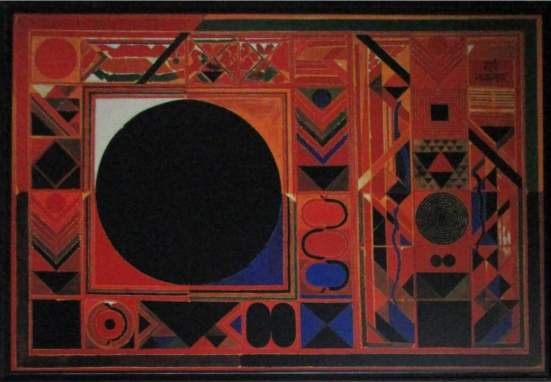
Consider combining original paintings with different dimensions while maintaining some connection through colour or artistic style.
Abstract paintings, landscapes, contemporary Indian art, botanical compositions, and cultural artworks can all work beautifully depending on your interior.
Bedroom Gallery Wall
Bedroom artwork usually benefits from a calmer visual approach.
Instead of using too many contrasting colours, consider soft landscapes, minimal abstracts, botanical artwork, or paintings with peaceful compositions.
A gallery wall can work above the bed, opposite the bed, or along an otherwise unused wall.

Dining Room Gallery Wall
Dining rooms offer an opportunity to use expressive artwork.
Colourful abstract paintings, still-life artwork, botanical compositions, cultural art, and contemporary paintings can add personality to the space.
Artwork can also help create a more welcoming environment when entertaining guests.

Hallway Gallery Wall
Hallways often have limited furniture, making them ideal spaces for displaying art.
A sequence of smaller paintings can create visual interest along the length of the hallway.
You can maintain consistency through similar frames or allow the paintings themselves to create variety.
Staircase Gallery Wall
A staircase naturally creates an upward visual movement.
Artwork can follow the angle of the stairs while maintaining reasonably consistent spacing.
This is especially effective for combining multiple smaller paintings into one large composition.
How to Choose Paintings for a Gallery Wall
Choosing the right paintings is one of the most important parts of creating an attractive gallery wall.
Start by thinking about the overall atmosphere you want to create.
Do you want the wall to feel colourful and energetic?
Would you prefer something calm and sophisticated?
Are you interested in contemporary artwork, traditional Indian art, abstract paintings, landscapes, portraits, or nature-inspired compositions?
You do not have to choose paintings from exactly the same style.
Mixing styles can create a more personal collection.
The key is finding one or two visual elements that connect the pieces.
This could be colour, frame style, artistic technique, subject matter, or overall mood.
Choosing the Right Painting Sizes
A gallery wall becomes more interesting when artwork sizes vary.
Try combining one or two larger paintings with several smaller pieces.
Large artwork naturally attracts attention and can act as the centre of the composition.
Smaller paintings can then create rhythm and movement around it.
Before purchasing paintings online, always check the exact dimensions.
Images shown on websites can make artwork appear larger or smaller than it actually is.
Compare the measurements with your available wall space before making a decision.
Original Paintings vs Prints for Gallery Walls
Both original paintings and prints can work within a gallery wall.
Original paintings offer unique texture, brushwork, depth, and individuality because each artwork is created by the artist.
They can also become meaningful pieces that stay within your collection for years.
Prints provide greater affordability and make it easier to experiment with different visual styles.
You can also combine original paintings with selected prints when creating your arrangement.
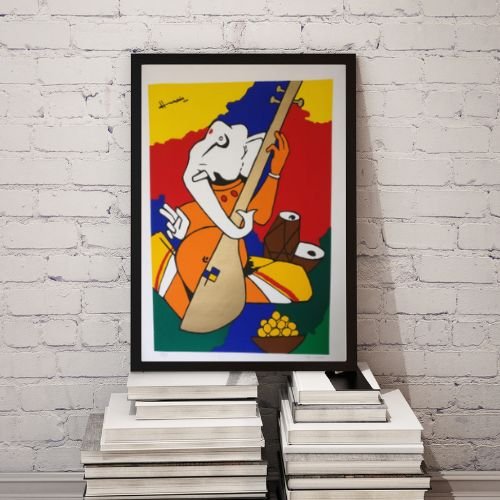
The decision ultimately depends on your budget, personal preferences, and the importance you place on owning original artwork.
How to Choose Gallery Wall Colours
There are two main ways to approach colour.
The first is to coordinate paintings with your existing interiors.
If your room contains neutral furniture, you may introduce artwork with colours that already appear in cushions, rugs, decorative objects, or curtains.
The second approach is contrast.
A largely neutral interior can become much more interesting when paired with colourful paintings.
You do not need every artwork to match.
Instead, look for a few repeated colours that visually connect the collection.
Choosing Frames for Your Gallery Wall
Frames play an important role in the final appearance of your collection.
Using identical frames creates a clean and structured look.
Mixing wood, black, white, metallic, or natural finishes produces a more relaxed and collected aesthetic.
You can also display canvas paintings without traditional frames when the edges are finished appropriately.
When using mixed frames, avoid introducing too many completely unrelated styles.
A limited selection generally feels more intentional.
Common Gallery Wall Mistakes
One common mistake is choosing paintings without considering their dimensions.
Always measure your wall and surrounding furniture before purchasing artwork.
Another mistake is hanging artwork too far apart.
When the gaps are too large, the paintings may look like separate decorative objects instead of one gallery wall.
Avoid placing every painting at exactly the same visual importance.
A stronger arrangement usually includes a clear focal point.
Finally, do not purchase artwork only because its colour matches your room.
Choose paintings you genuinely enjoy looking at.
Interior décor may change over time, but meaningful art can remain part of your home for many years.
How to Create a Gallery Wall on a Budget
Creating a gallery wall does not require purchasing every artwork at once.
You can gradually build a collection.
Start with one or two paintings you genuinely love and add complementary pieces over time.
Another option is to combine different sizes.
Instead of filling the entire wall with large artworks, use one larger focal painting and surround it with several smaller pieces.
This creates visual impact without requiring many large paintings.
You can also prioritise original paintings for the central pieces while using prints or photographs as supporting artwork.
Buying Art Gallery Paintings Online
Buying paintings online gives you access to artwork from artists and styles that may not be available locally.
However, purchasing artwork online requires careful evaluation.
Before buying a painting, check the exact dimensions, medium, surface, artist information, photographs, framing details, shipping information, and return policies.
For original paintings, look for information about the artist and authenticity whenever available.
Close-up photographs are particularly useful when buying textured artwork because they allow you to understand the surface and brushwork more clearly.

When exploring original paintings online, choose artwork based on both the available space and your personal connection with the piece.
A painting should not simply fill an empty wall.
It should contribute something meaningful to the room.
Mixing Different Art Styles
A gallery wall does not need to follow one artistic movement.
Contemporary artwork can sit beside traditional Indian paintings.
Abstract art can be paired with landscapes.
Minimal paintings can be balanced with more detailed compositions.
Mixing styles often makes a gallery wall feel more personal.
The challenge is creating enough connection between the pieces so the arrangement still feels intentional.
You can achieve this through similar colours, frames, dimensions, or spacing.
Gallery Wall Ideas With Indian Art
Indian art offers many styles that can create distinctive gallery walls.
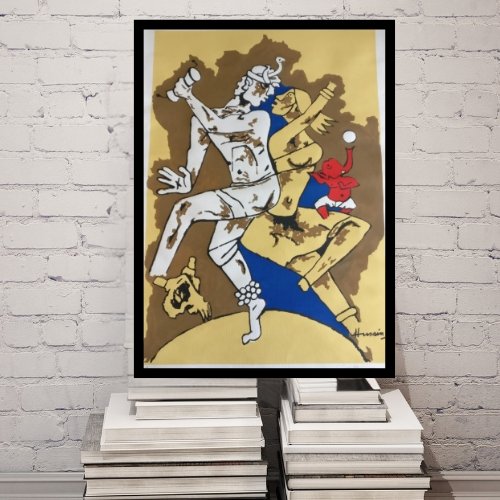
Traditional styles such as Madhubani, Warli, Pichwai, folk art, and culturally inspired compositions can bring heritage and storytelling into contemporary interiors.
These artworks can be displayed entirely as a traditional collection or mixed with modern and abstract paintings.
The contrast between traditional artistic techniques and contemporary interiors can create a particularly striking visual result.
Caring for Your Gallery Wall Paintings
Proper care helps maintain the appearance of your artwork.
Avoid placing paintings in areas where they receive strong direct sunlight for long periods.
Excessive moisture and humidity should also be avoided.
Dust frames and artwork gently using appropriate methods for the artwork’s surface.
Original paintings should generally not be cleaned with household cleaning products or wet cloths unless specifically recommended for the medium.
For valuable or delicate artwork, professional advice is preferable when restoration or deeper cleaning is required.
Building a Gallery Wall That Feels Personal
The most successful art gallery walls are not necessarily the most expensive or perfectly symmetrical.
They are the ones that feel connected to the person who created them.
Your gallery wall might include artwork from artists you admire, paintings collected while travelling, pieces connected to Indian culture, contemporary artwork, gifts, or paintings that simply create an emotional response.
Start with artwork you genuinely enjoy.
Then use thoughtful spacing, scale, framing, and arrangement to bring those individual pieces together.
Over time, your gallery wall can continue evolving as you discover new artwork.
A carefully curated collection does more than decorate a room. It gives the space character and makes your home feel distinctly yours.
FAQ
What is an art gallery wall?
An art gallery wall is a curated arrangement of multiple paintings, prints, photographs, or other artworks displayed together on a single wall.
How much space should be between paintings on a gallery wall?
Around 2 to 4 inches between artworks is a useful starting point for many residential gallery walls. The exact spacing can vary depending on the size of the paintings and the overall arrangement.
How high should a gallery wall be hung?
A common guideline is to position the visual centre of the arrangement approximately 57 to 60 inches from the floor. Adjust the position when displaying artwork above furniture.
What size paintings are best for a gallery wall?
A combination of large, medium, and small paintings often creates the most visually interesting arrangement. One larger artwork can act as the focal point while smaller pieces support it.
Should gallery wall frames match?
They do not have to match. Identical frames create a clean appearance, while carefully mixed frames can make the wall feel more relaxed and collected.
Can I mix original paintings and prints?
Yes. Original paintings, limited editions, photographs, and prints can all be used together when the overall arrangement has visual balance.
How do I arrange a gallery wall above a sofa?
Keep the overall artwork arrangement visually connected to the sofa and avoid placing the lowest artwork too far above it. A horizontal composition generally works well above wider furniture.
Can I use different styles of paintings together?
Yes. Abstract, contemporary, traditional, landscape, and figurative artwork can be combined when they share colours, frames, proportions, or another visual element.
What type of paintings are best for a living room gallery wall?
Abstract paintings, landscapes, contemporary art, botanical artwork, Indian art, and expressive compositions can all work well. Choose pieces that complement the room while reflecting your personal taste.
Where can I buy paintings for a gallery wall?
You can explore curated online art galleries and collections that provide artwork dimensions, artist information, medium details, authenticity information, and suitable photographs before purchasing.