
The word Kalamkari tells you almost everything about this craft. It comes from the Persian kalam, meaning pen, and kari, meaning craftsmanship. A Kalamkari painting is, quite literally, pen work: gods, flowers, birds and whole epics drawn and dyed by hand onto cotton cloth.
Kalamkari painting is a traditional textile art from Andhra Pradesh. It developed in two distinct styles. Srikalahasti Kalamkari is drawn freehand with a pen and is famous for mythological narratives. Machilipatnam Kalamkari uses carved wooden blocks and is known for flowing floral and paisley patterns.
This guide covers the history of Kalamkari painting, both styles, the natural dye process, popular motifs, easy designs for beginners, and practical ways to style, buy and care for Kalamkari art at home.
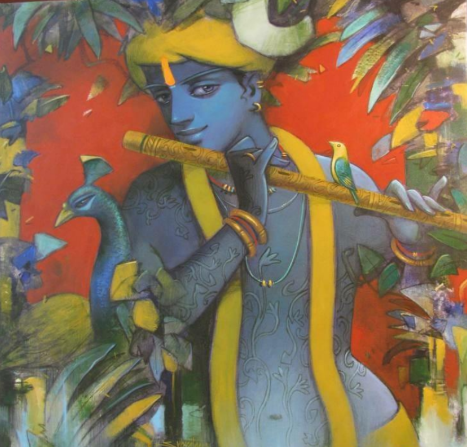
Kalamkari Painting at a Glance
| Detail | Fact |
|---|---|
| Origin | Andhra Pradesh, India |
| Main centres | Srikalahasti (Tirupati district) and Machilipatnam–Pedana (Krishna district) |
| Meaning | Kalam (pen) + kari (craftsmanship) |
| Two styles | Srikalahasti (freehand pen) and Machilipatnam (hand-block printing) |
| Base material | Cotton cloth treated with myrobalan and milk |
| Traditional colours | Indigo blue, madder red, iron black, mustard yellow, earthy brown |
| GI status | Srikalahasthi Kalamkari, GI No. 28; Machilipatnam Kalamkari, GI No. 90 |
| Oldest surviving pieces | Around the 15th and 16th centuries |
What Makes Kalamkari Painting So Distinctive
Most paintings are made by laying colour on top of a surface. A Kalamkari painting is different, because the colour becomes part of the cloth itself. Fabric is treated, drawn on, dyed, washed and sun-dried, often many times over, until the design is locked into the cotton.
That process gives Kalamkari art three qualities you rarely find together:
- Fine, flowing linework. Outlines are drawn with a pen or printed from a hand-carved block, so lines feel alive rather than mechanical.
- An earthy, glowing palette. Natural dyes produce warm reds, deep indigos and soft mustards that age gracefully.
- Story and pattern side by side. Some pieces narrate entire epics. Others repeat a single flowering vine across metres of fabric.
Because the craft sits between painting and textile-making, a Kalamkari painting works as wall art, a wall hanging, a furnishing fabric or a saree. Few Indian art forms move between the gallery and the wardrobe so easily.
Kalamkari Painting Belongs to Which State
Kalamkari painting is related to Andhra Pradesh. Its two recognised centres are Srikalahasti, a temple town in Tirupati district, and the coastal Machilipatnam region of Krishna district, where much of the block printing now happens in nearby Pedana.
Both styles hold their own Geographical Indication. Srikalahasthi Kalamkari is registered as GI application No. 28, filed in March 2005 by the artisan body KARUNA. Machilipatnam Kalamkari followed as GI No. 90, registered in 2008–09, according to India’s list of registered GIs.
The Machilipatnam registration is tightly defined. As the Deccan Herald reported, production under that name is limited to Pedana and neighbouring villages such as Polavaram and Kappaladoddi. The certificate went to the Vegetable Dye Hand Block Kalamkari Printers’ Welfare Association, Pedana.
Why Telangana Sometimes Gets Mentioned
Andhra Pradesh and Telangana were one state until 2014, so older sources and some artisan families span both. The GI records, however, place both recognised Kalamkari traditions firmly in present-day Andhra Pradesh.
Five Centuries of Pen and Dye
The history of Kalamkari painting is tied to India’s long mastery of dyed cotton. The MAP Academy’s Kalamkari entry notes that the exact origin is unknown, but the oldest surviving samples date to the 15th and 16th centuries.
Two very different patrons shaped the craft.
Temples. In Srikalahasti and other temple towns, painters made large cloth panels showing scenes from the Ramayana, Mahabharata and Puranas. These hung in temples and served as backdrops for religious storytelling, much like the Cheriyal scrolls used by balladeers in neighbouring Telangana.
Trade. On the Coromandel Coast, Machilipatnam became a busy port under the Golconda sultanate. Workshops there produced canopies with mythological scenes, prayer carpets, tent hangings with floral designs for royal courts, and painted cotton yardage for European markets, as the MAP Academy describes. Europe’s craze for Indian “chintz” grew partly from these textiles. Persian taste brought paisleys, cypress trees and arabesque florals that still define the Machilipatnam style.
Industrial printing nearly wiped the craft out. Revival came after Independence, when the All India Handicrafts Board set up a production and training centre at Panagal, on the outskirts of Srikalahasti. Today artisan families in both centres keep the techniques alive, as recognised in the Vice President of India’s art gallery collection.
Srikalahasti Kalamkari and the Pen
Srikalahasti Kalamkari is the purest form of pen work. Artists draw directly on treated cloth with a kalam, usually a sharpened bamboo or date-palm stick with a pad of cotton or wool bound near the tip to hold dye. The same pen is used to fill in colour.
This style is narrative at heart. Common subjects include:
- Ramayana and Mahabharata episodes laid out in bands, like a picture book
- Krishna Leela, Shiva and Parvati, Vishnu’s avatars and the Devi
- Temple architecture, decorative borders and inscriptions in Telugu
Because every line is freehand, two Srikalahasti pieces are never identical. If you love storytelling art, this is the Kalamkari painting style to look for. Our guide to Krishna paintings explores how Krishna is portrayed across other Indian traditions too.
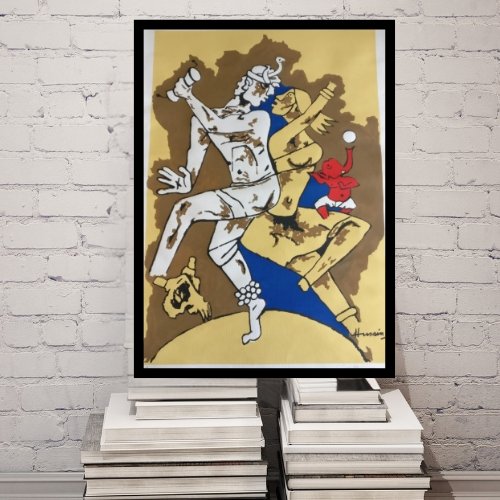
Machilipatnam Kalamkari and the Carved Block
Machilipatnam Kalamkari relies on hand-carved wooden blocks. Artisans press dye-soaked blocks onto prepared cotton to print outlines and fills, then add some colours and details by hand. A single design may need several blocks, one for each colour.
Its visual language is decorative rather than narrative:
- Flowering vines, creepers and leaves
- Paisleys, also called buta or mango motifs
- Birds, especially peacocks and parrots
- The Tree of Life, often framed by arches
- Repeating borders for sarees, curtains and bedspreads
Block printing made faster production possible, which is why this style dominates Kalamkari fabric today. Repetition does not mean machine-made, though. A hand-block print still shows small shifts in alignment and depth of colour.
Srikalahasti Versus Machilipatnam Side by Side
| Feature | Srikalahasti Kalamkari | Machilipatnam Kalamkari |
|---|---|---|
| Location | Srikalahasti, Tirupati district | Machilipatnam and Pedana, Krishna district |
| Technique | Freehand pen drawing and filling | Hand-block printing plus hand detailing |
| Main tool | Bamboo or date-palm kalam | Carved wooden blocks |
| Typical subjects | Epics, deities, temple scenes | Florals, paisleys, Tree of Life, birds |
| Historical patron | Temples and religious storytelling | Courts and overseas trade |
| Common products | Wall panels, narrative hangings | Sarees, dress fabric, furnishings |
| GI registration | Application No. 28 | Application No. 90 |
A quick way to remember the difference: if a Kalamkari painting tells a story, it is probably Srikalahasti. If it repeats a pattern, it is probably Machilipatnam.
The Natural Dye Kit Explained
Traditional Kalamkari art depends on plant and mineral materials, each with a specific job.
- Cotton cloth. The base for both styles, washed to remove starch before treatment.
- Myrobalan and milk. The cloth is soaked in a myrobalan (karakkaya) solution, often mixed with buffalo milk, which helps dyes bind and stops lines from spreading.
- Iron black (kasimi). Made by fermenting iron with jaggery, used for outlines.
- Alum. A mordant painted where red is wanted, before the cloth goes into a madder or related red-dye bath.
- Indigo. For blues, usually applied by dipping or careful painting.
- Yellows. Drawn from sources such as myrobalan flowers and pomegranate rind; yellow over blue creates green.
Recipes and order vary between workshops. Many contemporary pieces also use commercial colours, so don’t assume natural dyes unless the maker confirms it.
From Raw Cotton to Finished Art
Making a traditional Kalamkari painting can take weeks. The broad sequence looks like this:
- Wash and soften the cotton to remove starch and impurities.
- Treat with myrobalan and milk, then dry in the sun.
- Draw or print the outlines in iron black, using a pen or block.
- Apply alum where red is needed, then boil the cloth in a red-dye bath.
- Wash in running water to clear excess dye and brighten whites.
- Add blues, yellows and greens by pen, dipping or further printing.
- Repeat washing and sun-drying between colours until the design is complete.
Flowing river water and strong sunlight are part of the process, which is one reason the craft stayed rooted in specific places.
Motifs Worth Knowing Before You Buy
Recognising a few Kalamkari designs helps you read a piece and choose one that suits your space.
- Mythological scenes. Rama, Krishna, Shiva, Durga and Vishnu’s avatars, typical of Srikalahasti work.
- Tree of Life. A central flowering tree alive with birds and animals, beloved by interior designers.
- Peacocks and parrots. Symbols of beauty and abundance, ideal for living rooms.
- Elephants, lions and tigers. Used in borders and royal-court scenes for strength and grandeur.
- Lotus. Purity and new beginnings, a favourite for puja rooms.
- Paisley or buta. The signature curve of block-printed Machilipatnam textiles.
Kalamkari Painting Easy Designs for Beginners
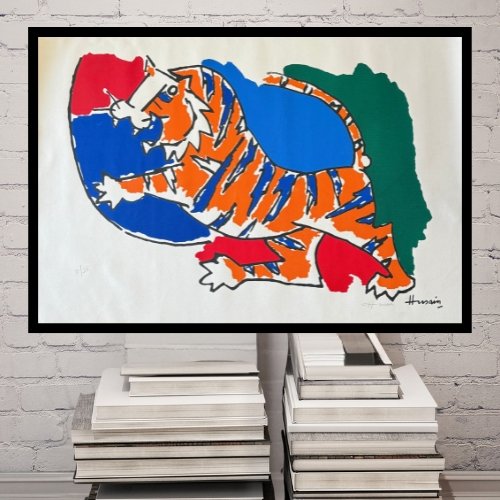
Want to try the style yourself? These Kalamkari painting easy designs help you practise the flowing line before attempting a full narrative scene:
- A single lotus. Symmetrical petals teach control and balance. Our lotus painting guide offers extra inspiration.
- A paisley row. Repeating one curve builds rhythm and steady pressure.
- A simple peacock. Practise curved necks and feather “eyes” with just two or three colours.
- A leaf-and-vine border. Ideal for framing a small page or a cushion cover.
- A small Tree of Life. A trunk, a few branches and two birds are enough to start.
Work in black outline first, then fill in two earthy colours, such as rust and mustard, to mimic the natural-dye look. Practise on paper before moving to cotton fabric.
One honest note: artwork made with ordinary paints is Kalamkari-inspired, not traditional Kalamkari. That label matters if you ever sell or gift your work.
Reading the Earthy Kalamkari Colour Palette
Traditional Kalamkari colours come from the dyes themselves, which is why they feel so harmonious together.
- Black defines outlines and fine details.
- Red and rust dominate backgrounds, garments and floral fills.
- Indigo blue often marks Krishna and Vishnu, and appears in sky and water.
- Mustard yellow fills garments, ornaments and backgrounds.
- Green comes from layering yellow over blue and usually appears in leaves and vines.
- Cream is the treated cotton left unpainted, which gives the design room to breathe.
This palette makes a Kalamkari painting surprisingly easy to place. It sits naturally beside wood, brass, terracotta and cane. For more on balancing warm and cool tones on a wall, read our guide to colour theory for art and interiors.
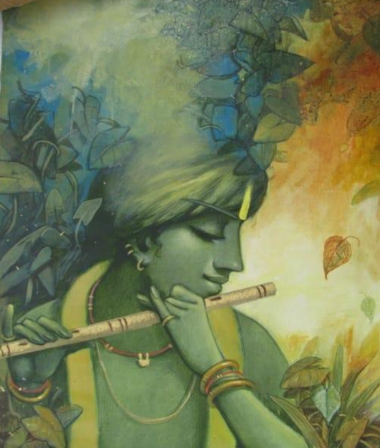
How Kalamkari Compares With Sister Traditions
| Art Form | Region | Surface | Signature Look |
|---|---|---|---|
| Kalamkari | Andhra Pradesh | Treated cotton, natural dyes | Fine pen lines or block prints, earthy tones |
| Cheriyal | Telangana | Coated khadi cloth | Red backgrounds, panelled stories |
| Madhubani | Bihar | Paper, cloth, walls | Dense patterns, double outlines |
| Phad | Rajasthan | Cloth scroll | Continuous epics of folk deities |
| Warli | Maharashtra | Mud or canvas | White stick figures, geometric shapes |
Explore each tradition in our guides to Cheriyal scroll painting, Madhubani painting, Phad painting and Warli painting. For a temple-wall cousin from further south, see our Kerala murals guide.
Telling Handmade Kalamkari From Machine Prints
Machine-printed “Kalamkari style” fabric is everywhere. It can be lovely and affordable, but it should not be sold as handmade. Use these checks before you buy a Kalamkari painting:
- Study the lines. Pen work varies in thickness. Block prints show slight misalignment where colours meet. Machine prints are perfectly crisp and uniform.
- Look at the back. Dyed cotton shows the design clearly on the reverse. Surface prints often look faint or patchy behind.
- Feel the cloth. Treated, hand-dyed cotton has a soft, slightly matte hand.
- Smell it. Freshly made natural-dye pieces often carry a faint earthy scent.
- Ask direct questions. Pen or block? Natural or synthetic dyes? Which workshop or village?
- Check the price against the labour. A detailed hand-painted panel cannot cost the same as printed yardage.
Remember that block-printed Kalamkari is genuine handmade craft even though its pattern repeats. The real question is hand or machine, not pen or block. Our guide on art prints versus original paintings explains the same principle for wall art in general.
Styling Kalamkari Art Room by Room
| Room | Best Kalamkari Choice | Why It Works |
|---|---|---|
| Living room | Large mythological or Tree of Life panel | Creates a rich focal point above a sofa or console |
| Bedroom | Floral, vine or bird panel | Soft, repeating patterns feel calm above a headboard |
| Dining room | Peacock or nature scene | Adds warmth to a functional space |
| Puja room | Krishna, Devi or lotus design | Devotional subjects suit quiet reflection |
| Office or reception | Framed narrative panel | Signals cultural depth without loud colour |
| Hallway | Long horizontal border piece | Narrow formats suit narrow walls |
A practical example: in a white-walled bedroom with a cane headboard, an unframed Machilipatnam floral hanging on a slim wooden rod softens the room instantly, and you can swap it seasonally.
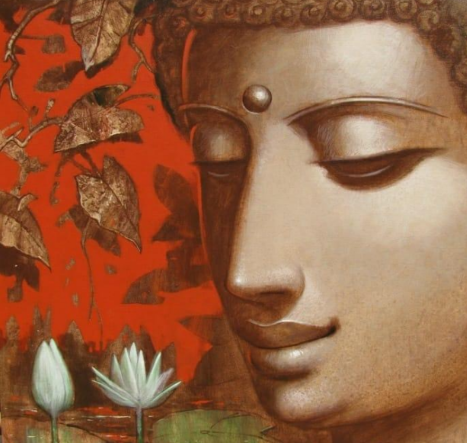
Wall Colours That Flatter Natural Dyes
- Ivory or warm white. Lets fine linework and earthy colour shine.
- Terracotta or rust. Echoes the reds for a grounded, cohesive room.
- Sage or olive. A natural backdrop that suits floral and Tree of Life designs.
- Deep forest green or charcoal. A gallery-style contrast for bold mythological panels.
Avoid busy wallpaper behind a detailed piece, because the linework disappears. A simple wooden or matte black frame is usually better than an ornate one. For whole-room planning, see our interior design guide.
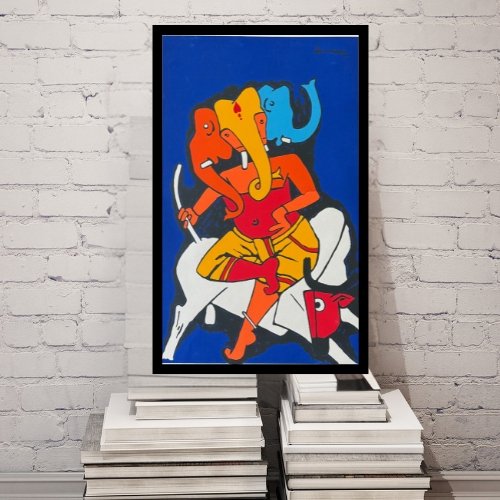
Caring for Dyed Cotton at Home
Natural dyes are beautiful but sensitive. The Canadian Conservation Institute’s basic textile care guidance warns that light damage is cumulative and irreversible, and that excess humidity encourages mould. For a Kalamkari painting, that means:
- Keep it out of direct sun. Hang it on a wall that never gets harsh afternoon light, or use UV-filtering glass.
- Avoid damp walls, especially during the monsoon.
- Frame with a spacer so glass never presses on the fabric.
- Dust gently with a soft, dry brush. Never use water, sprays or detergents on wall pieces.
- Store it rolled, wrapped in clean cotton, not folded along sharp creases.
- Rotate pieces if you own several, giving each a rest from the light.
Kalamkari garments and furnishings are different. Hand-wash them separately in cold water with mild soap, and dry them in shade. For older or valuable panels, consult a textile conservator.
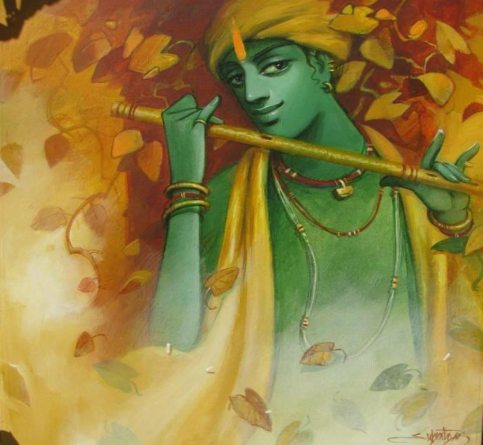
A Gift Rooted in Andhra Heritage
A Kalamkari painting makes a thoughtful gift because it carries craft, region and meaning in one piece.
- Housewarmings. A Tree of Life panel symbolises growth and abundance. See our housewarming gift ideas.
- Diwali and festivals. Lakshmi, Krishna or lotus designs feel right for the season. Browse festive art gifts or our Diwali gift guide.
- Weddings. Peacock and floral designs suggest joy and togetherness. Explore wedding art gifts.
- Corporate gifting. Handmade heritage art leaves a lasting impression. See corporate art gifts.
Add a short card explaining whether the piece is pen-drawn or block-printed and which centre it comes from. That small detail turns a present into a conversation. For more ideas, visit our gifting collection.
FAQ
What is Kalamkari painting?
Kalamkari painting is a traditional textile art from Andhra Pradesh, made by drawing with a pen or printing with wooden blocks on treated cotton, then colouring it with dyes through repeated washing and drying.
Kalamkari painting is related to which state?
Andhra Pradesh. Its two recognised centres are Srikalahasti in Tirupati district and Machilipatnam–Pedana in Krishna district.
What are the two types of Kalamkari?
Srikalahasti Kalamkari is drawn freehand with a pen and shows mythological stories. Machilipatnam Kalamkari is hand-block printed and features florals, paisleys and the Tree of Life.
Do both styles have a GI tag?
Yes. Srikalahasthi Kalamkari is GI application No. 28, filed in 2005. Machilipatnam Kalamkari is GI application No. 90, registered in 2008–09.
How old is Kalamkari painting?
Its exact origin is unknown, but the oldest surviving pieces date to around the 15th and 16th centuries.
What materials are used in Kalamkari?
Cotton cloth, a bamboo or date-palm pen or carved wooden blocks, myrobalan, milk, alum, iron-based black, indigo, madder and other plant-based colours.
What are some Kalamkari painting easy designs?
A single lotus, a paisley row, a simple peacock, a leaf-and-vine border or a small Tree of Life are good starting points.
How can I tell if Kalamkari is handmade?
Look for slight line variation or block misalignment, a clearly visible design on the reverse, and a soft, matte cotton feel. Ask about the method, dyes and workshop.
Where should I hang a Kalamkari painting?
Living rooms, bedrooms, dining rooms, puja rooms and offices all work well, ideally on a calm, neutral wall away from direct sunlight.
How do I care for Kalamkari artwork?
Keep it away from sun and damp, frame it with UV-filtering glass and a spacer, dust gently with a dry brush, and store it rolled in clean cotton.
Keeping a Living Craft Alive
A Kalamkari painting carries centuries of temple storytelling, overseas trade and patient handwork in every line. Knowing the difference between pen and block, natural and synthetic dye, and handmade and machine-printed helps you choose a piece you will love for decades.
To explore more Indian artwork for your home, browse our original paintings collection, discover curated art collections, or meet artists such as Subrata Das. Looking for a Kalamkari piece specifically? Contact our art team to check current availability and get help finding the right piece.