
The story of Kerala murals begins on temple walls, where artists once mixed stone dust and plant colors to paint gods, sages, and forests that seemed to breathe. Kerala murals are among the oldest and most distinctive painting traditions in India, and they still shape how a certain kind of home décor lover thinks about color, myth, and craftsmanship today. If you have ever stood in front of a wall covered in deep red, ochre, and green figures at a temple in Kerala, you already understand why this art form refuses to fade into the background.
This guide walks through what Kerala murals actually are, where the tradition comes from, how the paintings are made, and why they continue to find a place in modern Indian homes. Along the way, you will find practical styling advice, room-by-room placement ideas, and a look at how Kerala art forms fit into today’s interior design conversations.
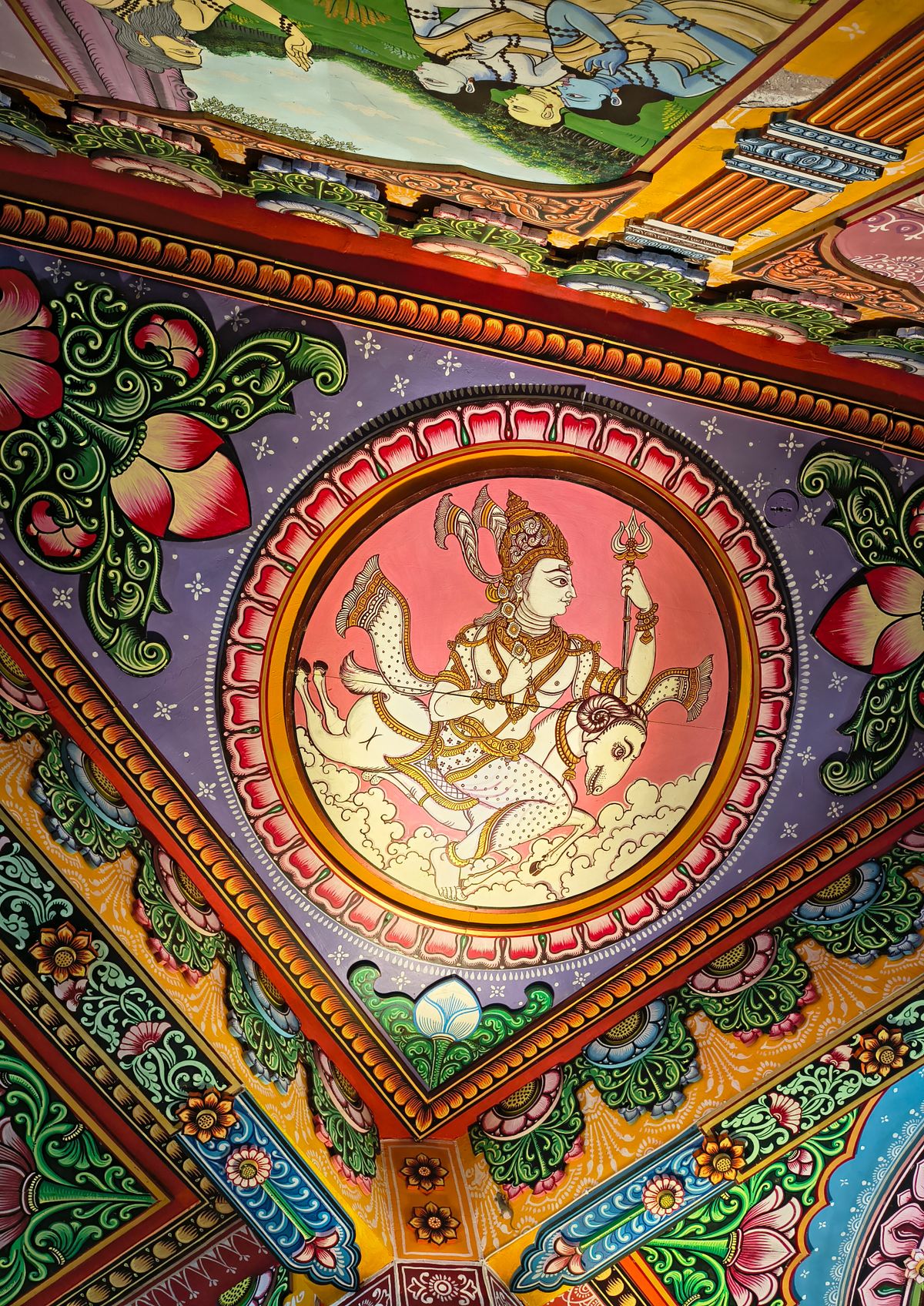 Temple ceiling and wall paintings across India share the same devotional roots as Kerala murals, using dense color and mythological detail to tell sacred stories.
Why This Painting Style Endures
Kerala murals are wall paintings developed over centuries in the temples, palaces, and later the homes of Kerala, using natural pigments made from stone, plants, and minerals rather than synthetic paint. Unlike many other Indian painting traditions that work on paper, cloth, or canvas, Kerala mural painting was born directly on wet lime plaster walls, which is part of why the colors have survived for hundreds of years in places like Padmanabhapuram and Ettumanoor.
What sets Kerala murals apart from other Indian art forms is the discipline behind them. Figures are drawn according to strict proportion systems described in ancient texts, expressions follow set codes borrowed from Kathakali, and colors are limited to a handful of earth tones that give the entire tradition its unmistakable, grounded palette. This is not loose, free-flowing art. Every Kerala mural painting follows rules refined by generations of temple artists.
Where Kerala Mural Art Began
The roots of Kerala murals go back well over a thousand years, with some of the earliest surviving examples dating to around the ninth century, according to the Kerala Tourism department’s own documentation of the state’s mural heritage. The tradition matured significantly between the sixteenth and eighteenth centuries, when temple patronage across Kerala funded large-scale wall paintings inside shrines, mathas, and royal residences.
Temples such as the Sri Padmanabhaswamy Temple, the Guruvayur temple, and the palace at Padmanabhapuram hold some of the finest surviving examples of Kerala mural art. According to Hinduism Today’s overview of Kerala’s mural treasures, these murals were not simply decoration. They served as visual scripture, teaching stories from the Ramayana, the Mahabharata, and the Puranas to worshippers who could not read Sanskrit texts themselves. That teaching function is part of why the tradition remained so consistent in style across such a long stretch of history.
Kerala traditional art forms in general grew out of this same devotional environment, alongside classical performance arts like Kathakali and Koodiyattam, which is why so many of these temple paintings share the same facial expressions, costume details, and dramatic poses seen on the Kathakali stage.
How Traditional Artists Create These Paintings
Making authentic Kerala murals is a slow, disciplined process that traditionally unfolds over five or six distinct stages, as documented by craft researchers at Gaatha’s field study of Kerala mural painting practice. Understanding this process is part of what makes owning a genuine piece feel meaningful rather than purely decorative.
Preparing The Surface And Pigments
Traditionally, the wall itself was prepared with multiple coats of lime plaster, polished smooth over several days until it could hold color evenly. Pigments came entirely from nature. Yellow ochre and red ochre were sourced from local stone, green came from a plant called Neelamari mixed with other minerals, black was made from lamp soot, and white came from crushed lime or shells. This natural palette is one of the defining features of Kerala murals, and it remains a strong selling point for buyers who care about sustainable, non-synthetic art materials.
Outlining And Filling The Composition
Once the surface is ready, the artist begins with a red or yellow outline sketch of the composition, working from memory or from established templates rather than freehand improvisation. Colors are filled in following a strict order, generally starting with the lightest tones and building toward the darkest, with black reserved for final outlining and detail work. This layered technique gives the finished piece its characteristic depth, where figures appear to sit forward from the background rather than blending into it.
Final Detailing And Line Work
The last stage is the most demanding, where fine black lines define facial features, jewelry, and costume patterns using extremely thin brushes traditionally made from squirrel hair. This is where a Kerala mural painting truly comes alive, since the eyes, eyebrows, and expressions carry as much storytelling weight as the overall composition.
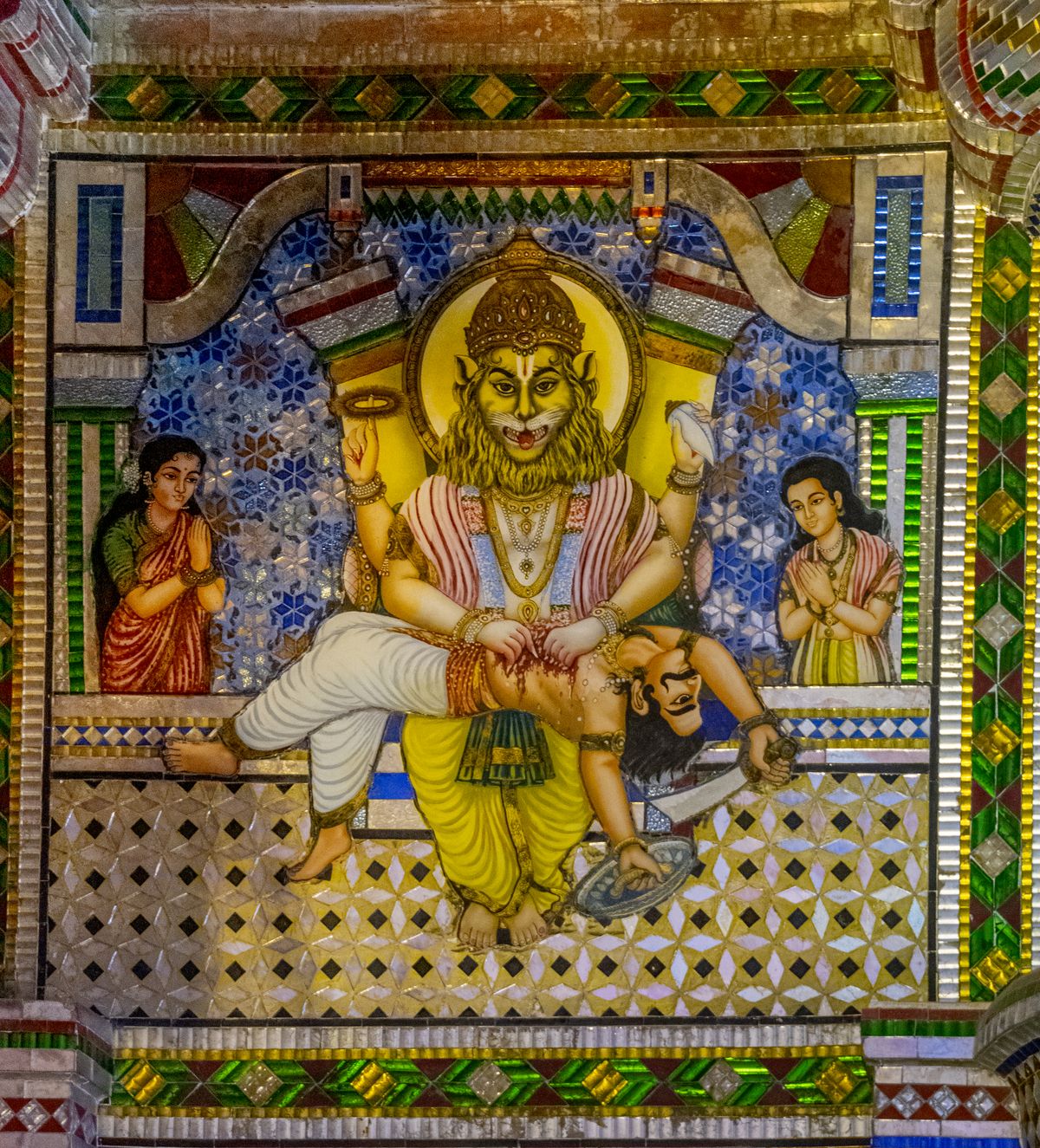 Fine linework and dense mythological detailing, seen here in a temple mural, are hallmarks of the same painting tradition that defines Kerala mural art.
Recurring Themes Found In These Paintings
Kerala murals draw their subject matter almost entirely from Hindu mythology, temple legends, and regional devotional literature. Krishna appears constantly across Kerala mural painting Krishna compositions, often shown as Guruvayurappan, the presiding deity of the Guruvayur temple, surrounded by cows, peacocks, and gopis in dense, symmetrical arrangements, a theme explored in detail in this study of the Sri Guruvayurappan temple murals.
Shiva, Vishnu in his various avatars, Devi in her fierce and gentle forms, and scenes from the Ramayana and Mahabharata all recur frequently. According to Wikipedia’s overview of Kerala mural painting, the Dashavatara, the ten avatars of Vishnu, is one of the most commonly repeated themes across temple walls in the state, alongside episodes from the Bhagavata Purana. Kerala mural art also occasionally depicts local folk deities and guardian spirits, reflecting the layered religious culture of the region.
The color coding within these themes is deliberate. Deities are typically shown in green or blue to represent divinity and calm strength, while demons and antagonists are painted in white or red to signal aggression or impurity. Once you know this code, reading a Kerala mural painting becomes a genuinely enjoyable exercise, almost like decoding a visual language.
Kerala House Paintings In Modern Homes
While this art form was once reserved almost entirely for temples and palaces, the tradition has moved steadily into private homes over the last few decades. Kerala house paintings today range from large statement pieces in formal living rooms to smaller framed works in a hallway or reading nook, and the appeal has spread well beyond Kerala itself.
Part of the reason Kerala murals work so well in a modern home is the palette. The natural ochres, deep greens, and warm reds pair beautifully with wooden furniture, cane, brass accents, and neutral wall colors, which makes them a natural fit for both traditional Indian interiors and more contemporary, earthy design schemes. A single Kerala mural painting placed above a console table or a sofa can anchor an entire room without needing much else around it.
Kerala house paintings also work well in pooja rooms, entryways, and formal dining spaces, where their devotional themes and rich detailing feel appropriate rather than overwhelming. Because the color palette is fairly consistent across the tradition, mixing two or three pieces in a gallery arrangement tends to look intentional rather than cluttered, something that is harder to achieve when mixing unrelated art styles.
Choosing The Right Piece For Your Space
Picking the right Kerala mural painting comes down to scale, subject, and the mood you want a room to carry. A large Kerala mural depicting a full mythological scene, such as a Dashavatara composition, works best as a focal point in a spacious living room or a formal entryway, where its detail can be appreciated from a distance.
Smaller Kerala murals, such as a single Krishna figure or a close-up Devi portrait, suit bedrooms, home offices, and reading corners far better, since they invite closer viewing rather than dominating the space. If you are drawn to devotional art but want something gentler in tone, a Kerala mural painting Krishna piece with a soft color palette often works better in a personal space than a dense, temple-scale composition.
Our collection of original paintings includes hand-painted pieces inspired by classical Indian traditions, and browsing through styles side by side is a genuinely useful way to see how this Kerala mural tradition compares to other regional art forms before committing to one for your home.
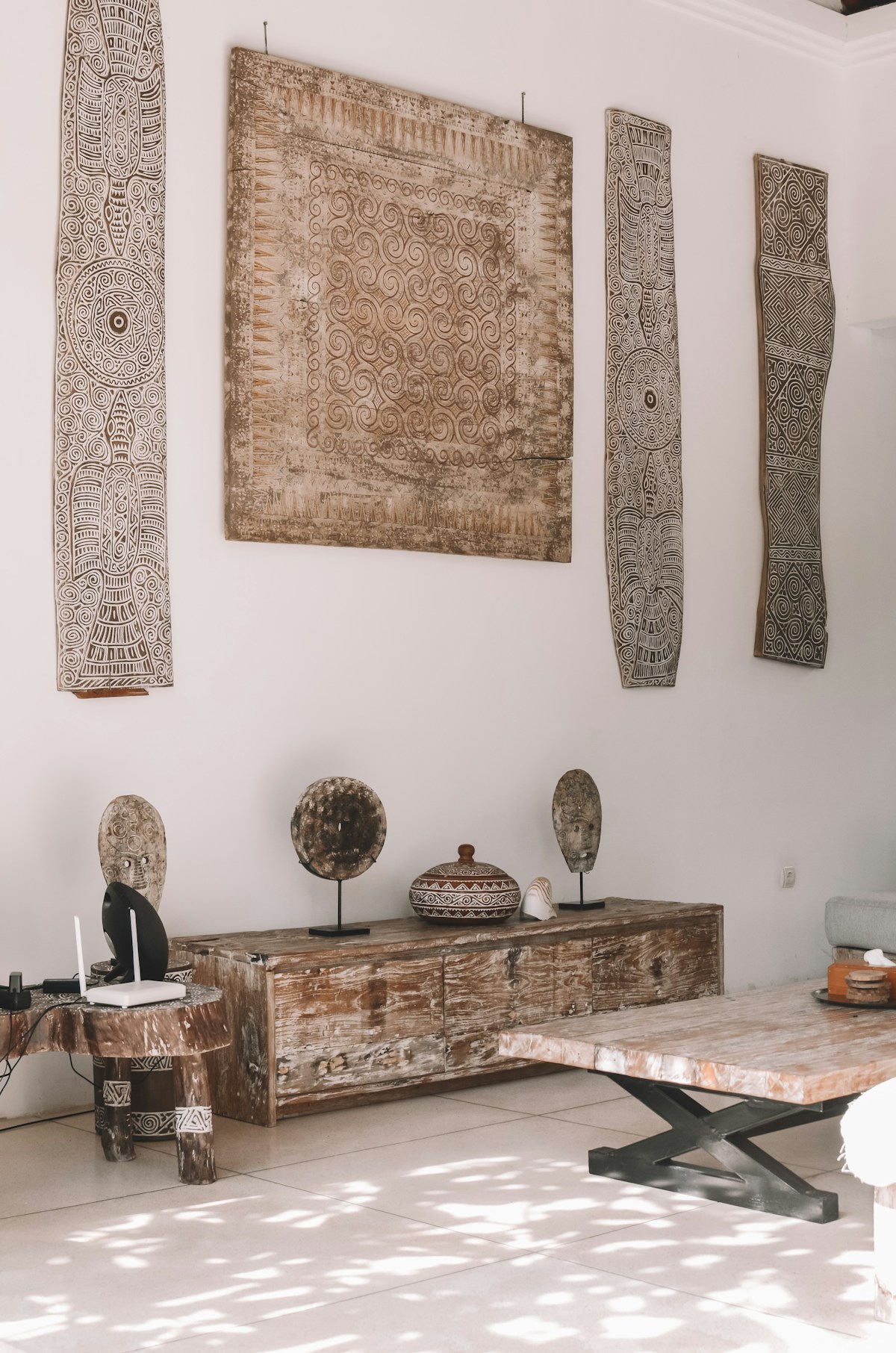
Styling Kerala Murals With Existing Décor
Kerala murals pair naturally with materials that already lean warm and earthy. Teak and rosewood furniture, cane chairs, brass diyas, and handwoven textiles all complement the ochre and green tones found in most Kerala mural painting compositions. If your home already leans toward a South Indian or Kerala-inspired aesthetic, with wooden pillars, sloped roofs, or traditional lamps, a Kerala mural painting slots in almost effortlessly.
For more contemporary homes, the trick is restraint elsewhere in the room. Let a Kerala mural painting be the boldest element on the wall, and keep surrounding furniture and accessories relatively simple, in neutral linen, unfinished wood, or matte ceramic. This lets the intricate detailing of the mural stand out instead of competing with an already busy room.
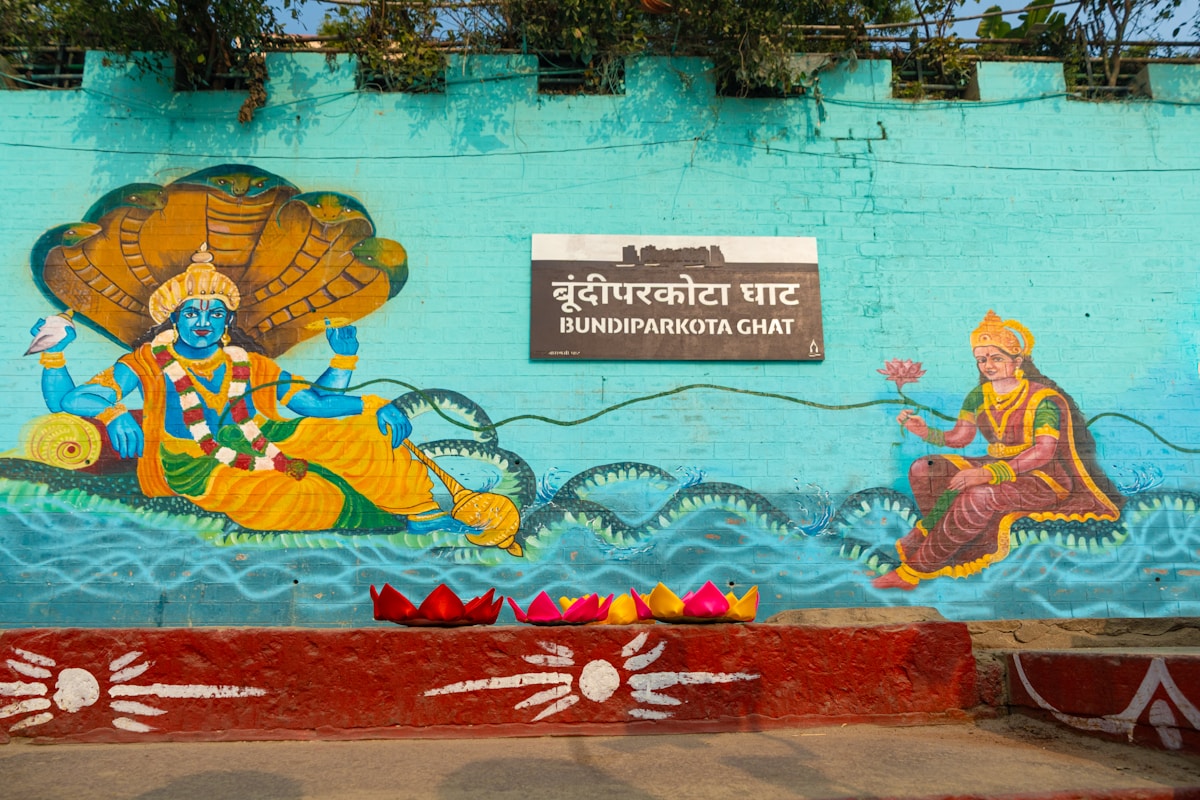
Lighting matters more than people expect. A warm-toned spotlight or a picture light angled slightly downward brings out the depth in the natural pigment colors used in this traditional art form, while flat overhead lighting tends to flatten the piece and mute its detail. If you are hanging a Kerala mural painting in a hallway or stairwell, a small accent light dedicated to the piece is worth the extra effort.
Common Mistakes When Decorating With These Pieces
One of the most common mistakes is hanging a Kerala mural painting at the wrong height, either too high to be appreciated or too low so it feels cramped against furniture. As a general guide, the center of the artwork should sit roughly at eye level, around 145 to 150 centimeters from the floor, adjusted slightly depending on the furniture beneath it.
Another mistake is placing Kerala murals in direct, harsh sunlight. While the natural pigments used in authentic Kerala mural art are more stable than many synthetic paints, prolonged UV exposure will still fade colors over time, particularly the reds and yellows. A wall that receives filtered or indirect light protects the piece far better than one facing a bright, uncovered window.
Overcrowding the surrounding wall is a third frequent issue. Kerala murals are detailed enough on their own that they rarely need additional decorative clutter nearby. A single well-placed Kerala mural painting, given room to breathe, almost always makes a stronger visual statement than one squeezed between shelves, mirrors, and smaller frames.
Caring For Kerala Mural Art Long Term
Because these paintings rely on natural pigments and, in the case of framed reproductions, delicate paper or canvas surfaces, a few simple habits go a long way in preserving them. Dust gently with a soft, dry brush rather than a damp cloth, since moisture can affect natural pigment layers over time. Avoid hanging pieces in kitchens or bathrooms, where humidity and grease can settle into the surface.
If you invest in a larger, more detailed Kerala mural painting, proper framing with UV-protective glass and acid-free matting is worth the additional cost, since it shields the piece from both light damage and airborne pollutants. For temple-style pieces passed down as heirlooms, occasional professional conservation is far safer than attempting to clean or restore the work yourself.
Kerala Murals As Meaningful Gifts
A Kerala mural painting makes a thoughtful gift for housewarmings, weddings, and festive occasions, particularly for someone who appreciates traditional Indian art or has a connection to Kerala itself. Because the imagery is devotional and rooted in mythology, it carries a sense of blessing that generic décor simply does not offer.
For a wedding, a Kerala mural painting Krishna piece works especially well, echoing the same themes of devotion and partnership found in Radha Krishna imagery from other Indian painting traditions. Our wedding gift painting guide covers more ideas for choosing devotional art as a gift, while our corporate art gifts collection is worth exploring if you are sourcing culturally rich, premium gifts for clients or colleagues who appreciate craftsmanship over generic corporate merchandise.
If you are curious how this tradition compares with other Indian folk and temple art before deciding what to gift or buy, our Warli painting guide offers a useful contrast, since Warli art relies on a completely different visual language built around simple geometric forms rather than the dense, narrative detail typical of Kerala mural painting.
Bringing This Tradition Into Your Home
Kerala murals carry centuries of devotion, discipline, and regional identity in every brushstroke, from the natural pigments ground from stone and plants to the strict proportion systems passed down through generations of temple artists. Whether you choose a large, temple-scale composition or a smaller Kerala mural painting Krishna piece for a personal corner of your home, you are bringing in a tradition that has shaped Kerala art forms for over a thousand years.
At The Brush Strokes Co, we believe art like this deserves a thoughtful home, not just a spot on a wall. If this tradition has caught your attention, explore our gifting collection for occasion-ready pieces, or get in touch with our art team if you are searching for a specific Kerala mural painting or Kerala traditional art forms piece for your home.
Questions People Often Ask
What are Kerala murals?
Kerala murals are traditional wall paintings from Kerala, made using natural pigments on lime-plastered surfaces, typically depicting Hindu deities and mythological scenes drawn from texts like the Ramayana, Mahabharata, and Bhagavata Purana.
How old is the Kerala mural painting tradition?
The tradition dates back over a thousand years, with surviving examples from around the ninth century, though it reached its most refined form between the sixteenth and eighteenth centuries under temple and royal patronage.
What colors are used in Kerala murals?
Traditional Kerala murals use a limited natural palette, including yellow and red ochre from stone, green from a plant called Neelamari, black from lamp soot, and white from crushed lime, giving the tradition its distinctive earthy tone.
Where can Kerala murals be seen today?
Some of the finest surviving Kerala murals can be seen at the Sri Padmanabhaswamy Temple, the Guruvayur temple, and the palace complex at Padmanabhapuram, alongside many smaller temples across the state.
Are Kerala murals suitable for modern homes?
Yes, Kerala murals pair well with warm, earthy interiors that use wood, cane, and brass, and they work particularly well as a focal point in living rooms, entryways, pooja rooms, and formal dining spaces.
What is the difference between Kerala murals and Kathakali art?
Kerala murals are wall paintings, while Kathakali is a classical dance form, but the two are closely related, since Kerala mural painting borrows many facial expressions, costume details, and dramatic poses directly from Kathakali performance traditions.
Is Krishna a common subject in Kerala mural painting?
Yes, Krishna appears frequently in Kerala mural painting Krishna compositions, often depicted as Guruvayurappan surrounded by cows, peacocks, and gopis, reflecting the deity’s central role in Kerala’s temple culture.
How should a Kerala mural painting be maintained at home?
Dust it gently with a soft dry brush, avoid direct sunlight and humid rooms like kitchens or bathrooms, and consider UV-protective framing for larger or more valuable pieces to preserve the natural pigment colors long term.