
A lotus painting is one of those pieces that looks equally at home in a formal drawing room, a quiet reading corner, or a client’s office lobby. Ask ten different collectors why they own one and you get ten different answers, from Vastu placement to a plain love of pink and gold on canvas. That range is part of why this flower has stayed such a steady subject for Indian artists.
A lotus painting depicts the lotus flower, called kamal in Hindi and padma in Sanskrit, a bloom that grows out of muddy pond water yet opens each morning completely clean. That contrast between the murky root and the spotless petal is the whole reason artists across India have painted this flower for centuries. In Hindu, Buddhist and Jain traditions alike, the lotus stands for purity, detachment and spiritual awakening, and painters have carried that symbolism onto canvas, cloth or paper for centuries.
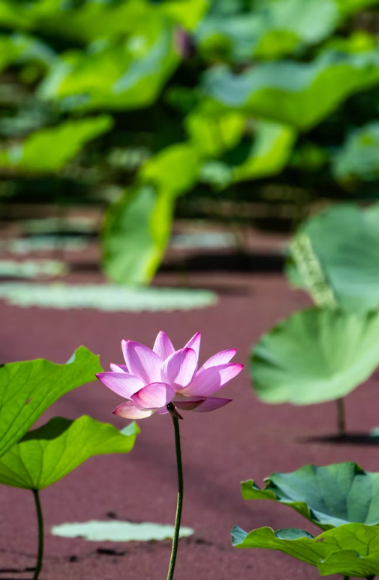
A lotus flower in bloom, the same purity symbolism painters have carried onto canvas, cloth and paper for centuries. Photo by Kouji Tsuru on Unsplash.
What Is A Lotus Painting
You find the flower rendered very differently depending on the tradition behind it. A Madhubani rendering is dense and linear, packed with fish and birds around the bloom. A Pichwai version shows a full pond scene behind Krishna, with lotus leaves floating flat on painted water. A Tanjore piece raises the petals in gold foil relief, while a modern acrylic lotus painting on canvas might reduce the whole flower to a single bold silhouette. The subject stays constant even as the visual language around it changes completely from region to region.
This range is exactly why lotus painting has stayed a steady seller across Indian art platforms for decades. It reads as devotional in a pooja room, decorative in a living room, and quietly symbolic in an office reception, without needing much introduction for any of those audiences.
Where Lotus Painting Traditions Began
Lotus imagery in Indian art predates most of the named painting styles alive today by well over a thousand years. Stone carvings, temple ceilings and manuscript borders used the flower long before it appeared as a stand alone subject on paper or canvas, and that early religious use is what gave the motif its lasting weight.
Lotus Motifs Inside Ajanta Caves
One of the oldest and most studied examples of lotus painting in the world sits inside Cave 1 at the Ajanta Caves in Maharashtra. The mural known as Bodhisattva Padmapani, painted in the late fifth century during the Gupta period, shows the bodhisattva Avalokiteshvara holding a blue lotus in one hand, a gesture that gives him his name, since Padmapani translates to the one who holds the lotus. Britannica notes that the Bodhisattva Padmapani painting marked an unusually realistic style for its period, using natural pigment on lime plaster and shading to build real emotional depth into the figure’s face.
The Ajanta Caves themselves earned recognition as a UNESCO World Heritage Site, and the caves still hold the original murals in place rather than in a museum, which is part of why art historians treat this particular mural as a benchmark for how far Indian technique had developed by the fifth century.
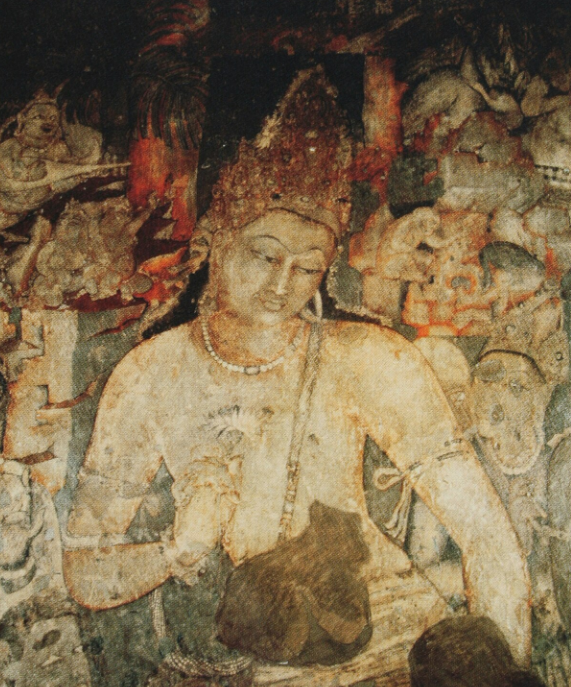 Bodhisattva Padmapani, a fifth century devotional mural inside Ajanta Cave 1, among the oldest surviving depictions of the flower in Indian art. Wikimedia Commons, public domain.
Lotus As India National Flower
The flower’s religious weight eventually earned it a formal national status. The lotus, botanically Nelumbo nucifera, is recognized as the national flower of India, chosen in part because the same purity symbolism found in centuries of devotional art still resonates culturally today. That official status is one more reason the flower keeps appearing across new generations of Indian art rather than fading into a purely historical motif.
What Lotus Painting Symbols Represent
Nothing in a well made lotus painting sits there by accident. Every color and every petal count usually points to something specific, and knowing a few of these details changes how you read a finished piece.
White petals generally stand for purity and knowledge, which is why Saraswati is so often shown seated on a white lotus. Pink flowers are tied most closely to Buddhist tradition and to the historical Buddha himself, while a red bloom tends to represent the heart and compassion. Blue lotus imagery, seen in the Padmapani mural at Ajanta, is associated with wisdom and the triumph of spirit over material attachment.
The flower’s structure carries its own symbolism too. Because the plant grows from a muddy root yet flowers completely unstained above the water, it became a natural symbol for rising above hardship without being marked by it. Lakshmi, Saraswati and Brahma are all shown either seated on a lotus or holding one, and that consistent pairing with major deities is a large part of why this flower still reads as devotional art rather than plain floral decoration, even in a fully modern acrylic style.
Five Popular Lotus Painting Styles
Most lotus paintings sold today trace back to one of five distinct traditions, and knowing the difference makes it clear why two pieces built around the same flower can look nothing alike.
-
Madhubani Lotus Ponds And Symbols
Madhubani painting from the Mithila region of Bihar treats the lotus as one of its most reliable motifs, usually shown filling a pond alongside fish and geometric border patterns. The flower appears constantly in Kohbar style work, traditionally painted for the wedding chamber, where lotus ponds stood for fertility and a fresh start for the couple. Our folk art overview covers this tradition and its recurring symbols in more depth.
-
Pichwai Paintings Show Lotus Ponds
Pichwai painting, developed in Nathdwara around the worship of Shrinathji, leans on the lotus pond as one of its defining backdrops. A style within this tradition, sometimes called Kamal Talai or Lotus Pichwai, arranges rows of lotus flowers and leaves across the lower half of the composition, usually behind Krishna and his cows. Our Pichwai painting guide goes deeper into how these pond scenes are built and how to identify genuine hand painted work. If devotional Krishna imagery interests you specifically, our Radha Krishna painting collection is worth a look too.
-
Lotus Lippan Art Mirror Work
Lippan art, a traditional craft from Kutch in Gujarat practiced by the Rabari and Kumbhar communities, involves creating raised mud relief on walls or panels and embedding small mirrors in the wet clay. Using the shape of lotus petals for mirror inlay, these pieces capture light beautifully as people pass by. While Lippan art is part of Gujarat’s broader decorative mirror tradition, its sculptural nature makes it more suitable as a textured accent rather than the main artwork on a wall.
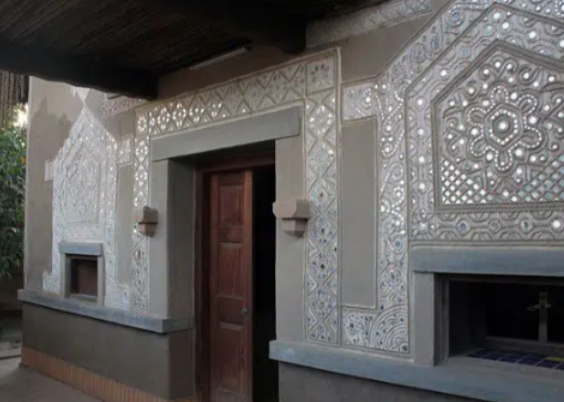
A Lippan art panel showing the raised mud relief and embedded mirror work traditionally practiced by Kutch artisans. Wikimedia Commons.
-
Tanjore Style Uses Gold Work
Tanjore painting from Thanjavur in Tamil Nadu renders the lotus with raised gesso work finished in real gold foil, often placed beneath a seated deity rather than as the sole subject. The gold surface catches light differently through the day, which is part of why this style suits a formal entryway or a temple room better than a bedroom.
-
Modern Lotus Painting Acrylic Canvas
Contemporary Indian artists increasingly paint the lotus in acrylic on stretched canvas rather than natural pigment on paper or cloth, often stripping the composition down to one or two large blooms against a flat background. A modern lotus painting acrylic canvas piece reads as far more graphic than a traditional folk or devotional version, and it tends to suit apartments, offices and minimal interiors that want a floral, symbolic touch without a fully traditional look.
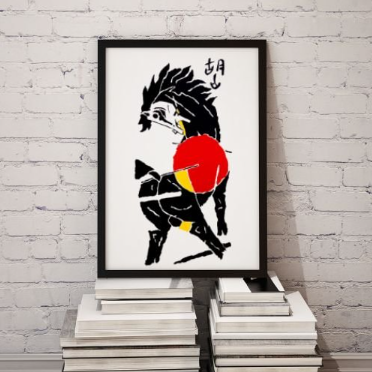 A framed, ready to hang original from The Brushstrokes Company collection, the kind of finish contemporary floral canvas work typically receives before it reaches a home. The Brushstrokes Company.
Comparing These Five Lotus Styles
Here is how the five major styles stack up, so you can match one to your space before you start browsing.
| Style | Region | Signature Look | Best Suited For |
| Madhubani | Mithila, Bihar | Dense linework, fish and lotus ponds | Folk art lovers, wedding gifts |
| Pichwai | Nathdwara, Rajasthan | Rows of lotus flowers behind Krishna | Pooja rooms, traditional living rooms |
| Lippan | Kutch, Gujarat | Raised mud relief with mirror inlay | Textured accent walls, entryways |
| Tanjore | Thanjavur, Tamil Nadu | Gold foil relief beneath a deity | Formal entryways, temple rooms |
| Modern acrylic | Pan India | Bold, graphic, minimal composition | Apartments, offices, modern homes |
Lotus Painting Acrylic Techniques Used
Artists working in acrylic build a piece in layers rather than in one pass, since acrylic dries fast enough to allow immediate layering without the long wait oil painting demands. A base coat usually blocks in the water and background first, followed by the leaf shapes, then the petals themselves, added last so their edges stay crisp against the darker tones underneath.
Petal shading is where most of the skill shows. A trained artist blends two or three shades of pink or white wet on wet at the tip of each petal, then lets the base color show through near the center, which is what gives a hand painted piece the soft gradient a print can never fully copy. Some contemporary artists finish a lotus painting acrylic piece with a light gold leaf or metallic paint accent at the center of the flower, echoing the gold work found in older Tanjore pieces without the added cost or weight.
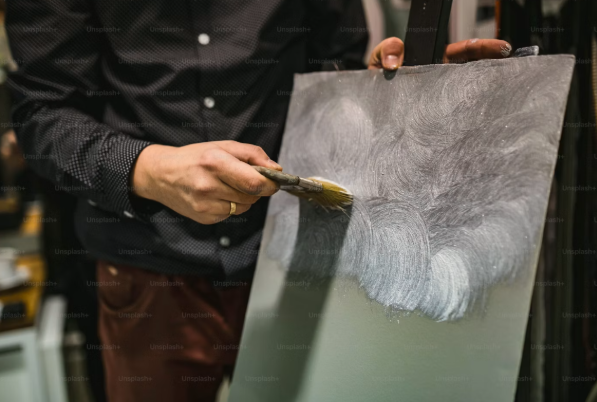
Layering acrylic paint by hand, the technique most contemporary floral canvas artists use to build petal shading and depth. Photo by Karolina Grabowska on Unsplash.
Choosing Right Lotus Painting Canvas
Canvas size changes how a finished piece reads on a wall far more than most buyers expect going in. A small lotus painting canvas, roughly 12 by 16 inches, works well stacked in a gallery arrangement or placed in a study, while anything under that size tends to disappear on a large, empty wall.
For a single statement piece above a sofa or a bed, 24 by 36 inches or larger generally holds its own without needing a second piece beside it. Stretched canvas is the standard choice for a modern acrylic rendering, since it can hang unframed for a cleaner, contemporary look, or go into a simple floating frame for a slightly more finished edge. Paper or cloth based traditional styles, including Madhubani and Pichwai pieces, almost always need proper framing behind glass, since the material itself is more fragile than primed canvas.
Best Wall For Lotus Painting
Vastu guidance for lotus painting wall placement generally points toward the north, north east or east facing side of a home, the same directions favored for most devotional and floral art, since these are associated with calm, clarity and new beginnings. A south facing wall, a spot directly above a bed, or a wall backing onto a bathroom is usually avoided for the same reason devotional pieces in general skip those locations.
Beyond Vastu, the practical answer depends on the room. A large Pichwai or Tanjore piece works as a focal point in a living room or entryway, where its detail can actually be seen from across the room. A smaller Lippan panel or a minimal acrylic piece suits a hallway, a home office, or a reading nook, where it adds texture without competing for attention.
Lotus Mural Painting Flower Designs
A lotus mural painting takes the same flower and scales it up across a much larger surface, sometimes spanning an entire wall rather than a single framed canvas. These designs usually repeat the flower in a pattern, often paired with lily pads, koi fish or geometric borders, and they suit a double height wall, a staircase landing, or a spa and wellness space far better than a single framed piece ever could.
Because a mural is painted directly onto the surface or applied as a large scale canvas panel, flower designs at this scale need a slightly different approach than a standard piece. Colors are usually simplified and petal shapes enlarged, since fine detail that reads clearly on a 24 inch canvas tends to blur once it is stretched across ten feet of wall. Anyone considering this scale of work should look at examples up close first, and our curated art collections page is a reasonable starting point for browsing large format pieces before commissioning a full mural.
Framing And Lighting Lotus Painting
A simple wooden or metal float frame keeps a modern acrylic piece looking current without pulling attention away from the brushwork itself. Traditional Madhubani, Pichwai or Tanjore pieces generally benefit from a slightly heavier frame with a visible border, which echoes the ornate quality already present in the artwork rather than fighting it.
Lighting matters more than most buyers plan for at purchase time. A picture light mounted above the frame, angled slightly downward, brings out the gold work in a Tanjore piece and the mirror flash in a Lippan panel far better than ambient room lighting alone. Direct, harsh sunlight is the one thing to avoid entirely, since it fades pigment and can warp paper based work within a few years.
Spotting An Authentic Lotus Painting
The market for lotus painting is large, and a real share of what gets sold as original is actually a printed reproduction. A genuinely hand painted piece shows small, human irregularities up close, slightly uneven line thickness, visible brush texture, and color that is never perfectly flat across the whole surface. A print looks mechanically uniform under close inspection, with no texture and identical color coverage from edge to edge.
Ask directly where a piece comes from and who painted it. A seller who can name the artist, the region and the technique used is almost always working with real handmade art. For Lippan work specifically, run a hand lightly over the surface. Genuine mud relief has real height and texture you can feel, while a printed or molded imitation stays flat. Our original paintings collection is a useful reference point for what authentic, artist sourced work looks and feels like in practice.
What Does Lotus Painting Cost
Price depends heavily on size, style and whether a piece is an original or a reproduction. A small modern acrylic rendering on canvas, roughly A3 size, tends to sit at the more accessible end of the market. A large, hand painted Tanjore piece with real gold foil, or a detailed Lippan panel with dozens of individually placed mirrors, generally costs significantly more because of the materials and the hours of skilled labor involved.
Madhubani and Pichwai lotus painting pieces on paper or cloth usually fall somewhere between those two extremes, with price rising alongside canvas size and the density of the linework. As a general rule, the more intricate the detailing and the more expensive the materials, the higher the price, so it is worth asking a seller directly what is actually driving the cost of any specific piece before comparing options.
Real Lotus Painting Buying Scenarios
A young couple furnishing their first apartment in Bangalore chose a small modern acrylic piece for their reading nook, since a bold folk art rendering felt too heavy for a compact, minimally furnished room. A corporate gifting manager ordering fifty pieces for a client event picked a mid sized Pichwai style artwork instead, since its rich color photographs well and the devotional theme suited a diverse client list without feeling tied to one belief system.
For a housewarming gift, a Lippan mirror panel built around a lotus design works particularly well, since the craft itself signals thought and effort beyond a standard framed print. A grandmother furnishing a pooja room, on the other hand, is far more likely to choose a traditional hand painted Tanjore piece with gold work, since that formal, devotional look fits a sacred corner of the home better than a minimal contemporary piece ever would. Our gifting collection is built around occasions like these, sized and finished so a piece arrives ready to give.
Show Image A devotional, floral themed piece from The Brushstrokes Company gifting collection, similar in spirit to the scenarios described above. The Brushstrokes Company.
Common Mistakes Buying Lotus Paintings
Buying purely on how a piece looks in a product photo, without checking the actual dimensions against the wall, is the most common mistake buyers make. A piece that reads as large and dramatic on a phone screen can look surprisingly small once it is actually hanging.
Ignoring the room’s existing color scheme is the second frequent misstep, particularly with a brightly colored Pichwai or Tanjore rendering that can clash badly with a heavily patterned wall or busy furniture. Buying a printed reproduction without realizing it, and paying original piece pricing for it, is the third common trap, so always confirm the medium and ask about the artist directly before finalizing a purchase.
Caring For Your Lotus Painting
Direct sunlight is the single biggest threat to any painting like this, since UV exposure fades natural and even synthetic pigment noticeably faster than most owners expect. Hanging a piece away from a window that gets harsh afternoon light, or behind UV protective glass if it is framed, keeps the color true for far longer.
Humidity comes next on the list, especially for paper or cloth based traditional styles, so kitchens, bathrooms and other damp rooms are best avoided entirely. For cleaning, a soft dry brush or a gentle puff of air is far safer than any liquid cleaner, which can smear pigment or loosen a Lippan panel’s mirror inlay almost instantly. If a piece genuinely matters to you, proper conservation framing with acid free mats is worth the added cost, since it protects real craftsmanship rather than just the image sitting behind it.
Frequently Asked Questions About Lotus Painting
What does a lotus painting symbolize?
It generally represents purity, spiritual awakening, and rising above hardship, since the flower itself grows out of muddy water yet opens completely clean. This powerful contrast has inspired Hindu, Buddhist, and Jain traditions for centuries, making lotus artwork a popular choice for homes, meditation spaces, and places of worship.
Which style suits a small apartment best?
A modern acrylic lotus painting on canvas with one or two simplified blooms against a clean background is usually the best choice for a small apartment. Minimal designs create a sense of openness, while highly detailed traditional styles such as Madhubani or Pichwai often require larger wall spaces to be appreciated fully.
What is lotus lippan art exactly?
Lotus Lippan art is a traditional mud and mirror craft from the Kutch region of Gujarat. Created by Rabari and Kumbhar communities, it features raised mud relief patterns shaped like lotus flowers with small mirrors embedded into the surface before the clay dries, producing a distinctive decorative finish.
Can I get this made in acrylic on canvas?
Yes, acrylic on stretched canvas is one of the most popular formats for contemporary lotus paintings. Acrylic paint dries quickly, allows smooth layering and vibrant colors, and produces artwork that can be displayed with or without a frame for a modern appearance.
Which direction is best for lotus painting placement?
According to Vastu principles, north, northeast, and east-facing walls are generally considered the most suitable locations for a lotus painting. These directions are associated with positivity and harmony, while south-facing walls, bathrooms, and the area directly above a bed are typically avoided.
How can I tell if a piece is handmade?
A genuine handmade lotus painting usually displays subtle variations in brushstrokes, line thickness, and texture that naturally occur during the painting process. Printed reproductions, on the other hand, appear mechanically uniform with perfectly flat colors and no visible paint texture.
What size lotus artwork works best above a sofa?
For a standard-sized sofa, a lotus painting measuring approximately 24 × 36 inches or larger creates a balanced visual impact. Smaller artworks can appear disproportionate once furniture and decorative cushions are placed underneath.
Is a lotus painting a good housewarming gift?
Yes, a lotus painting makes an excellent housewarming gift because it symbolizes purity, prosperity, and new beginnings. Whether you choose a contemporary acrylic canvas or a handcrafted Lippan mirror artwork, it offers a meaningful decorative piece suitable for a wide range of interiors and budgets.
Bring Home Your Lotus Painting
A lotus painting carries a lot more history than its petals suggest at first glance, from a fifth century mural inside the Ajanta Caves to a Kutch artisan pressing mirrors into wet mud by hand today. Knowing the styles, the symbolism and what genuine handmade work actually looks like changes how you shop for one and how it eventually feels hanging on your own wall.
At The Brushstrokes Company, sourcing and craftsmanship get the same attention as the finished piece itself, since a painting carries far more weight once you understand what is actually happening inside it. If you are ready to bring one home, browse the original paintings collection or explore gifting options if you are buying for someone else’s new home.