
Krishna paintings are among the most admired forms of traditional Indian art, celebrated for their beautiful colours, spiritual symbolism and cultural significance. From traditional Radha Krishna paintings to detailed Pichwai artwork and modern Krishna canvas paintings, these artworks combine artistic heritage with timeless beauty.
A Lord Krishna painting can bring a sense of devotion, warmth and personal meaning to your home. Whether displayed in a living room, pooja room or bedroom, Krishna artwork can complement both traditional and contemporary interiors.
But which Krishna painting is best for your home? What do the different artistic styles represent, and how can you identify an original handmade painting?
In this guide, explore popular Krishna painting styles, their spiritual meanings, traditional Vastu placement beliefs, prices and essential buying tips to help you choose the perfect artwork.
What Is a Krishna Painting?
A Krishna painting is an artwork depicting Lord Krishna, one of the most revered deities in Hinduism and traditionally regarded as an avatar of Lord Vishnu.
Krishna is commonly portrayed playing a flute, wearing a peacock feather or standing beside Radha. Other compositions illustrate important moments from his life, including his childhood in Vrindavan, his affection for cows and his interactions with devotees.
Krishna paintings appear in several Indian artistic traditions, including Pichwai, Kangra, Tanjore and Madhubani painting.
Each tradition presents Krishna differently through its colours, composition, materials and painting techniques.
While some Krishna paintings serve devotional purposes, others are appreciated for their cultural heritage, artistic craftsmanship and decorative appeal.
History of Krishna Paintings in Indian Art
The history of Krishna paintings is closely connected to India’s religious literature, mythology and regional artistic traditions.
Stories from the Bhagavata Purana, Mahabharata and other Hindu texts have inspired generations of artists to portray Krishna’s childhood, divine activities and relationships with his devotees.
Krishna’s representation in Indian painting developed through temple art, manuscript illustrations, murals and regional painting schools over many centuries.
An important influence was the Gita Govinda, composed by the poet Jayadeva in the twelfth century. Its poetic descriptions of Radha and Krishna inspired numerous miniature paintings, particularly in Rajasthan and the Himalayan regions.
During the seventeenth and eighteenth centuries, painting traditions such as Pahari and Rajasthani miniature art developed distinctive interpretations of Krishna’s stories.
In southern India, Tanjore painting became known for richly decorated devotional imagery, while Pichwai painting flourished around the worship of Shrinathji in Nathdwara.
Today, contemporary Indian artists continue to reinterpret Krishna through acrylic painting, abstract art and mixed-media compositions.
Popular Krishna Painting Styles and Artistic Traditions
India has a rich history of Krishna-inspired art. Different regions developed their own styles, materials and visual techniques to portray the deity.
Here are six popular traditions and artistic approaches worth exploring.
1. Pichwai Krishna Paintings
Pichwai painting is a traditional art form associated with Nathdwara in Rajasthan.
These paintings were historically created as decorative backdrops for Shrinathji, a form of Lord Krishna worshipped within the Pushtimarg tradition.
Pichwai artworks often feature elaborate arrangements of lotus flowers, cows, peacocks, temple architecture and seasonal celebrations.
Traditional compositions may use rich blues, greens, reds and gold detailing to create an ornate appearance.
Because of their intricate designs and religious significance, Pichwai Krishna paintings are popular choices for pooja rooms, traditional living rooms and statement walls.
To understand this artistic tradition further, explore our detailed guide to Pichwai Painting.
2. Kangra and Pahari Krishna Paintings
Kangra painting is a well-known school within the broader Pahari miniature painting tradition of the Himalayan region.
It developed prominently during the eighteenth century and is celebrated for its delicate linework, graceful figures and romantic landscapes.
Radha Krishna paintings are among the most recognisable subjects in Kangra art.
These artworks frequently depict Radha and Krishna in gardens, forests or peaceful natural surroundings.
Soft colours, detailed facial expressions and balanced compositions create a gentle atmosphere.
Kangra-style Krishna paintings can complement bedrooms, reading corners and interiors inspired by classical Indian art.
3. Tanjore Krishna Paintings
Tanjore painting, also known as Thanjavur painting, originated in Tamil Nadu and is recognised for its ornate decorative techniques.
Traditional Tanjore artworks commonly feature devotional subjects, including Lord Krishna, Goddess Lakshmi and other Hindu deities.
Many paintings incorporate raised gesso work, gold foil and decorative embellishments.
Krishna may be depicted as a child holding butter, playing the flute or appearing within an elaborate ornamental arch.
The rich decorative appearance of traditional Tanjore painting makes it suitable for pooja spaces and interiors that feature classical Indian design.
However, buyers should check the materials used, as modern Tanjore-style artworks do not always contain genuine gold foil or traditional embellishments.
4. Madhubani Krishna Paintings
Madhubani painting, also called Mithila painting, is a traditional art form associated with the Mithila region of Bihar.
This style is known for bold outlines, decorative patterns, intricate borders and distinctive use of colour.
Madhubani Krishna paintings may depict Radha and Krishna, Krishna playing the flute or scenes from Hindu mythology.
Floral patterns, birds, fish and geometric motifs frequently appear within the compositions.
Traditionally associated with walls and floors, Madhubani painting is now also created on handmade paper, canvas and other surfaces.
Its graphic patterns and vibrant designs make Madhubani Krishna artwork suitable for both modern and traditional interiors.
5. Raja Ravi Varma’s Krishna Paintings
Raja Ravi Varma was an influential Indian painter who helped popularise realistic interpretations of Indian mythological subjects during the nineteenth century.
His artistic approach combined European academic painting techniques with themes drawn from Indian religion, literature and history.
Paintings associated with Krishna, including Yashoda and Krishna, demonstrate his attention to natural expressions, realistic figures and emotional storytelling.
Ravi Varma’s compositions and their printed reproductions influenced the visual representation of Hindu deities across India.
Unlike Pichwai or Kangra painting, Raja Ravi Varma represents an individual artist rather than a regional painting school.
His work remains an important example of realistic mythological painting in Indian art history.
Read more about his life and masterpieces in our guide to Raja Ravi Varma Paintings.
6. Modern Krishna Canvas Paintings
Contemporary Krishna paintings combine traditional religious imagery with modern artistic techniques.
Artists may use acrylic colours, oil paints, textured mediums or mixed materials to create new interpretations of Krishna.
Some artworks feature detailed portraits, while others use abstract forms, minimal lines or symbolic elements such as the flute and peacock feather.
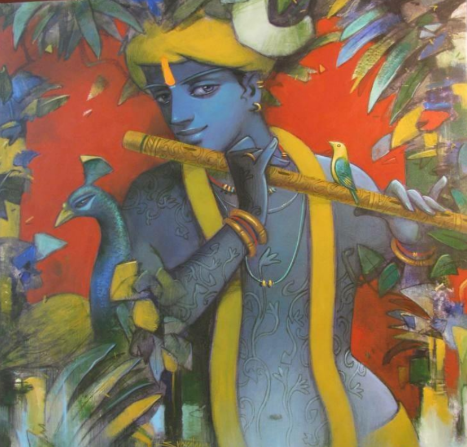
Modern Krishna canvas paintings are popular among buyers who appreciate devotional subjects but prefer contemporary interior design.
These artworks can complement apartments, living rooms, offices and creative spaces. You can see more of this approach in contemporary Indian painting.
Comparison of Popular Krishna Painting Styles
| Painting Style | Main Characteristics | Suitable Spaces |
|---|---|---|
| Pichwai | Detailed patterns, lotus motifs and Shrinathji imagery | Pooja rooms and statement walls |
| Kangra | Soft colours, delicate details and romantic landscapes | Bedrooms and reading areas |
| Tanjore | Decorative embellishments, raised work and gold detailing | Traditional interiors |
| Madhubani | Bold outlines, floral patterns and vibrant colours | Modern and traditional homes |
| Ravi Varma-inspired | Realistic figures, shading and expressive faces | Classic interiors |
| Contemporary | Abstract, minimalist or modern interpretations | Apartments and offices |
The best Krishna painting style depends on the artwork’s craftsmanship, your personal taste and the atmosphere you wish to create.
Spiritual Meaning and Symbolism of Krishna Paintings
Krishna paintings are valued not only for their artistic beauty but also for their symbolism within Hindu traditions.
Different elements in Krishna artwork may represent love, devotion, joy, wisdom and the relationship between humanity and the divine.
Krishna Playing the Flute
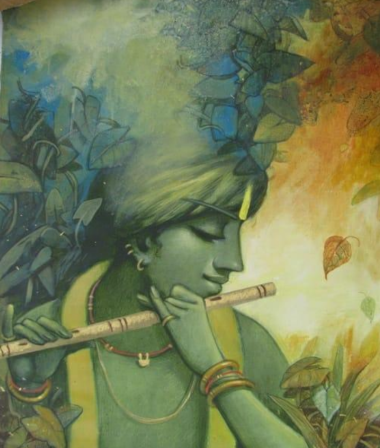
The flute is one of the most recognisable symbols associated with Lord Krishna.
In devotional interpretations, Krishna’s flute represents divine attraction, harmony and the call of spiritual love.
Paintings featuring Krishna playing the flute are popular for their peaceful and expressive compositions.
Radha Krishna Paintings
Radha Krishna paintings symbolise love, devotion and spiritual connection.
Their relationship is widely celebrated in devotional literature and artistic traditions.
These paintings often portray Radha and Krishna in natural surroundings, exchanging glances or standing together.
Because of this symbolism, Radha Krishna artwork is frequently selected for bedrooms, living rooms and wedding gifts.
Krishna with Cows
Cows are closely connected with Krishna’s childhood in Vrindavan and his identity as Gopala, the protector of cows.
Paintings featuring Krishna with cows often evoke pastoral life, compassion, care and devotion.
Peacock Feather and Yellow Garments
The peacock feather is an iconic part of Krishna’s appearance and is often associated with beauty and grace.
Krishna is also frequently depicted wearing yellow garments, which may carry associations with auspiciousness and divine presence.
Meanings can vary depending on religious interpretation and regional artistic traditions.
Best Krishna Paintings for Different Rooms
Choosing a Krishna painting for your home involves considering the artwork’s style, dimensions, colours and personal significance.
Krishna Paintings for Living Rooms
Living rooms are ideal for displaying artworks that create a strong visual impression.
A large Pichwai Krishna painting, contemporary canvas composition or detailed Radha Krishna artwork can become the focal point of a living room.
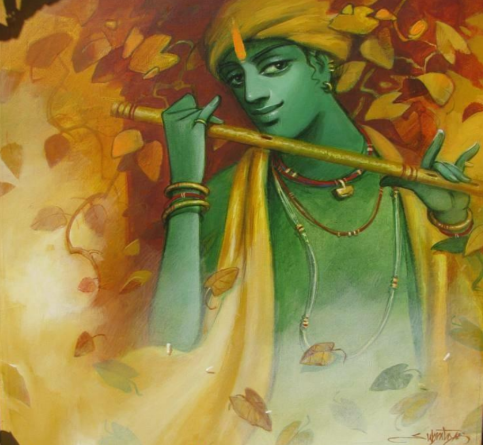
Choose colours that complement your existing furniture and wall finishes.
Krishna Paintings for Pooja Rooms
Traditional devotional paintings are popular choices for pooja rooms.
Shrinathji Pichwai paintings, Tanjore Krishna paintings and images of Bal Krishna can complement devotional settings.
Consider the available wall space and ensure that the artwork is displayed respectfully according to your household’s practices.
Radha Krishna Paintings for Bedrooms
Radha Krishna paintings are often associated with love, companionship and emotional connection.
Softly coloured Kangra-inspired paintings or minimalist Radha Krishna compositions can suit bedrooms.
Choose artwork that complements the room’s atmosphere and your personal beliefs.
Krishna Paintings for Offices
For offices or workspaces, contemporary Krishna artwork can offer a subtle cultural or devotional element.
Minimalist flute compositions, abstract Krishna portraits and smaller canvas paintings may suit professional interiors without overwhelming the space.
Krishna Painting Vastu: Traditional Placement Beliefs
Many homeowners consider Vastu Shastra when deciding where to place a Krishna painting.
According to some Vastu traditions, eastern and northeastern areas are considered favourable for devotional artwork.
However, these recommendations vary between practitioners and households.
There is no established scientific evidence that hanging a Krishna painting in a particular direction directly affects prosperity, relationships or positive energy.
For practical placement, consider choosing a clean, visible wall where the artwork is protected from excessive sunlight, humidity and heat.
A pooja room, living room, hallway or bedroom may be appropriate depending on the painting’s subject and your personal preferences.
The most important consideration is selecting a position that respects your beliefs while protecting the artwork and complementing the room.
How to Choose an Original Krishna Painting
If you are planning to purchase an original Krishna painting, understanding authenticity and craftsmanship is important.
Check the Artist’s Details
Look for information about the artist, their background and the techniques used.
A trustworthy artwork listing should clearly identify the creator when that information is available.
Understand the Painting Medium
Krishna paintings may be created using acrylic, oil, watercolour, natural pigments or mixed media.
Confirm whether the artwork is painted directly on canvas, cloth, paper or another surface.
Verify Authenticity and Provenance
Original paintings may feature brushstrokes or hand-applied textures, but these characteristics alone cannot confirm authenticity.
Some handmade paintings have smooth surfaces, while printed reproductions can imitate physical textures.
Ask for artist information, provenance, authenticity documentation and clear photographs.
For high-value artworks, independent professional verification may be appropriate.
Confirm Whether It Is an Original or a Print
A reproduction of a famous Krishna painting is different from an original handmade artwork.
Both can be visually appealing, but they should be clearly described and priced according to their actual medium and authenticity.
Krishna Painting Price in India
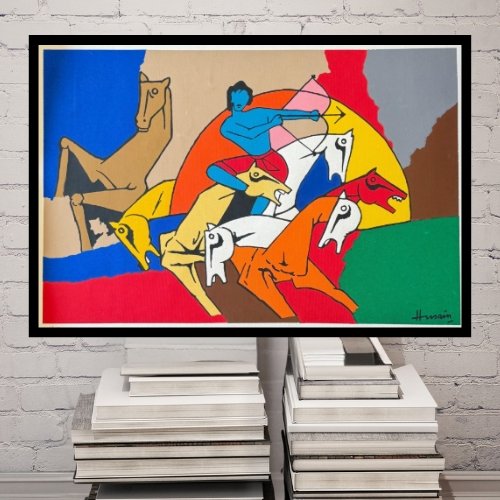
The price of Krishna paintings in India varies depending on several factors.
A small contemporary Krishna painting may be relatively affordable, while a highly detailed traditional artwork or a painting by a recognised artist may cost significantly more.
Important factors influencing the price include the artist’s reputation, painting size, materials, complexity, originality and provenance.
Traditional Tanjore paintings using genuine gold foil and intricate embellishments may require additional materials and labour.
Similarly, detailed Pichwai paintings can involve extensive craftsmanship.
Limited-edition prints and original paintings may also carry different prices based on their artistic significance and availability.
Before purchasing, compare the artwork’s specifications rather than relying only on size or appearance.
Common Mistakes to Avoid When Buying Krishna Paintings
One common mistake is choosing artwork based only on its appearance in an online photograph.
Always check the actual dimensions to understand how the painting will look on your wall.
Another mistake is overlooking the painting’s medium or assuming that every artwork described as traditional is entirely handmade.
Buyers should also verify whether frames, protective packaging and authenticity documentation are included.
Avoid selecting a painting solely because of claims that it will bring wealth, luck or guaranteed positive outcomes.
Instead, focus on artistic quality, personal connection, seller transparency and suitability for your space.
Krishna Paintings for Weddings and Housewarming Gifts
Krishna paintings are meaningful gifts for people who appreciate devotional art and Indian cultural traditions.
Radha Krishna Paintings for Weddings
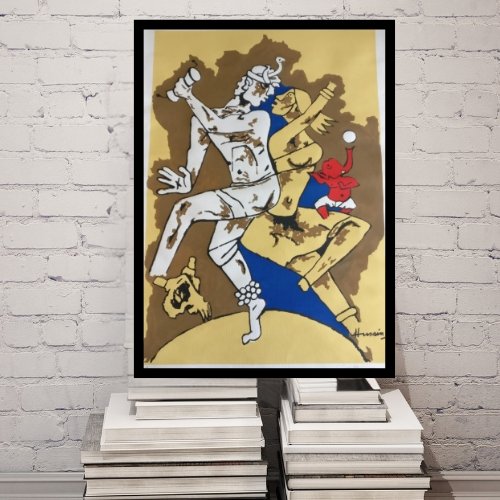
Radha Krishna artwork is often chosen for weddings and anniversaries because of its association with love, devotion and companionship.
A carefully selected painting can be a personal gift that reflects the recipient’s beliefs and aesthetic preferences.
Krishna Paintings for Housewarmings
For housewarming celebrations, Krishna artwork can be a thoughtful addition to a new home.
Traditional Pichwai compositions, contemporary canvas paintings or smaller devotional artworks can suit different interiors.

Krishna Paintings for Festivals
Krishna paintings are also suitable for occasions such as Janmashtami and Diwali.
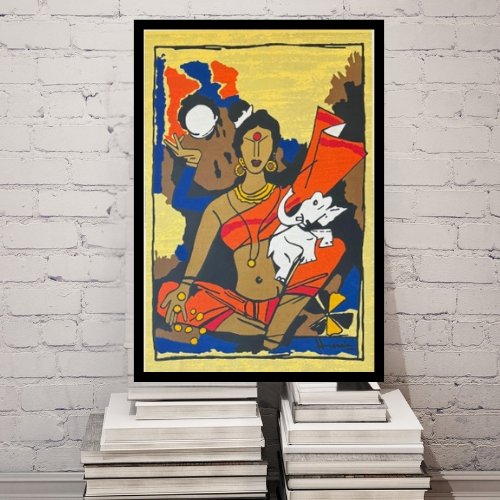
When choosing artwork as a gift, consider the recipient’s preferences, available space and whether framing is required.
Explore The Brush Strokes Co.’s gifting collection for more artwork gifting ideas.
How to Care for Krishna Paintings
Proper care can help preserve the colours, surfaces and materials of Krishna paintings.
Avoid placing artwork in direct sunlight, as prolonged exposure may cause some pigments to fade.
Keep paintings away from excessive humidity, cooking fumes and significant temperature changes.
For framed works on paper, suitable archival framing materials and UV-filtering glazing may provide additional protection.
Avoid applying water, household cleaners or chemicals directly to painted surfaces.
If an artwork is fragile, valuable or damaged, consult a professional conservator before attempting any cleaning.
Care requirements can vary between canvas paintings, traditional cloth paintings and works with gold foil or other embellishments.
Explore Krishna Paintings and Indian Art at The Brush Strokes Co.
Krishna paintings represent an important part of India’s artistic and devotional heritage.
From the intricate detailing of Pichwai artwork to the soft colours of Kangra paintings and the expressive compositions of contemporary artists, each style offers a different interpretation of Krishna.
At The Brush Strokes Co., art enthusiasts can explore Indian paintings across different subjects, styles and mediums.
Whether you are looking for devotional artwork, traditional Indian paintings or contemporary pieces, understanding artistic techniques and materials can help you make an informed choice.
Browse our painting collection or explore the artwork collection to discover available artistic styles.
Frequently Asked Questions About Krishna Paintings
1. What is the meaning of a Krishna painting?
A Krishna painting commonly represents devotion, love, harmony and spiritual connection. Its meaning depends on the subject, such as Krishna playing the flute, Radha Krishna or Bal Krishna.
2. Which Krishna painting is best for home?
The best Krishna painting depends on your personal preferences, interior style and available space. Pichwai, Kangra, Tanjore and contemporary Krishna paintings are all popular options.
3. What are the different types of Krishna paintings?
Popular Krishna painting styles include Pichwai, Kangra, Tanjore, Madhubani, Ravi Varma-inspired realistic compositions and contemporary Krishna canvas paintings.
4. Where should a Krishna painting be placed according to Vastu?
Some Vastu traditions recommend eastern or northeastern areas for devotional paintings. However, recommendations vary, and placement should also consider household beliefs, room suitability and artwork preservation.
5. Is a Radha Krishna painting suitable for a bedroom?
Many people choose Radha Krishna paintings for bedrooms because they associate the imagery with love, companionship and devotion. Suitability ultimately depends on personal and household beliefs.
6. Which Krishna painting is best for a pooja room?
Traditional Pichwai, Tanjore, Shrinathji and Bal Krishna paintings are popular choices for pooja rooms because of their devotional themes.
7. How can you identify an original Krishna painting?
Check the artist’s information, painting medium, provenance and supporting documentation. Brushstroke texture alone is not proof of authenticity, and valuable paintings may require expert assessment.
8. What affects the price of handmade Krishna paintings?
Prices depend on the artist, size, medium, materials, craftsmanship, originality, condition and provenance. Traditional techniques involving elaborate detailing may also influence the cost.
9. Is a Radha Krishna painting a good wedding gift?
Yes, Radha Krishna paintings are often selected as wedding gifts because they symbolise love and devotion. They can be meaningful gifts when they suit the couple’s personal tastes and beliefs.
10. Where can you buy Krishna paintings online in India?
Krishna paintings are available through art galleries, specialised art retailers, artist websites and online artwork stores. Before buying, check the medium, dimensions, seller reputation and authenticity information.
Conclusion
Krishna paintings beautifully combine Indian artistic traditions, cultural heritage and devotional symbolism.
Whether you prefer a richly detailed Pichwai painting, a romantic Kangra composition, a traditional Tanjore artwork or a contemporary Krishna canvas painting, each style offers its own artistic appeal.
Understanding the history, symbolism, materials and craftsmanship behind these paintings can help you select artwork that reflects your taste and personal beliefs.
When choosing a Krishna painting for your home, consider its size, colour, authenticity, display location and the atmosphere you want to create.
Explore the Indian art collection at The Brush Strokes Co. to discover artistic styles that can bring beauty and meaning to your space.