
Raja Ravi Varma (1848–1906) was one of India’s most celebrated painters, known for bringing Indian mythology to life through realistic oil paintings. His remarkable ability to combine European painting techniques with Indian traditions transformed the way people viewed art, religion and storytelling.
From his famous Shakuntala painting to his widely recognised depictions of Goddess Lakshmi and Saraswati, Raja Ravi Varma created artworks that continue to influence Indian art and culture.
But what made his paintings so special? Why are his artworks still admired more than a century after his death? Let’s explore the fascinating life, famous paintings, artistic techniques and enduring legacy of Raja Ravi Varma.
Who Was Raja Ravi Varma?
Raja Ravi Varma was an influential Indian painter born on April 29, 1848, in Kilimanoor, in the princely state of Travancore, present-day Kerala. He belonged to an aristocratic family with close connections to the Travancore royal court.
He became famous for combining the realistic techniques of European academic painting with subjects inspired by Indian mythology, literature and everyday life.
His paintings featured lifelike human expressions, detailed clothing, natural lighting and carefully composed backgrounds. These qualities made mythological characters appear more familiar and emotionally expressive.
Raja Ravi Varma is often described as a pioneering figure in modern Indian art because of his contribution to oil painting, mythological imagery and the wider distribution of art through printed reproductions.
Raja Ravi Varma Biography and Early Life
Raja Ravi Varma developed an interest in drawing and painting during childhood. Growing up in an environment influenced by literature, culture and traditional art, he began experimenting with sketches at an early age.
His artistic talent attracted attention within the Travancore royal family, giving him opportunities to develop his skills and observe accomplished painters.
As his career progressed, Ravi Varma received commissions from royal families and influential patrons across India. His portraits became popular for their detailed facial expressions, elegant costumes and realistic presentation.
His younger brother, C. Raja Raja Varma, was also an accomplished artist and became an important collaborator in his artistic career.
Over time, Ravi Varma’s reputation extended beyond royal courts. His mythological paintings became widely recognised, helping establish him as one of the most important figures in the history of Indian painting.
Education and Artistic Training
Raja Ravi Varma’s artistic development was influenced by both Indian painting traditions and European academic techniques.
He learned through observation, experimentation and exposure to artists associated with the Travancore royal court. He developed particular skill in oil painting, a medium that allowed him to create realistic skin tones, detailed textures and dramatic lighting effects.
Unlike many traditional Indian painting styles, which often emphasised decorative patterns and stylised figures, Ravi Varma used perspective, shading and naturalistic proportions to create a sense of depth.
This combination became a defining characteristic of his artistic identity.
His work gained recognition at important exhibitions, including an award at Vienna in 1873, helping introduce his paintings to international audiences.
Famous Paintings of Raja Ravi Varma
Raja Ravi Varma created numerous portraits, historical compositions and mythological paintings during his lifetime. His best-known works draw inspiration from Indian epics, classical literature and religious traditions.
Here are some of the most famous paintings of Raja Ravi Varma.
1. Shakuntala
Shakuntala is one of Raja Ravi Varma’s most recognised paintings, inspired by the story of Shakuntala and King Dushyanta.
The composition portrays Shakuntala pretending to remove a thorn from her foot while secretly looking back toward Dushyanta.
The painting beautifully captures love, hesitation and longing through the character’s pose and expression.
Its detailed natural surroundings, graceful figures and realistic portrayal of emotion demonstrate Ravi Varma’s ability to transform a literary scene into an engaging visual narrative.
2. Damayanti Talking to a Swan
Damayanti Talking to a Swan is another celebrated painting inspired by the story of Nala and Damayanti from the Mahabharata.
The artwork depicts Princess Damayanti communicating with a swan that plays a role in bringing her and King Nala together.
Ravi Varma portrays Damayanti with elegance and emotional sensitivity, using rich colours, detailed clothing and a carefully arranged setting.
The painting demonstrates his ability to combine romantic storytelling with realistic human expressions.
3. Yashoda and Krishna
Yashoda and Krishna is among Raja Ravi Varma’s most admired mythological subjects.
The painting depicts the affectionate relationship between Lord Krishna and his foster mother, Yashoda.
Rather than presenting the characters only as distant religious figures, Ravi Varma portrays a tender moment of maternal love.
This emotional connection is one of the reasons his mythological paintings remain popular among Indian art enthusiasts.
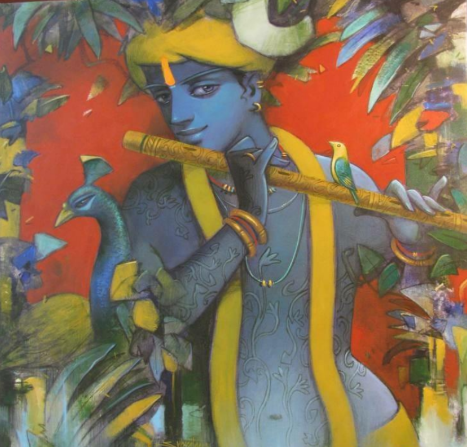
The artwork also gained international attention when an important Yashoda and Krishna oil painting sold for a record-breaking price at auction in April 2026.
4. Goddess Lakshmi Painting
Raja Ravi Varma’s depiction of Goddess Lakshmi became one of the most recognisable images associated with Indian devotional art.
The goddess is traditionally shown standing on a lotus, wearing jewellery and richly coloured garments, with elephants forming part of the composition.
Through realistic details, graceful posture and balanced composition, Ravi Varma created a representation that appealed to audiences across different regions.
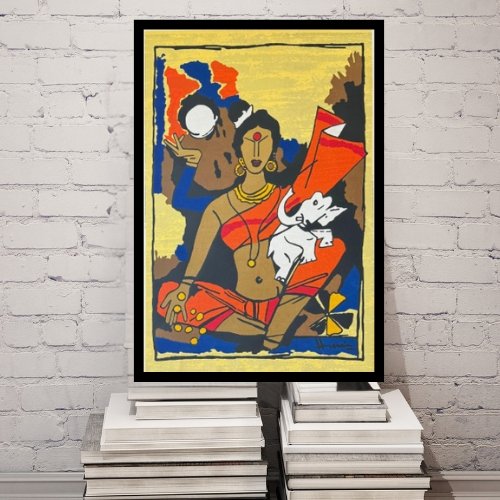
Printed versions helped popularise this imagery, influencing religious calendars, decorative prints and household devotional pictures.
5. Goddess Saraswati Painting
Raja Ravi Varma’s Goddess Saraswati painting presents the deity associated with knowledge, music, wisdom and learning.
The goddess is depicted with a veena, traditionally accompanied by symbolic elements such as a book and a swan.
Ravi Varma used soft colours, natural expressions and detailed clothing to give the composition a peaceful and elegant appearance.
His interpretation became especially influential through reproduced devotional images used in homes and educational spaces.
Raja Ravi Varma’s Painting Style and Techniques
The distinctive appeal of Raja Ravi Varma paintings comes from the combination of traditional Indian subject matter and European academic realism.
Realistic Human Expressions
Ravi Varma gave his subjects natural facial expressions and body language. Whether depicting a royal portrait or a mythological character, he focused on making emotions visible.
Use of Oil Paintings
Oil colours allowed him to create smooth transitions between light and shadow, detailed textures and rich colour combinations.
This technique was particularly effective for painting silk garments, jewellery, skin tones and architectural details.
Indian Mythological Themes
Many of his famous paintings were inspired by the Ramayana, Mahabharata, Puranas and classical Sanskrit literature.
By presenting familiar stories through realistic imagery, he offered audiences a new way to experience Indian mythology through art.
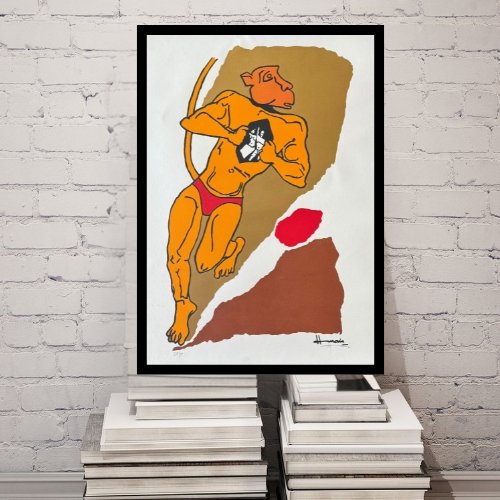
European Perspective and Composition
Ravi Varma incorporated techniques such as perspective, shading and modelling to create depth.
His compositions often featured detailed landscapes, dramatic lighting and carefully arranged figures.
These techniques helped establish his distinctive style within the development of modern Indian art.
How Raja Ravi Varma Changed Indian Art
Raja Ravi Varma played an important role in connecting traditional Indian artistic themes with changing painting techniques during the nineteenth century.
Before his period, Indian art included diverse traditions such as miniature paintings, murals, manuscript illustrations and court paintings.
Ravi Varma introduced a different visual interpretation by portraying historical and mythological characters using European-style realism.
His paintings made familiar religious stories appear more human and emotionally accessible.
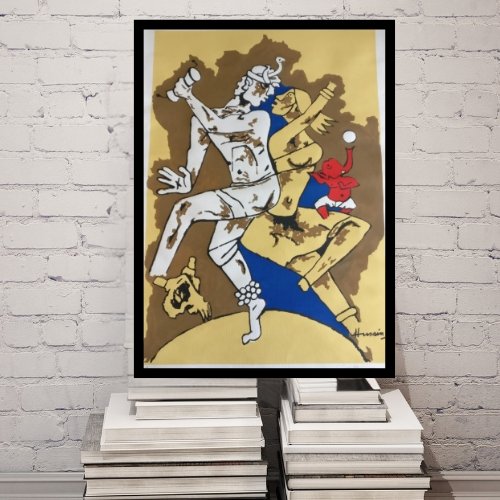
He also helped expand interest in portraiture and mythological oil painting beyond individual royal commissions.
His artistic approach influenced later painters, popular devotional imagery and even aspects of Indian cinema.
Although later generations of artists sometimes criticised his dependence on European academic techniques, his contribution to Indian visual culture remains significant.
Readers interested in other traditional Indian art forms can explore our guide to Kerala Mural Paintings.
The Raja Ravi Varma Lithographic Press
One of Raja Ravi Varma’s most important contributions was the establishment of a printing press that helped make artworks more accessible.
In the 1890s, he established a lithographic press in Bombay, initially at Ghatkopar, using imported printing technology and the expertise of trained technicians.
The press produced reproductions of paintings and religious images, including popular depictions of Goddess Lakshmi, Goddess Saraswati and scenes from Indian mythology.
These prints could be distributed more widely and sold at prices far below those of original oil paintings.
As a result, artworks inspired by Ravi Varma reached households, shops and religious spaces across India.
The lithographic press helped change how people encountered art, making printed devotional images part of everyday visual culture.
Original Raja Ravi Varma Paintings vs Oleographs
Original paintings and oleographs are two different forms of artwork associated with Raja Ravi Varma.
An original Raja Ravi Varma painting is a unique artwork created by the artist using materials such as oil paint and canvas.
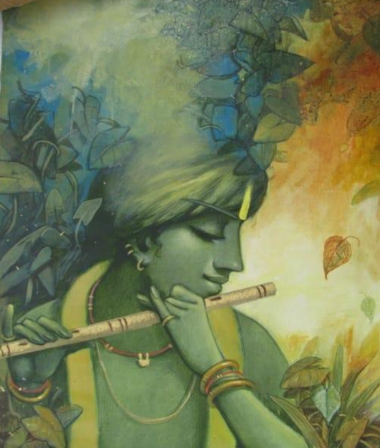
An oleograph, on the other hand, is a printed image produced through a specialised lithographic process. These prints allowed artworks to be reproduced in multiple copies.
Historic oleographs from the Ravi Varma Press can have significant artistic and collectible value, but they should not be confused with original paintings.
Modern digital reproductions are another category and generally have different materials, printing techniques and market values.
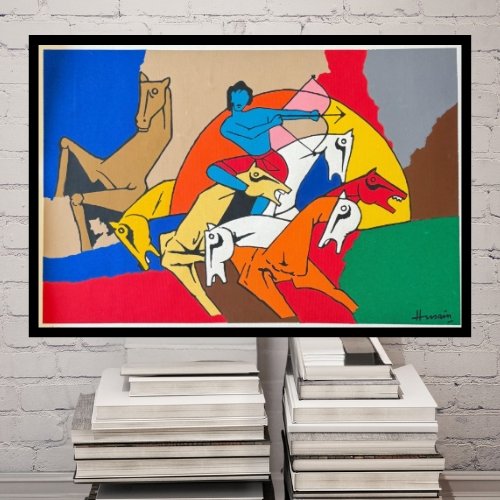
Collectors should carefully examine provenance, printing methods, condition and authenticity before purchasing historical artworks.
Raja Ravi Varma Painting Price and Auction Records
The value of original Raja Ravi Varma paintings reflects their historical importance, rarity, condition and provenance.
A significant moment in the Indian art market occurred on April 1, 2026, when Raja Ravi Varma’s Yashoda and Krishna, dated to approximately the 1890s, sold at Saffronart’s Spring Live Auction in Mumbai.
The painting achieved ₹167.20 crore, including the buyer’s premium.
This sale exceeded the previous widely reported Indian art auction benchmark established by M. F. Husain’s Gram Yatra in 2025.
The extraordinary auction result demonstrated the continuing international interest in important historical Indian artworks.
However, the price of one exceptional painting should not be treated as the standard value of every work attributed to Ravi Varma.
Auction prices depend on factors including authenticity, condition, provenance, subject, historical importance and collector demand.
Where Can You See Raja Ravi Varma Paintings?
Several museums, galleries and historic collections in India preserve works associated with Raja Ravi Varma.
Raja Ravi Varma Art Gallery, Thiruvananthapuram
Located within Kerala’s museum complex, the Raja Ravi Varma Art Gallery provides an opportunity to explore paintings associated with the artist and understand his contribution to Indian art history.
Lakshmi Vilas Palace, Vadodara
The royal family of Baroda was an important patron of Raja Ravi Varma.
The palace and its associated collections preserve significant examples of paintings connected with his artistic career.
National Gallery of Modern Art
The National Gallery of Modern Art maintains important information and collections relating to Indian modern art, including works associated with Raja Ravi Varma.
Before planning a visit, check the respective institution’s current gallery access, exhibition displays and visitor information.
Raja Ravi Varma’s Influence on Modern Indian Art
Raja Ravi Varma’s influence extends beyond his original paintings.
His representations of Hindu mythology helped shape devotional prints, calendars and popular religious imagery.
His realistic compositions also contributed to visual storytelling traditions that later developed in Indian theatre, photography and cinema.
At the same time, his work became part of broader debates about Indian artistic identity.
Artists associated with later movements, including the Bengal School, explored different approaches to painting, sometimes rejecting the European academic realism Ravi Varma had embraced.
This contrast contributed to the evolution of modern Indian art and encouraged new interpretations of Indian cultural subjects.
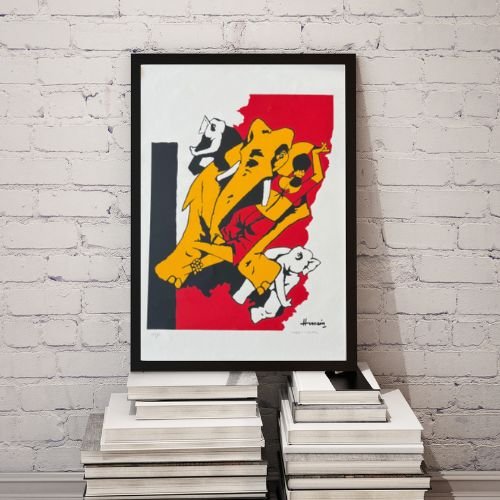
Ravi Varma’s importance therefore lies not only in the paintings he created but also in the artistic discussions and visual traditions his work helped inspire.
Why Are Raja Ravi Varma Paintings Still Popular?
More than a century after his death, Raja Ravi Varma paintings continue to attract attention from historians, collectors, art enthusiasts and people interested in Indian culture.
His paintings remain popular because they combine recognisable mythological stories with artistic realism and emotional depth.
The elegant depictions of goddesses, historical characters and literary figures appeal to audiences who value both cultural meaning and visual beauty.
His influence is particularly visible in devotional imagery and decorative artworks inspired by Indian mythology.
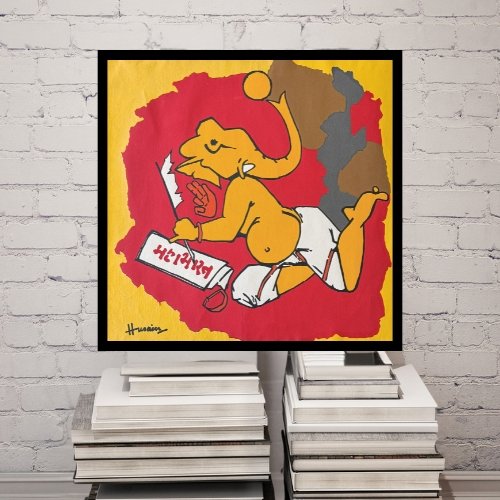
For those interested in exploring Indian art, The Brush Strokes Co.’s artwork collection features artworks across different styles and subjects.
You can also learn more about artistic traditions and painting techniques in our guide to Fine Art.
Raja Ravi Varma’s Legacy in Indian Art History
Raja Ravi Varma died on October 2, 1906, but his artistic influence continues.
He helped popularise realistic depictions of Indian mythological subjects, developed a distinctive approach to oil painting and expanded access to art through printed reproductions.
His artworks connected literature, religion, portraiture and visual storytelling in a way that appealed to a broad audience.
Today, Raja Ravi Varma remains an essential figure in discussions about the development of modern Indian painting.
His work serves as a bridge between historical Indian artistic traditions and the changing visual culture of the modern era.
Frequently Asked Questions About Raja Ravi Varma
1. Who was Raja Ravi Varma?
Raja Ravi Varma was a famous Indian painter born in Kerala in 1848. He is known for combining European oil painting techniques with Indian mythology, literature and portraiture.
2. Which are the most famous paintings of Raja Ravi Varma?
Some of his most famous paintings include Shakuntala, Damayanti Talking to a Swan, Yashoda and Krishna, and his celebrated representations of Goddess Lakshmi and Saraswati.
3. Why is Raja Ravi Varma called the father of modern Indian art?
Raja Ravi Varma is sometimes described as a father figure of modern Indian art because of his influential combination of European academic realism and Indian subjects, along with his contribution to the wider availability of printed art.
4. What was Raja Ravi Varma’s painting style?
His painting style combined European academic realism, oil painting, naturalistic expressions, detailed clothing and Indian historical and mythological themes.
5. Which Raja Ravi Varma painting sold for ₹167 crore?
Yashoda and Krishna sold for ₹167.20 crore, including the buyer’s premium, at Saffronart’s Spring Live Auction on April 1, 2026.
6. How did Raja Ravi Varma influence Indian mythology paintings?
He portrayed mythological figures using realistic human expressions, detailed costumes and naturalistic compositions. His printed reproductions helped popularise these interpretations across India.
7. Where are Raja Ravi Varma’s original paintings displayed?
Important works associated with Raja Ravi Varma can be found in collections such as the Raja Ravi Varma Art Gallery in Thiruvananthapuram and collections associated with Lakshmi Vilas Palace in Vadodara.
8. What is the difference between an original Ravi Varma painting and an oleograph?
An original painting is a unique artwork created by the artist. An oleograph is a printed reproduction produced using lithographic techniques and may exist in multiple copies.
9. Can you buy Raja Ravi Varma paintings?
Authentic original paintings and historic prints occasionally appear through specialist galleries, collectors and auction houses. Buyers should verify provenance, authenticity and applicable legal restrictions before purchasing.
10. Why is Raja Ravi Varma important in Indian art history?
Raja Ravi Varma helped connect Indian mythology with European realist painting techniques. His portraits, mythological compositions and printed reproductions influenced modern Indian art and popular visual culture.
Conclusion
Raja Ravi Varma was more than a skilled painter. He was an influential artist who reshaped how Indian mythology, culture and storytelling could be represented through art.
From the emotional beauty of Shakuntala to the timeless devotion portrayed in his Goddess Lakshmi and Saraswati paintings, his artworks continue to inspire generations.
His ability to combine realistic painting techniques with traditional Indian subjects made his work distinctive, while his lithographic press helped bring art into everyday Indian life.
Today, his legacy lives on through museums, historical collections, devotional imagery and the continuing appreciation of Indian paintings.
If you enjoy discovering the beauty and history of Indian art, explore the art collection at The Brush Strokes Co. to discover more artistic styles and creative expressions.